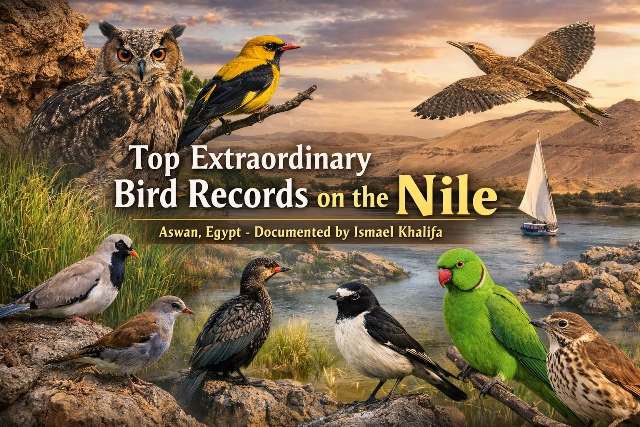
The Nile in southern Egypt is more than a scenic river; it is a biological frontier where Palearctic migrants, Afrotropical residents, desert specialists, and wetland ghosts converge. In Aswan, this ecological crossroads has produced some truly extraordinary bird records, all carefully observed and documented by local birding guide Ismael Khalifa, founder of Aswan Birdwatching. Here are ten of the most remarkable Nile records; species that surprised, inspired, and redefined what we expect to see along Egypt’s great river.
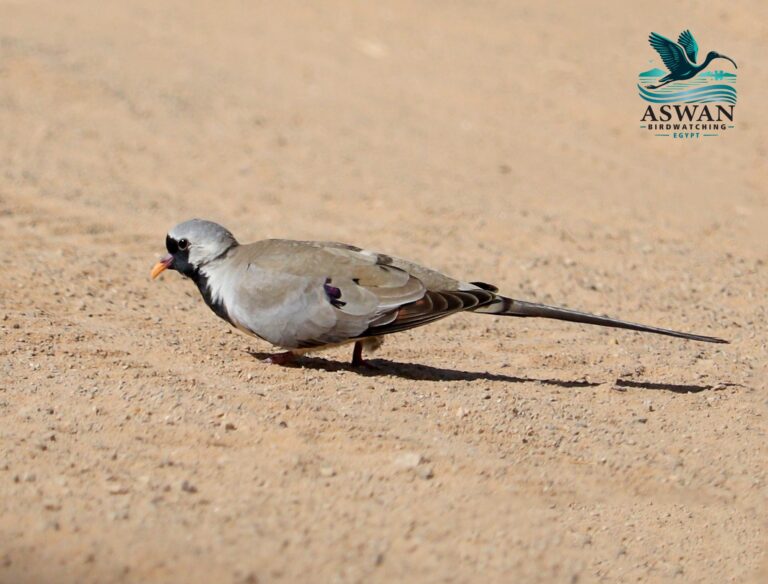
1. Namaqua Dove
A true desert jewel. The Namaqua Dove is typically associated with arid landscapes and semi-desert plains. Its presence along the Nile in Aswan is exceptional, illustrating how even desert specialists rely on riverine corridors for hydration and dispersal. A rare and elegant record.
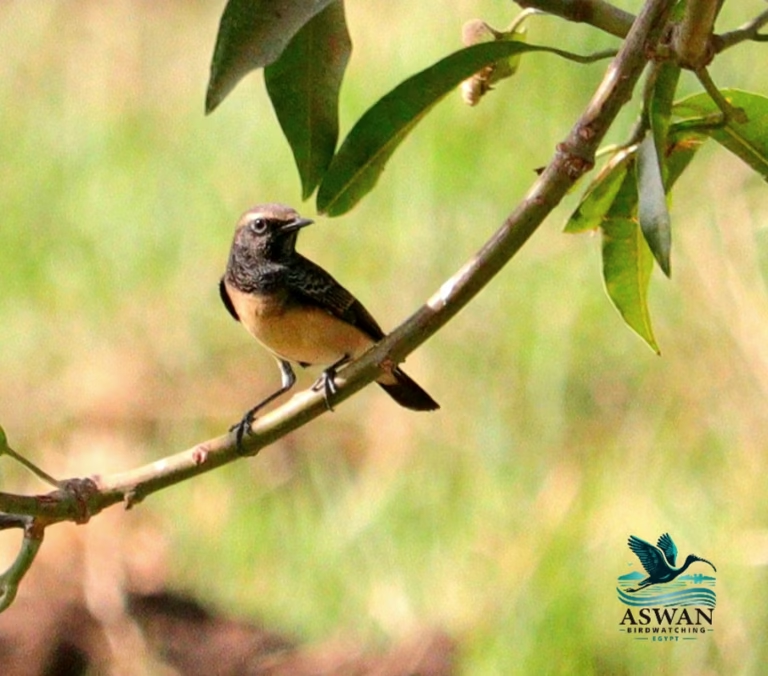
2. Cyprus Wheatear
A Mediterranean breeder rarely associated with southern Egypt. Its documentation in Aswan suggests fascinating migratory deviations and reinforces the Nile’s role as a safe migratory refuge.
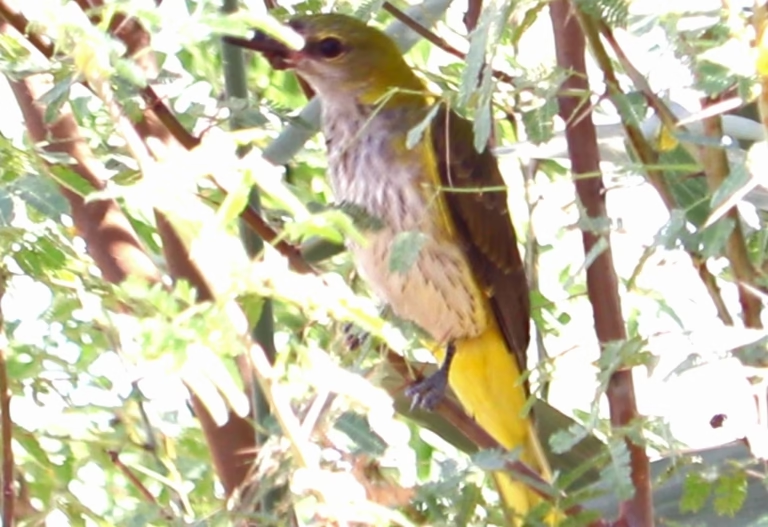
3. Eurasian Golden Oriole
A flash of gold in the canopy. During migration, the Nile becomes a lifeline of green vegetation in an otherwise arid region. Seeing this vibrant migrant resting in riverside trees is a spectacular reminder of the Nile’s global importance.
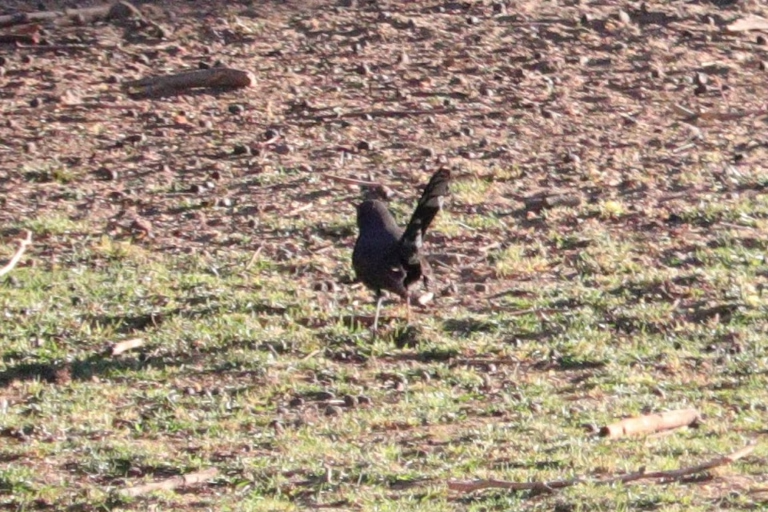
4. Black Scrub Robin
A species of dry scrub and semi-desert. Its presence along the Nile reflects the mosaic nature of habitats in Aswan, where acacia scrub meets irrigated farmland and river islands.
5. Pharaoh Eagle-Owl
A commanding nocturnal predator of rocky deserts. Documenting the Pharaoh Eagle-Owl within Nile-associated habitats highlights the fluid boundary between desert escarpments and river systems in Upper Egypt.
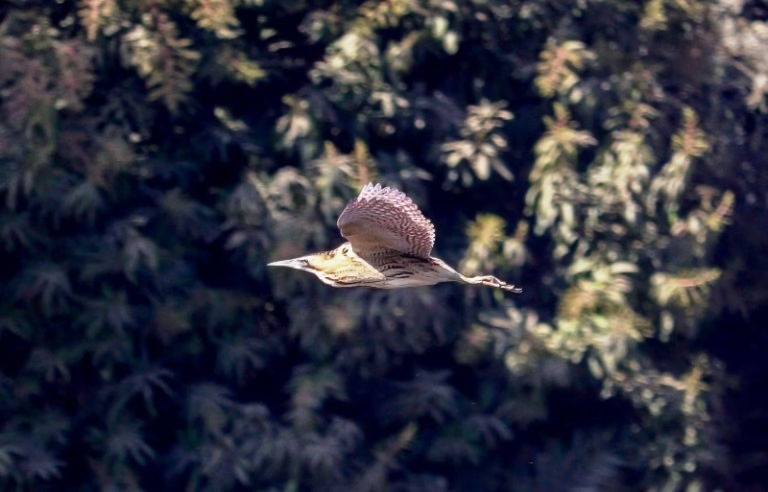
6. Eurasian Bittern
The ghost of the reedbeds. Few birds test a birder’s patience like the Eurasian Bittern. Recording it along Nile wetlands in Aswan is a true field achievement — a sign of healthy reedbed ecosystems and sharp observational skill.
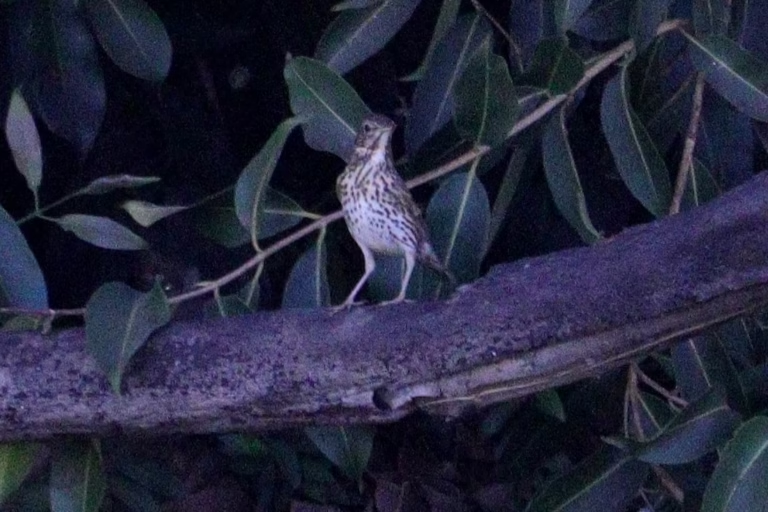
7. Song Thrush
A familiar European songster, yet always notable when recorded precisely along Upper Egypt’s riverine vegetation. Each wintering thrush adds valuable data to our understanding of migratory timing and habitat selection.
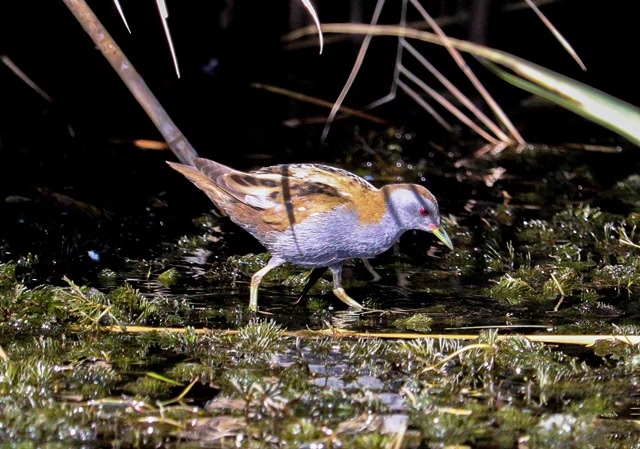
8. Little Crake
Secretive and notoriously difficult to observe. Recording a Little Crake along Nile reedbeds represents a high-level wetland discovery; a species that often goes unnoticed even when present.
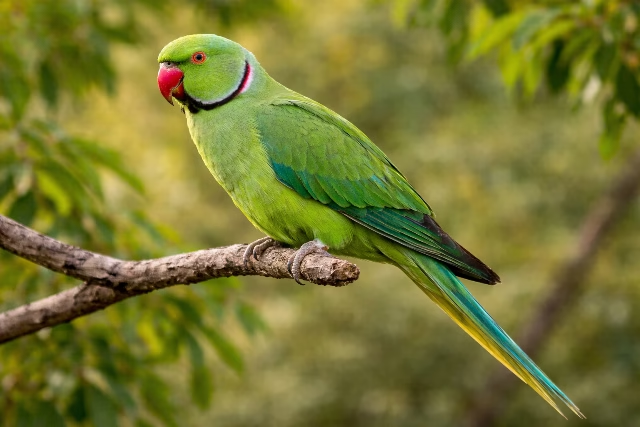
9. Rose-ringed Parakeet
Bright green, loud, and charismatic. Its presence along the Nile raises fascinating ecological questions about adaptation, range expansion, and the growing interaction between urban and natural habitats.
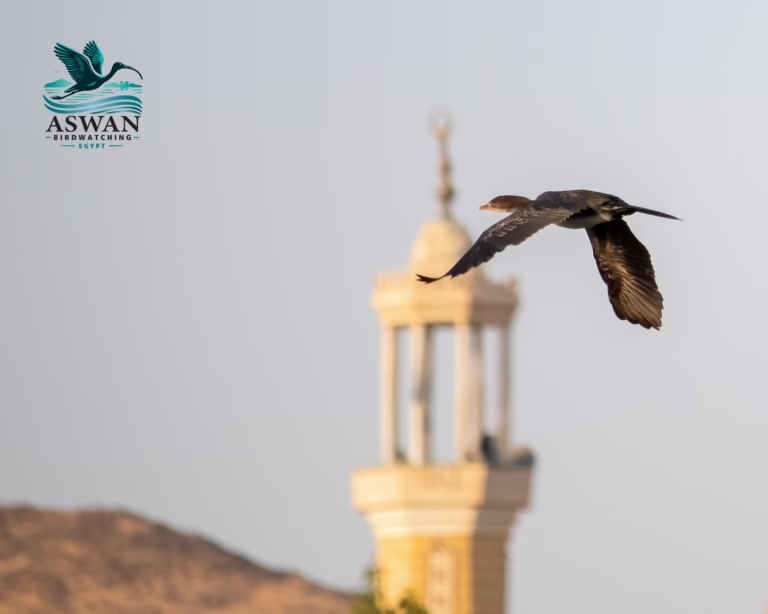
10. Reed Cormorant
An Afrotropical wetland species whose presence on the Nile strengthens Aswan’s ecological identity as a transitional zone between Africa and the Palearctic. Its observation is particularly meaningful in understanding distribution shifts along the river system.