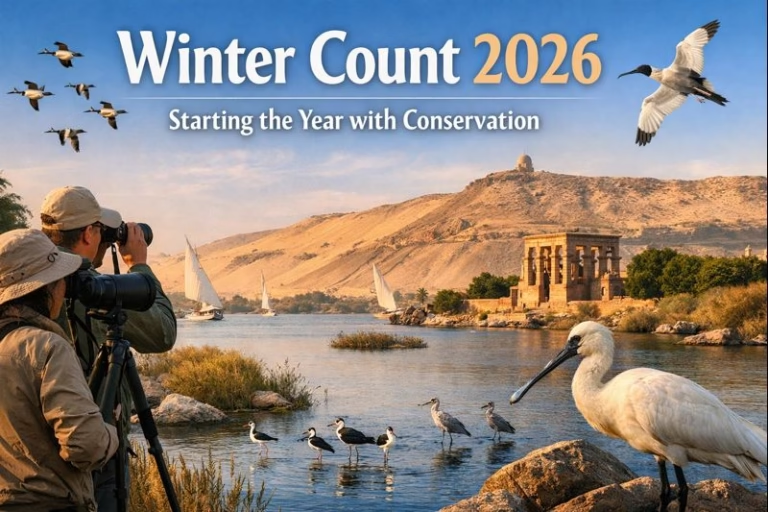
The year 2026 began not with resolutions written on paper, but with binoculars raised toward open skies and quiet wetlands. As winter reached its peak, we stepped into the field to take part in the Annual Winter Count for Waterbird, turning our shared passion for birds into meaningful conservation action. Organized by Nature Conservation Egypt (NCE) in cooperation with the Ministry of Environment, and in collaboration with BirdLife International, the event provided a unique opportunity to contribute to a nationwide effort that monitors bird populations, evaluates habitat health, and informs strategies for protection.
The Winter Bird Count: One Day, A Bigger Picture
As winter settles in, Egypt becomes a crucial stopover for waterbirds. Some species arrive to spend the season, while others pass through on their migratory journeys, turning lakes, wetlands, and coastlines into bustling hubs of life. The Winter Waterbird Count, a global annual event, captures this extraordinary moment. Its purpose is simple yet powerful: to count waterbirds, document their presence, and collect data that helps track population trends, assess species status, and evaluate the health of vital habitats.
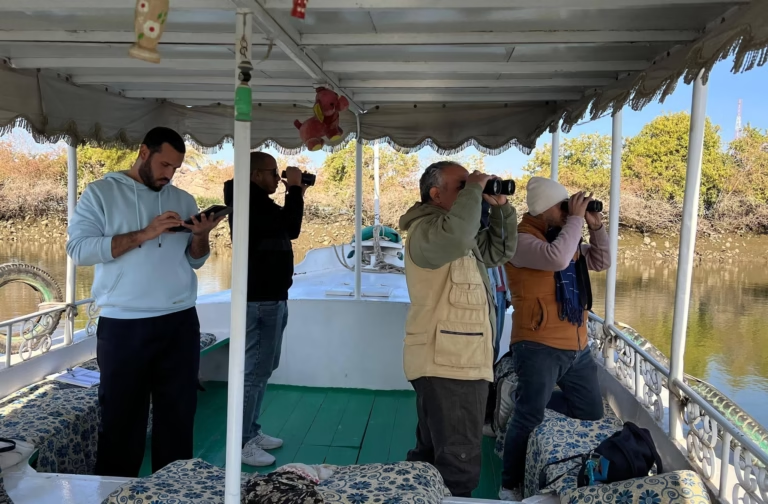
In Aswan, the count includes the Nile River, Lake Philae, Lake Nasser, and some Sewage stations.
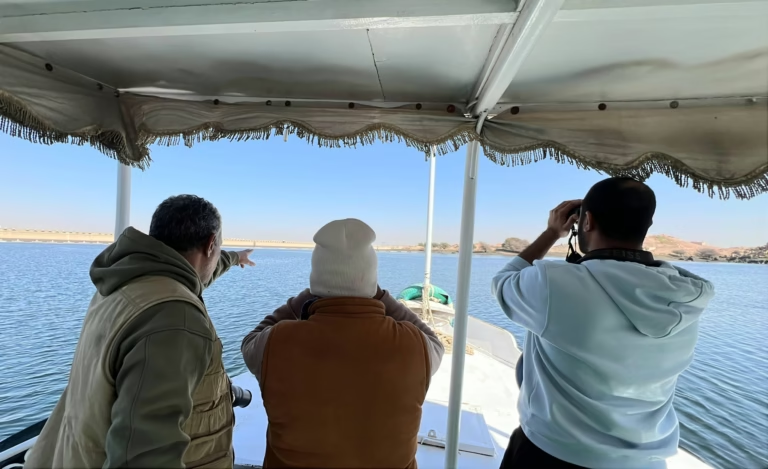
This year (January 5th), participants on Lake Philae recorded over 50 different species, most of them waterbirds. The diversity observed was both remarkable and scientifically significant, providing valuable insight into the state of Egypt’s wetlands during the winter season.
From Field Observations to Conservation Impact
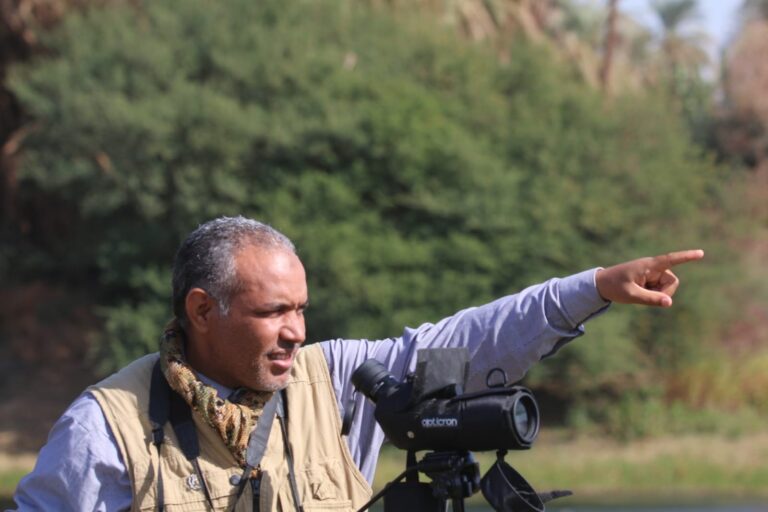
What begins as a single day in the field extends far beyond the act of counting birds. The data collected during the Winter Waterbird Count becomes part of long-term monitoring efforts at both national and international levels. These records help scientists detect changes in bird populations, understand migration dynamics, and identify wetlands that are under pressure or in need of protection.
For Egypt, positioned at the crossroads of major migratory routes, this information is especially valuable. Changes in species presence or abundance can act as early indicators of habitat degradation, climate impacts, or wider ecological shifts. By linking local observations to global conservation frameworks, the Winter Waterbird Count transforms individual sightings into meaningful tools for decision-making and protection.
Highlights from the 2026 Count
Among the many species observed during the event, several stood out as particularly exciting highlights:
- Common Pochard Duck (Aythya ferina) – a globally Vulnerable species, making its presence during the count especially significant and a reminder of the conservation value of Egypt’s wetlands.
- Tufted Duck (Aythya fuligula) – elegant divers often seen in clusters on open water.
- White Stork (Ciconia ciconia) – iconic migrants gracefully soaring over wetlands.
- Grey Plover (Pluvialis squatarola) and Common Ringed Plover (Charadrius hiaticula) – striking shorebirds feeding along lakeshores.
- Temminck’s Stint (Calidris temminckii) – tiny but energetic waders, always a delight to spot.
- Common Snipe (Gallinago gallinago) – masters of camouflage, blending perfectly into marshes.
- Eurasian Spoonbill (Platalea leucorodia) – elegant, long-billed foragers gliding through shallow waters.
- Purple Heron (Ardea purpurea) – a rare and striking heron, observed stalking prey in reeds.
- Common Redshank (Tringa totanus) and Common Greenshank (Tringa nebularia) – waders with unmistakable calls and markings.
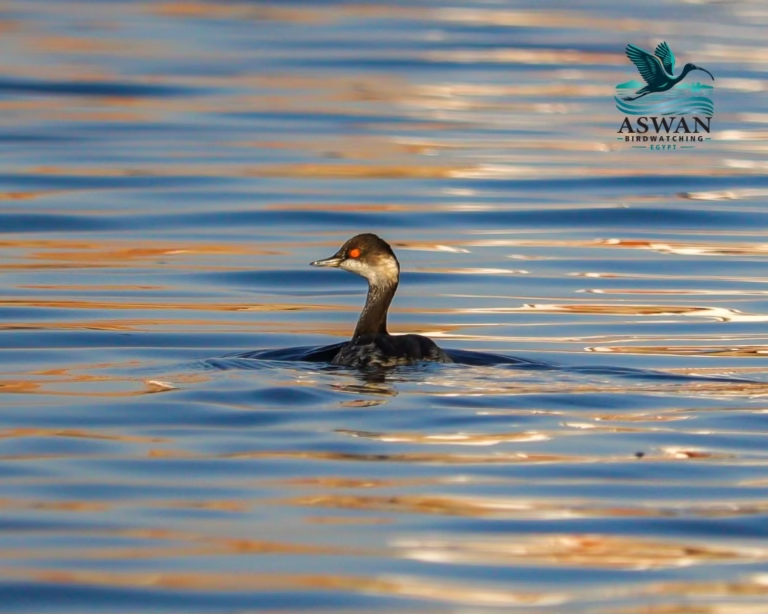
- And finally all three grebe species in the area:
– Great Crested Grebe (Podiceps cristatus)
– Black-necked Grebe (Podiceps nigricollis)
– Little Grebe (Tachybaptus ruficollis).
These sightings not only highlight the richness of Egypt’s winter birdlife, but also underscore the importance of protecting wetlands and other critical habitats.
A Chance for Community and Citizen Science
The Annual Winter Waterbird Count is not only a scientific exercise, but also a powerful opportunity for community engagement. It brings together experienced ornithologists, local birders, students, photographers, and nature lovers, all united by a shared purpose: contributing real data to conservation while learning from one another in the field.
Through citizen science, individual observations become part of a much larger picture. Each species recorded, each count carefully noted, feeds into national and global databases used by researchers and conservation organizations to monitor population trends and identify emerging threats. For many participants, this hands-on involvement transforms birdwatching from a personal hobby into a meaningful act of stewardship.