
For every birdwatcher, lifers represent more than new ticks on a checklist. They are milestones shaped by field experience, patience, and careful documentation. In 2025, several exceptional species were added to Ismael Khalifa’s Egypt Life List on eBird, each carrying particular scientific and national significance. This recap highlights four standout lifers and explains why they matter — not only personally, but also within the broader context of bird recording in Egypt.
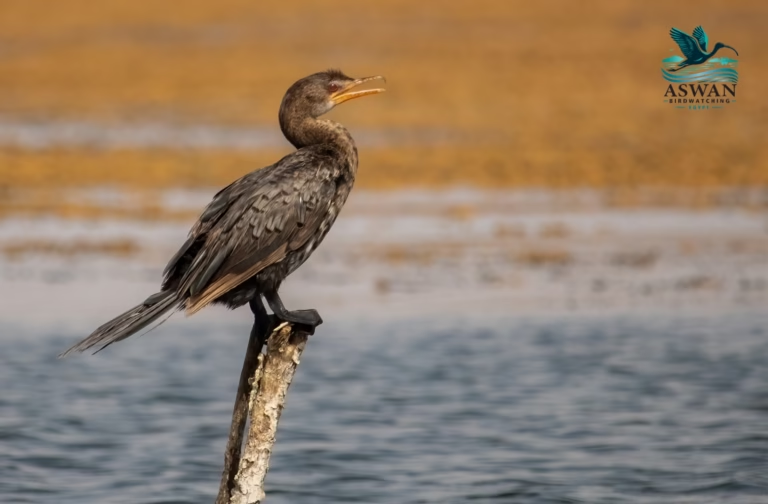
Reed Cormorant (Microcarbo africanus)
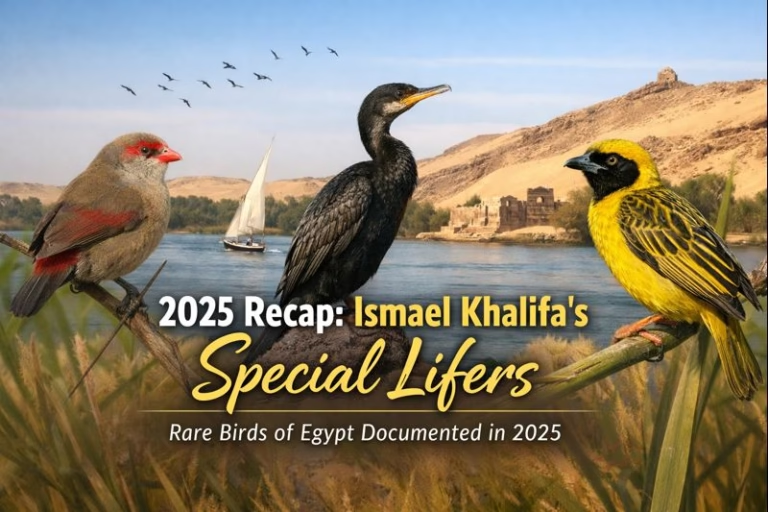
The Reed Cormorant is a localized and historically under-recorded species in Egypt, most closely associated with freshwater habitats in the far south, particularly Lake Nasser and adjacent wetlands. Smaller and more compact than the Great Cormorant, it is often seen perched low on reeds or submerged branches with wings spread to dry.
According to the eBird database, Ismael Khalifa is considered:
- The first Egyptian to spot and document the Reed Cormorant, recorded solo on 21 December 2024
- Later, a member of the team that documented the first confirmed breeding evidence for the species in Egypt after more than a century of absence.
This record represents a major milestone in modern Egyptian ornithology and highlights the importance of long-term monitoring in southern wetlands.
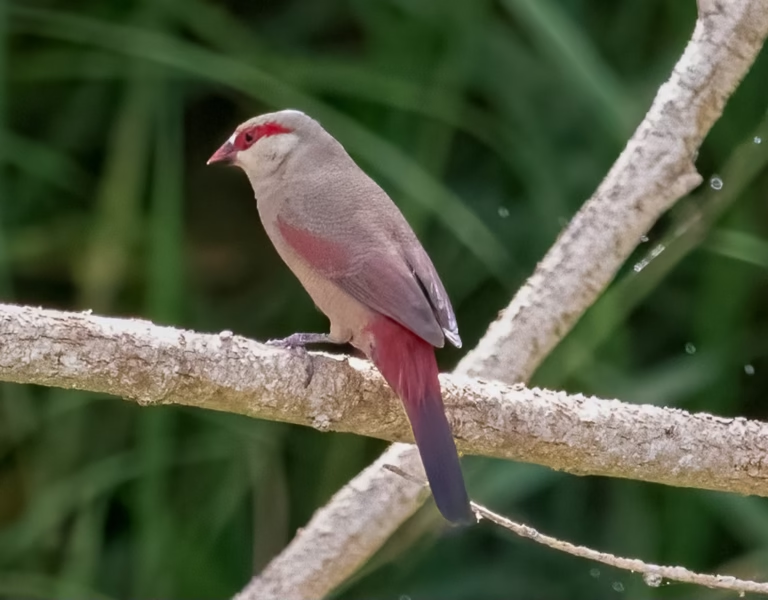
Crimson-rumped Waxbill (Estrilda rhodopyga)
Small, discreet, and strikingly colorful, the Crimson-rumped Waxbill is among the rarest regularly documented passerines in Egypt. Its bright crimson rump contrasts sharply with its otherwise subtle plumage, making it visually distinctive yet easily overlooked in dense grassy habitats.
According to eBird records:
- Ismael Khalifa is considered the first Egyptian to spot and document the Crimson-rumped Waxbill.
- The record was made on 24 May 2025, alongside three Austrian birders.
This observation added a high-value national record to Egypt’s bird database and demonstrated the importance of careful observation in marginal and transitional habitats.
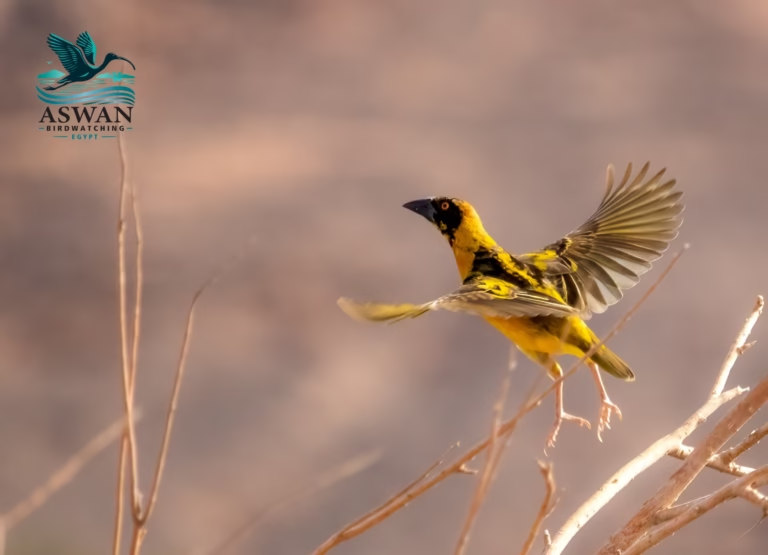
Village Weaver (Ploceus cucullatus)
The Village Weaver is widely distributed across sub-Saharan Africa and well known for its bright breeding plumage and elaborate woven nests. In Egypt, however, it remains uncommon and irregular, with very few confirmed records.
Based on available eBird data:
- Ismael Khalifa was among the first Egyptian birders to spot and document the Village Weaver in Egypt (during bird count expedition on Lake Nasser) – 19 January 2025.
Recording this species reflects early engagement with emerging distribution patterns and highlights the value of local birders in detecting changes in species occurrence at the northern edge of their range.
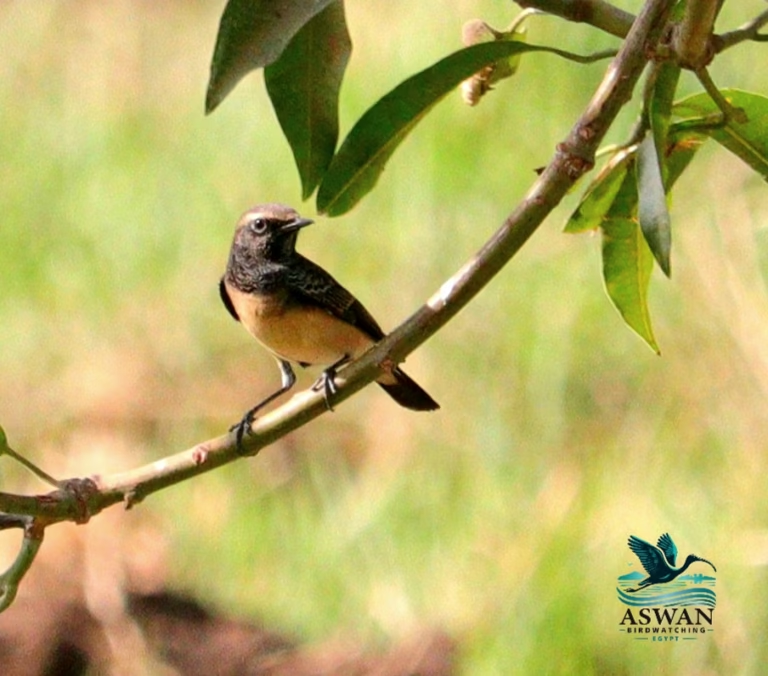
Cyprus Wheatear (Oenanthe cypriaca)
A highly sought-after Western Palearctic species, the Cyprus Wheatear is a passage migrant through Egypt, primarily during spring and autumn migration. Its preference for open, rocky, and semi-desert landscapes makes Aswan an ideal — though still challenging — location for detection.
According to eBird data:
- Ismael Khalifa is considered the first Egyptian to spot and document the Cyprus Wheatear.
- The record was made during an Aswan Birdwatching trip in Aswan on 05 November 2025.
This sighting further confirms Aswan’s strategic importance along regional migratory flyways.
From Local Sightings to International Scientific Recognition
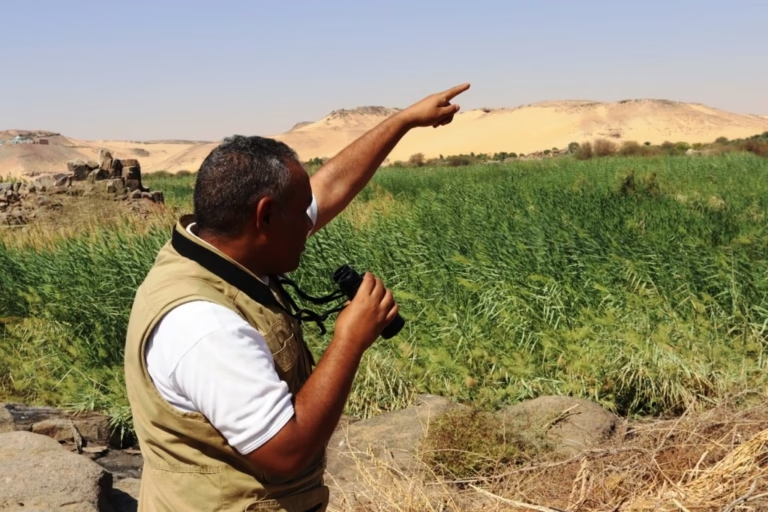
Some lifers go beyond personal milestones and become part of the scientific record. In 2025, several of Ismael Khalifa’s observations gained international scientific attention, most notably his records of the Crimson-rumped Waxbill near Abu Simbel.
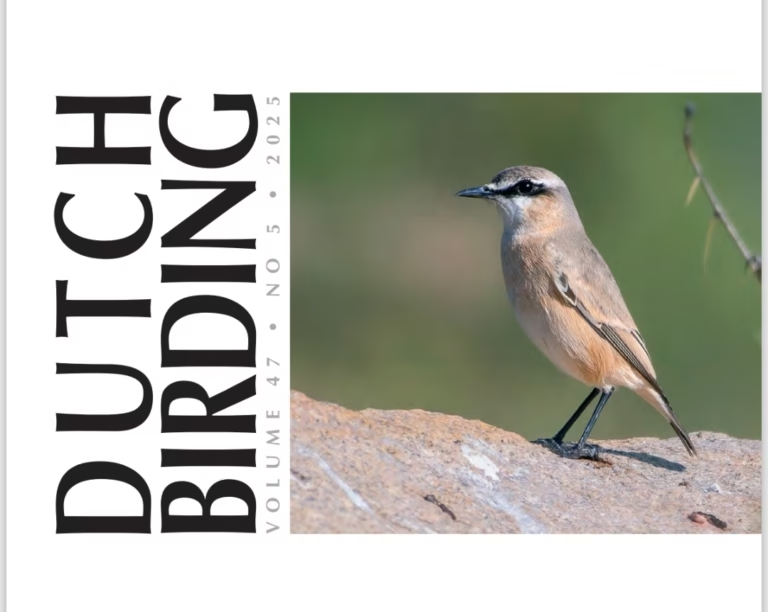
These observations were cited in Dutch Birding, one of Europe’s leading ornithological journals, in Volume 47, No. 5 (2025). The publication documented multiple independently confirmed sightings from the Abu Simbel area, including observations made by Ismael Khalifa alongside international birders, all supported by photographic evidence submitted to eBird.
Why These Lifers Matter
Taken together, these records represent more than personal achievements. They reflect:
- Egypt’s underexplored avian diversity, particularly in Upper Egypt.
- The importance of consistent fieldwork and accurate documentation.
- The growing role of local observers in strengthening global databases such as eBird
Each record contributes directly to conservation science, long-term monitoring, and a deeper understanding of bird distribution in North Africa.
Pingback: 2025 Recap: Top Reviews for Aswan Birdwatching Trips
Pingback: First Aswan Lifers of 2026: A Milestone Start to the Year
Pingback: A Year in the Field: My 2025 eBird Journey