In recent years, Egypt’s ornithological community has been witnessing a quiet but powerful transformation, one driven by dedicated field birders, improved training, and a growing commitment to scientific documentation. What were once isolated observations in wetlands, deserts, and remote landscapes are increasingly finding their way into peer-reviewed journals and international conservation discussions.
The webinar “From the Field to Scientific Publication”, held on Thursday, January 29th, came as a timely celebration of this progress, marking a year in which Egyptian researchers successfully translated field discoveries into four scientific papers published in Sandgrouse, the journal of the Ornithological Society of the Middle East (OSME).
A Scientific Session Rooted in the Field
At the heart of the webinar was a dedicated scientific session featuring four Egyptian researchers and birders, each presenting rare and significant bird records from different ecological regions of the country. From wetlands and desert lakes to mountainous and coastal environments, the session highlighted how careful observation, long-term fieldwork, and proper documentation can reshape our understanding of bird distribution in Egypt.
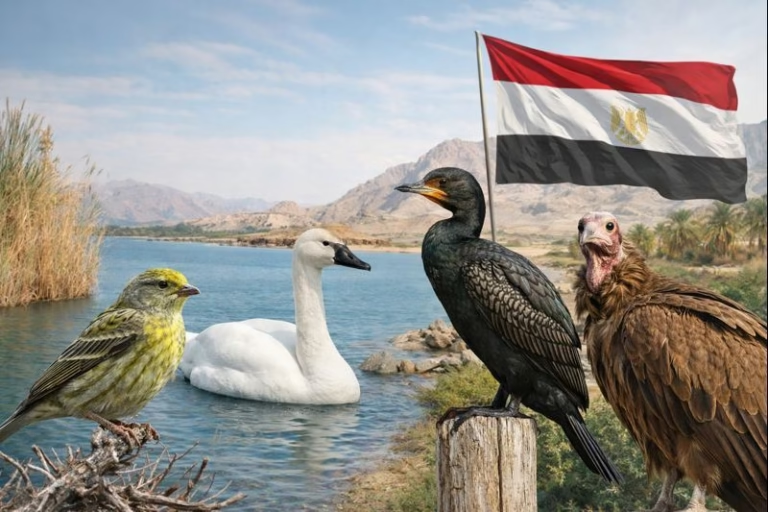
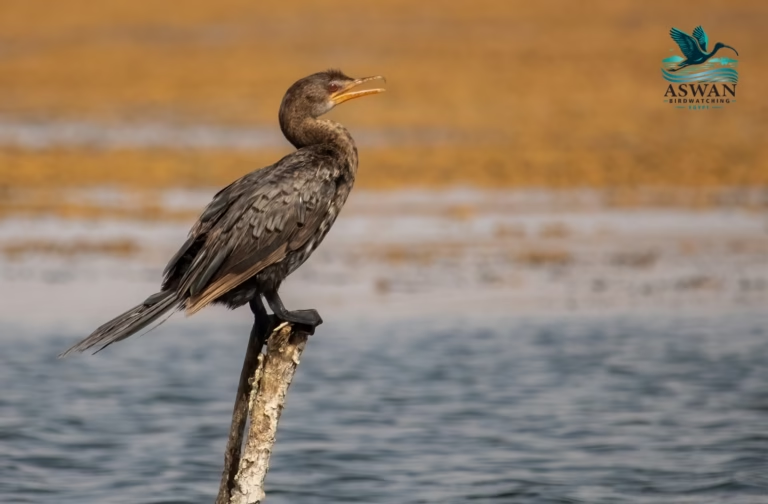
The records discussed spanned a wide taxonomic range and included waterfowl such as the Tundra Swan and Reed Cormorant, raptors like the Hooded Vulture, and passerines including the Syrian Serin and the Crimson-rumped Waxbill. Several additional records were also shared that are still under review and yet to be published, offering a glimpse into discoveries still making their way through the scientific process.
Voices Behind the Discoveries
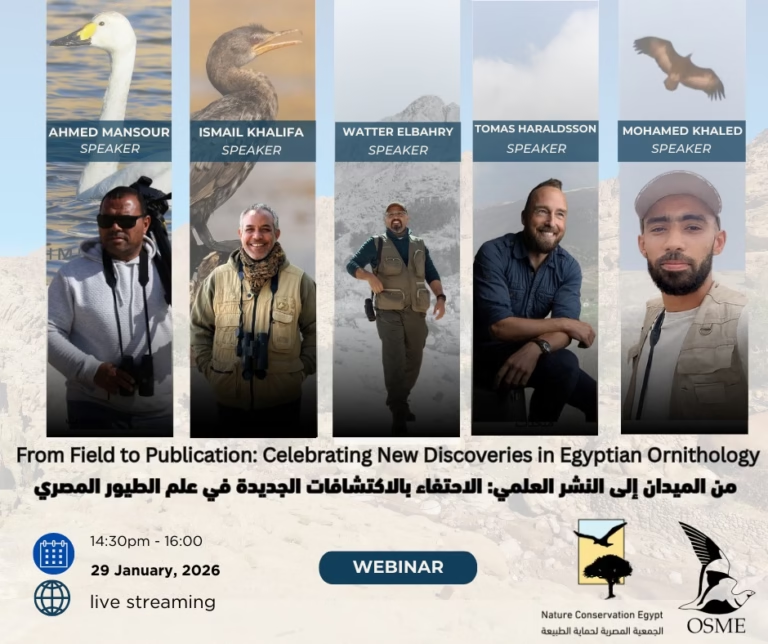
Behind every rare record and published paper stands a story of patience, sharp observation, and countless hours in the field. The speakers in this session represent a new generation of Egyptian ornithologists and field birders who have successfully bridged the gap between birdwatching and scientific research.
Through their diverse backgrounds, ranging from professional research and environmental assessment to local guiding and wildlife photography, they demonstrated how individual effort, when supported by training and collaboration, can lead to discoveries of national and international importance.
The webinar was moderated by the talented representer Amar El Kady, NCE communication officer.
Watter AlBahry (Syrian Serin – Sinai)
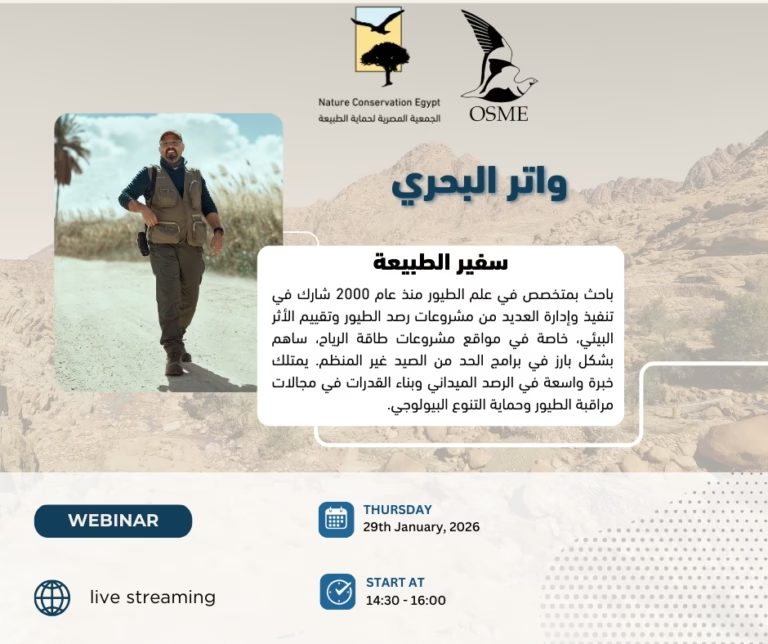
A researcher specializing in ornithology since 2000, Watter AlBahry shared insights from his extensive experience in bird monitoring and environmental impact assessment projects, particularly at wind energy sites. His work has played an important role in combating illegal hunting in Egypt through systematic monitoring. During the webinar, his presentation on the Syrian Serin in Sinai underscored the value of long-term expertise, structured surveys, and capacity building in advancing both conservation and science.
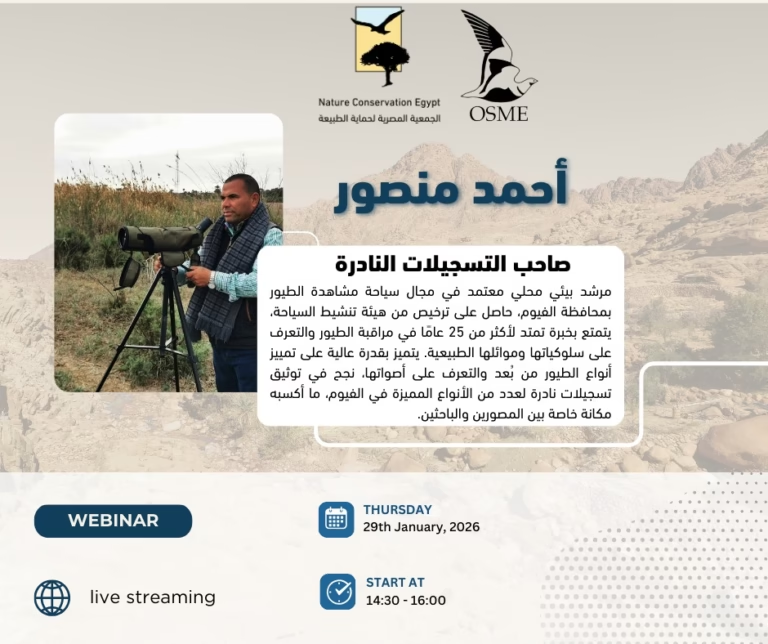
Ahmed Mansour (Tundra Swan – Fayoum)
Representing Fayoum, Ahmed Mansour presented the exceptional record of the Tundra Swan. As a certified local eco-guide licensed by the Tourism Promotion Authority, Ahmed brings over 25 years of birdwatching experience and deep knowledge of bird behavior and habitats. Renowned for his ability to identify birds both visually and by sound, he has documented several rare species in Fayoum, earning widespread respect among birders and researchers. His story highlighted how local expertise can lead to records of international significance.
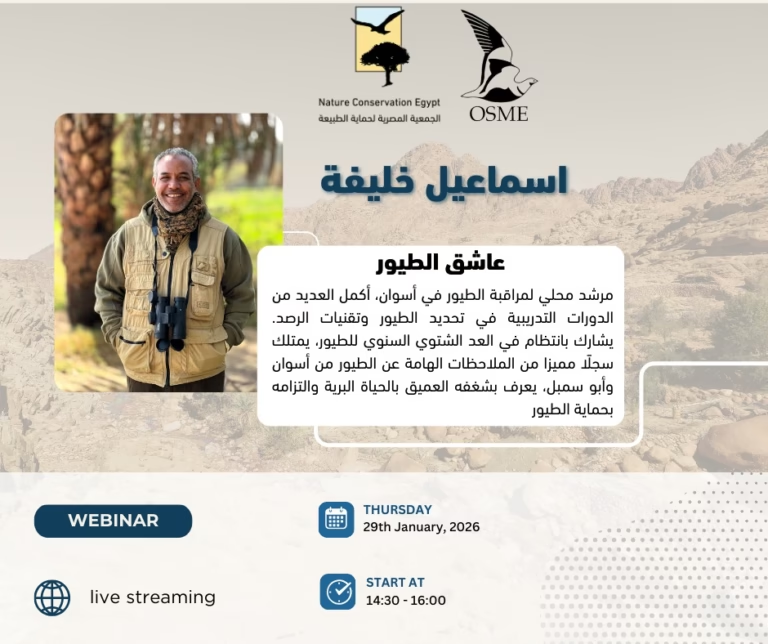
Ismael Khalifa (Reed Cormorant – Aswan)
Based in Aswan, Ismael Khalifa shared a compelling journey from guided birdwatching to high-impact scientific documentation. Having completed multiple training courses in bird identification and survey techniques supported by OSME and NCE, and participating annually in the Winter Bird Count since 2021, Ismael has been at the forefront of several national firsts.
He was the first Egyptian birder to record the Reed Cormorant and the Crimson-rumped Waxbill on Lake Nasser, contributed to the first national record of the Village Weaver, and helped confirm the first breeding record of the Reed Cormorant after more than 120 years. His records have appeared in Dutch Birding, demonstrating how local observations, when rigorously documented, can reach the highest levels of international ornithology.
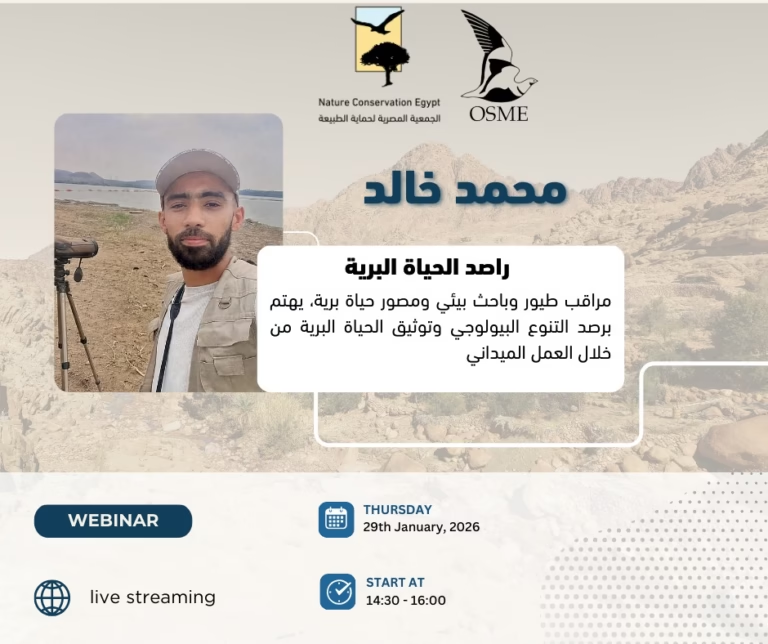
Mohamed Khaled (Hooded Vulture – Red Sea)
From the Red Sea region, Mohamed Khaled presented his work on the Hooded Vulture. A birdwatcher, environmental researcher, and wildlife photographer, Mohamed focuses on biodiversity monitoring through fieldwork and visual documentation. His contribution emphasized the importance of integrating photography, research, and conservation awareness in documenting sensitive and declining species.
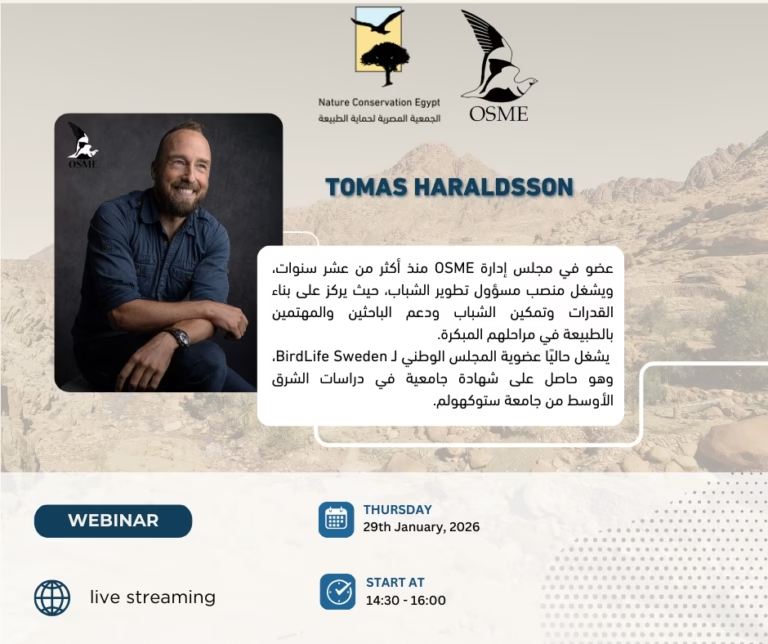
Supporting the Next Generation
The session was further enriched by the participation of OSME’s Youth Development Officer, Tomas Axén Haraldsson, who outlined OSME’s ongoing support for young researchers and birders. He highlighted opportunities in training, research collaboration, and scientific publication, reinforcing the message that strong institutions and mentorship are key to sustaining scientific progress.
The webinar was both a celebration and a statement of intent. It showcased how Egypt’s ornithological community is increasingly bridging the gap between field observations and peer-reviewed science. More importantly, it demonstrated that with training, collaboration, and dedication, local birders and researchers can contribute meaningfully to global knowledge and conservation.
Indeed, it has been a year full of achievements, for Egyptian ornithology, for scientific publication, and for the growing community that continues to turn moments in the field into lasting scientific records.
Pingback: Top 10 Extraordinary Bird Records in Aswan