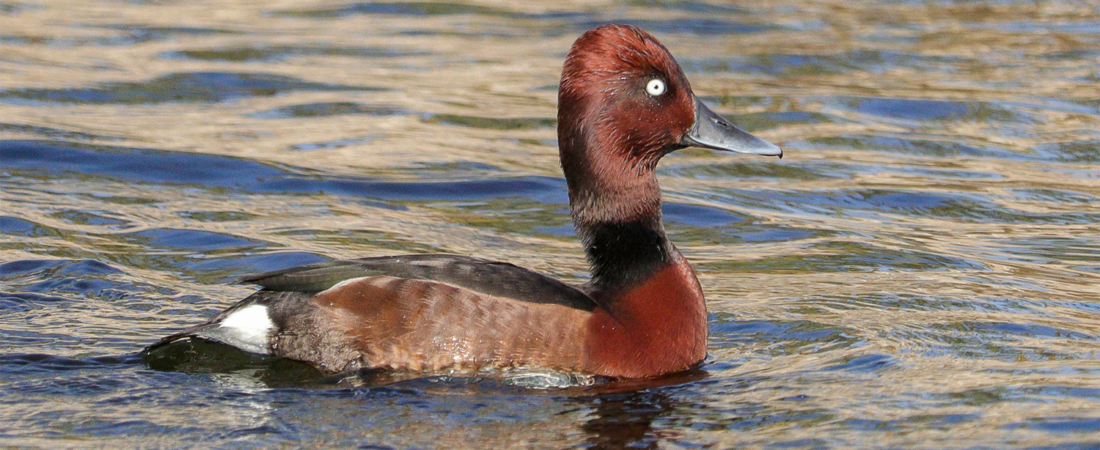
Some birds announce their presence with bright colors or loud calls. The Ferruginous Duck (Aythya nyroca) does neither. It quietly glides across the water, dives beneath the surface without a splash, and often disappears into the reeds before most people even notice it.
Yet this elegant diving duck has become one of my favorite birds to show visitors on birdwatching trips in Aswan. Behind its modest appearance lies a fascinating story of migration, survival, and adaptation.
Here are ten facts that make the Ferruginous Duck one of the Nile’s most remarkable waterbirds.
1. It Isn’t Just Another Brown Duck
At first glance, many people overlook the Ferruginous Duck because of its rich brown plumage. But take a closer look, and you’ll discover one of the most elegant ducks in the Western Palearctic.
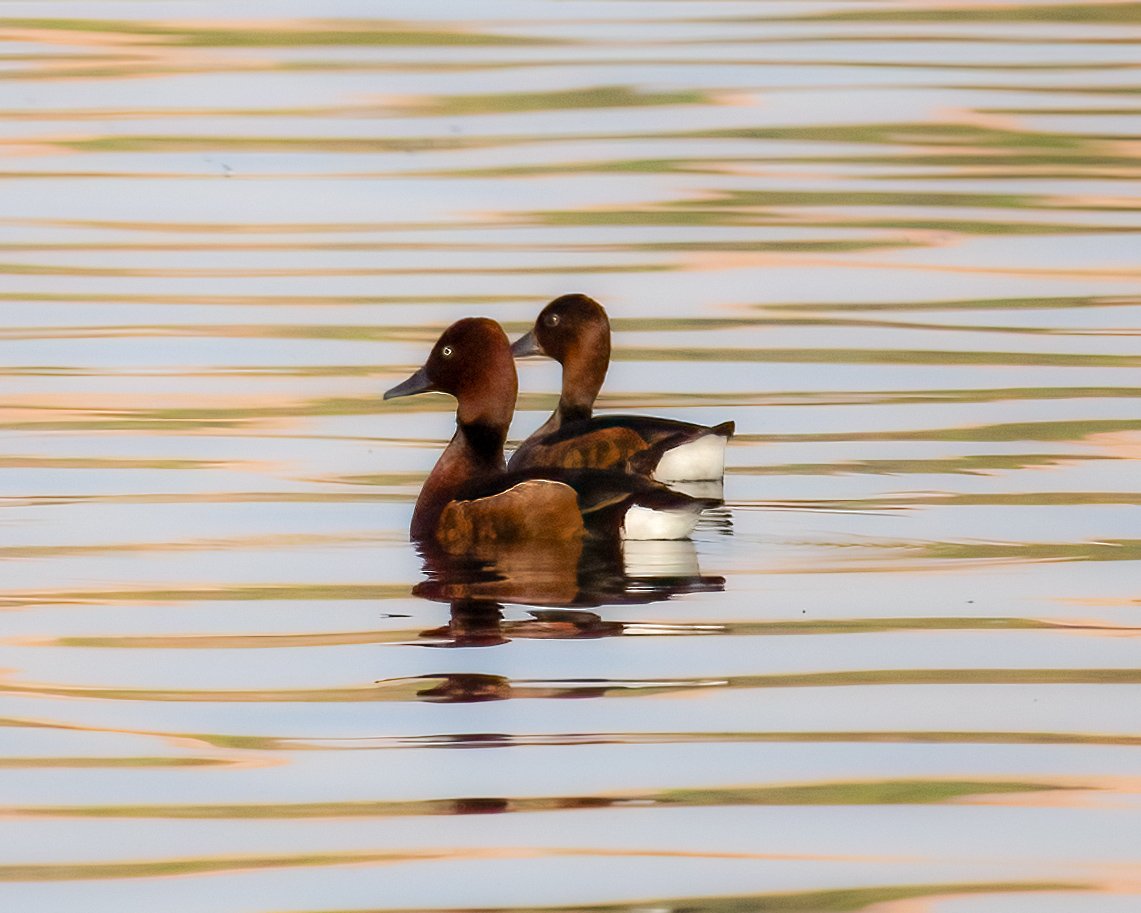
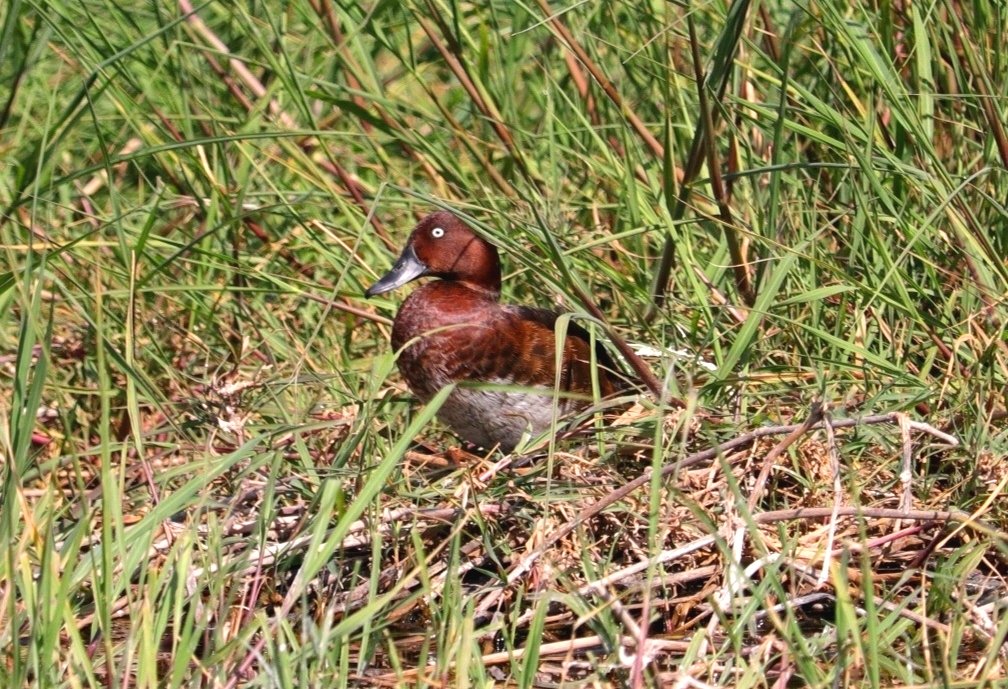
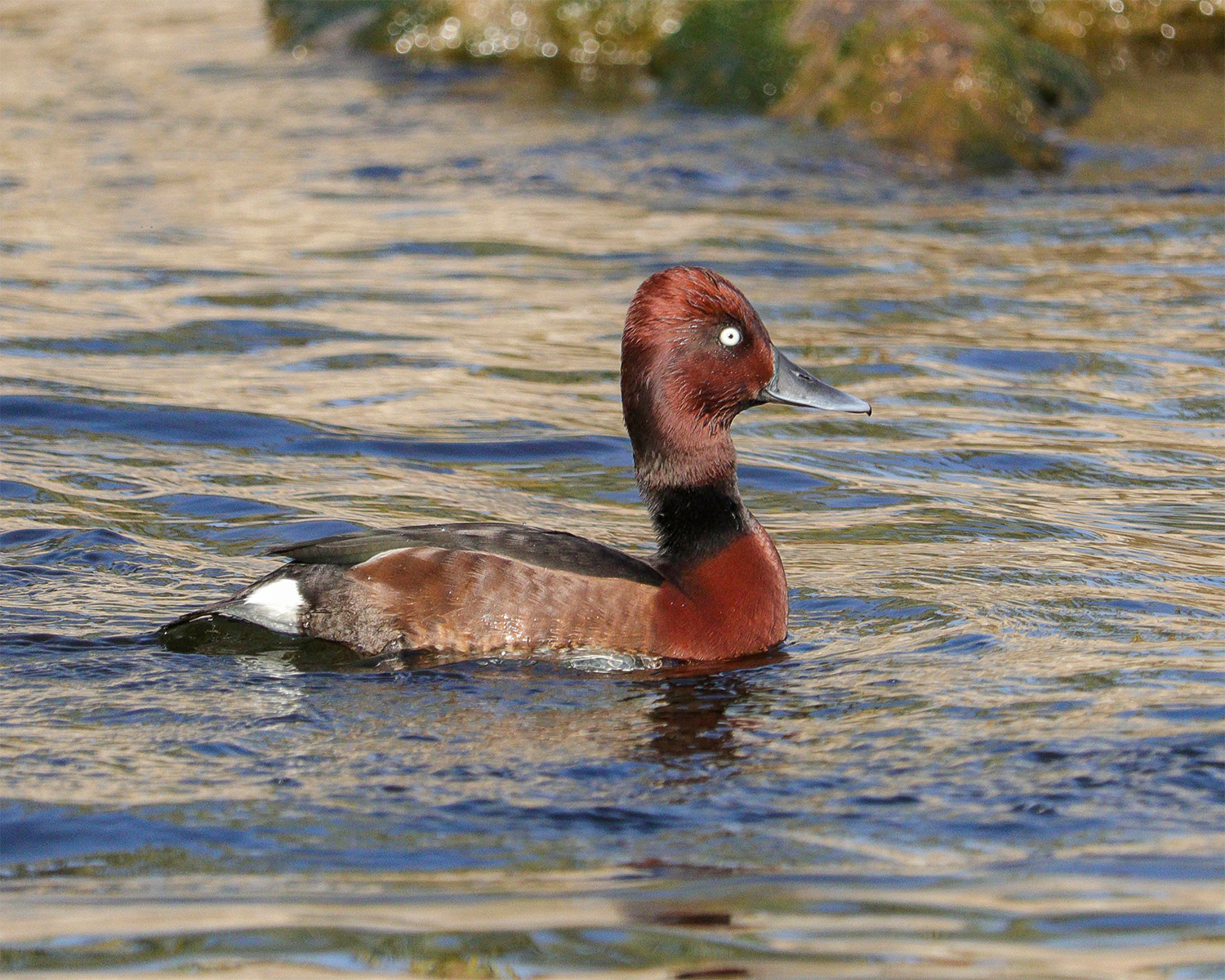
The adult male wears deep chestnut feathers that glow in the early morning sunlight, while its brilliant white eye creates a striking contrast. Add the clean white undertail and broad white wing panels visible in flight, and it becomes a truly unforgettable bird.
2. It’s a Diving Duck, Not a Dabbling Duck
Unlike Mallards and many familiar ducks that feed by tipping forward, the Ferruginous Duck searches for food underwater.
It dives with remarkable ease, feeding on aquatic plants, seeds, insects, mollusks, and small crustaceans hidden beneath the surface.
Watching one disappear beneath the Nile and resurface several meters away never gets old.
3. Ferruginous Duck Has Become a Resident Breeder in Aswan
Perhaps the most exciting recent development for birdwatchers in southern Egypt is that the Ferruginous Duck is no longer just a winter visitor.
In recent years, the species has established itself as a resident breeder in Aswan, with breeding confirmed in suitable wetlands along the Nile. Seeing adults accompanied by tiny ducklings has become one of the highlights of the local birding calendar.
This change highlights the importance of Aswan’s healthy freshwater habitats and demonstrates that the region now supports the species throughout the year.
4. It Travels Across Continents
Although Aswan now has breeding birds, much of the global population still migrates incredible distances.
Ferruginous Ducks breed across Central and Eastern Europe and western Asia before many individuals travel south to spend the winter in North Africa, the Middle East, and parts of Africa.
For migratory birds, the Nile Valley remains one of nature’s great highways.
5. It Prefers Peace and Quiet
If you’re searching for Ferruginous Ducks, don’t expect to find them in busy waterways.
They prefer calm lakes, reedbeds, sheltered bays, and quiet backwaters where disturbance is minimal.
Patience is often rewarded with close views of these shy birds.
6. It Has One of the Brightest Eyes Among European Ducks
One feature immediately catches every birdwatcher’s attention: the male’s dazzling white iris.
In the soft light of sunrise, the eye almost seems to glow, making identification surprisingly easy even from a considerable distance.
It’s one of the species’ most distinctive field marks.
7. Ferruginous Duck Is Near Threatened Worldwide
Despite its beauty, the Ferruginous Duck faces significant conservation challenges.
Wetland drainage, pollution, habitat loss, and illegal hunting have caused declines across much of its range.
The species is currently classified as Near Threatened on the IUCN Red List, making the protection of wetlands like those in Aswan more important than ever.
8. It Is Surprisingly Secretive
Ferruginous Ducks are experts at avoiding attention.
Rather than gathering in large, noisy flocks, they often remain hidden among reeds or quietly feed away from other waterfowl.
Many birdwatchers pass by without realizing they’re there.
Sometimes, the only clue is a ripple on the water before a duck suddenly surfaces nearby.
9. Early Morning Is the Best Time to Find One
If you want to see the Ferruginous Duck at its best, wake up early.
Just after sunrise, the Nile is calm, the light is golden, and the ducks are actively feeding.
The chestnut plumage reflects beautifully in the still water, creating unforgettable opportunities for bird photography.
10. It Represents Everything That Makes Aswan Special
The Ferruginous Duck tells a much bigger story than one bird species.
Its successful breeding in Aswan reflects the value of the region’s islands, reedbeds, and freshwater wetlands. It reminds us that the Nile is not only one of the world’s great rivers but also an internationally important refuge for wildlife.
Every time I guide visitors along the Nile and we find a Ferruginous Duck quietly swimming among the reeds, I see the same reaction—a smile, followed by silence as everyone simply enjoys the moment.
Some birds impress you with drama.
The Ferruginous Duck wins you over with elegance.