
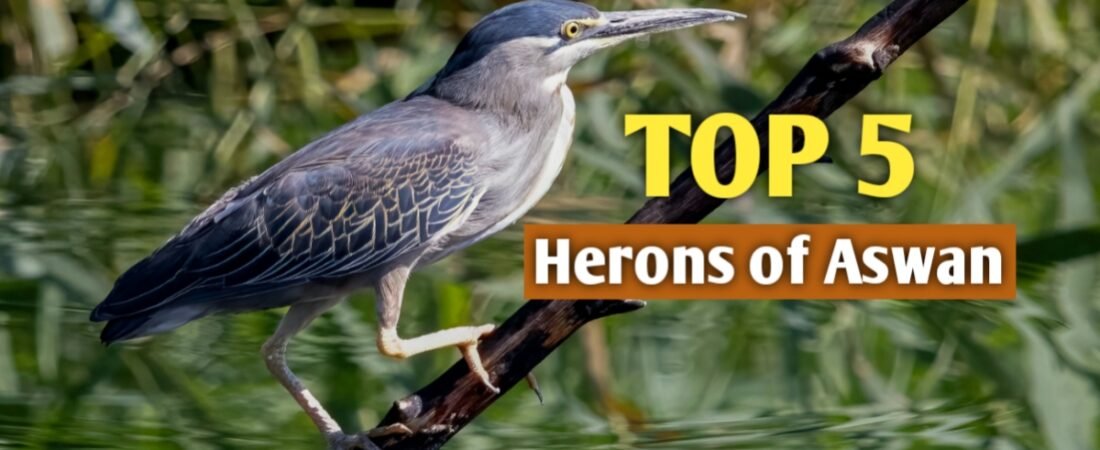
There’s a bird on the Nile that most visitors walk right past without ever noticing — not because it’s rare, but because it’s a master of not being seen. Hunched at the water’s edge, motionless for minutes at a time, blending perfectly into wet rock and tangled reed roots, the Little Heron (Butorides striata) is one of Aswan’s quietest residents, and one of its most rewarding to actually find.
Here are ten facts that make this small, patient hunter far more interesting than its unassuming looks let on.
1. It’s smaller than it looks in photographs
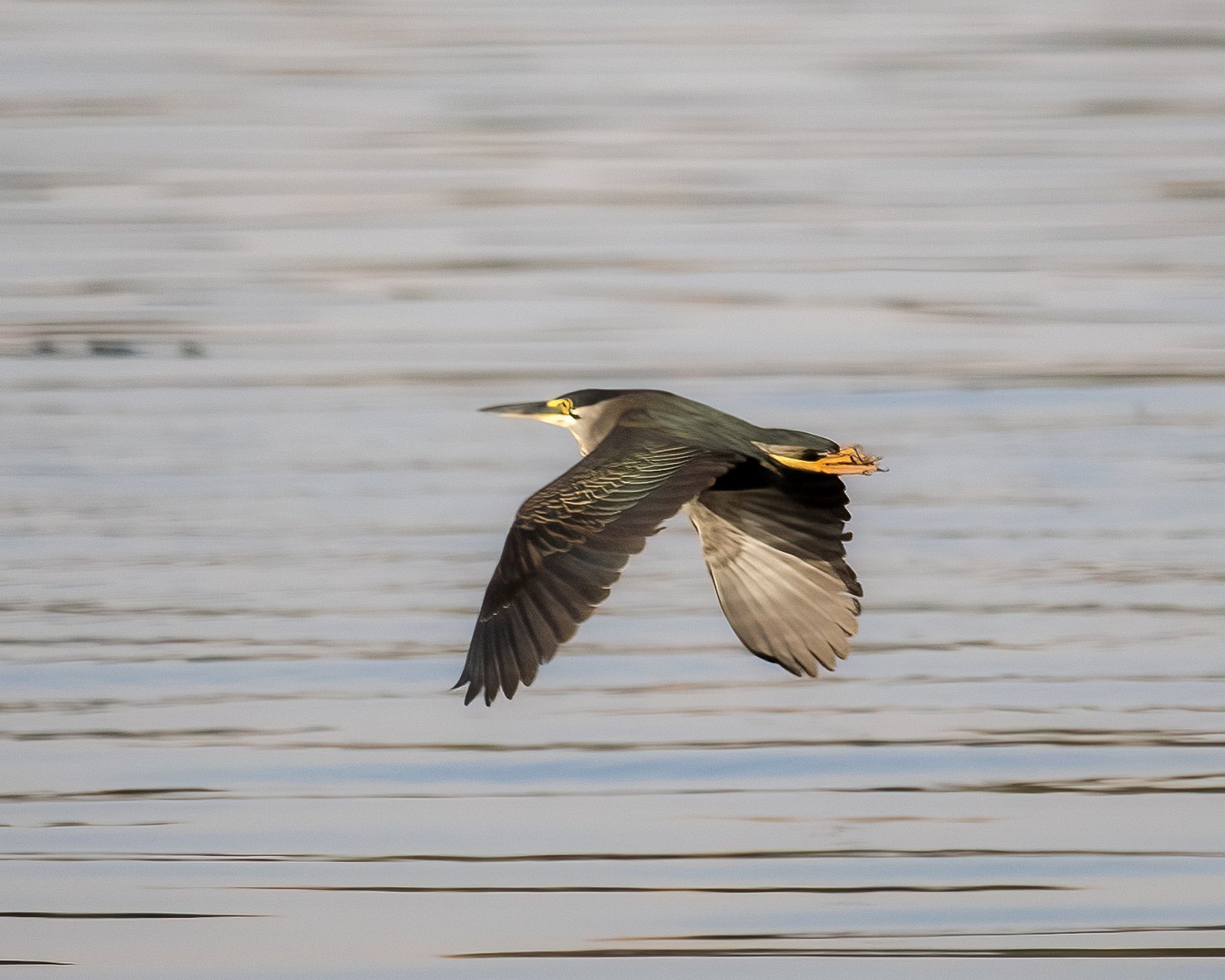
Standing at around 16 inches tall, the Little Heron is compact and hunched by nature, which makes it look even smaller in the field than its measurements suggest. Compared to the Purple Herons and Grey Herons that share its habitat, it’s almost easy to dismiss at a glance — until you notice the intensity in its eyes.
2. It’s part of a truly global family
The Little Heron belongs to the genus Butorides, a small group of closely related herons found on nearly every continent. Its closest relatives are the Green Heron of North America and the Striated Heron of South America — in fact, for decades, ornithologists considered all of these populations to be a single species.
Recent genetic research has since split them apart, but the family resemblance, and the shared hunting style, remains unmistakable. If you’ve ever watched a Green Heron stalk a pond edge in the US, you’ve essentially watched this bird’s cousin.
3. It’s one of the very few birds known to use tools
This is where the Little Heron stops being just another quiet heron and becomes genuinely remarkable. Individuals in this family have been documented deliberately dropping small objects — a feather, an insect, a piece of bread — onto the water’s surface to lure fish within striking distance. It’s a form of bait fishing, and it places the Little Heron among a very short list of bird species known to use tools in the wild.
4. It hunts by ambush, not pursuit
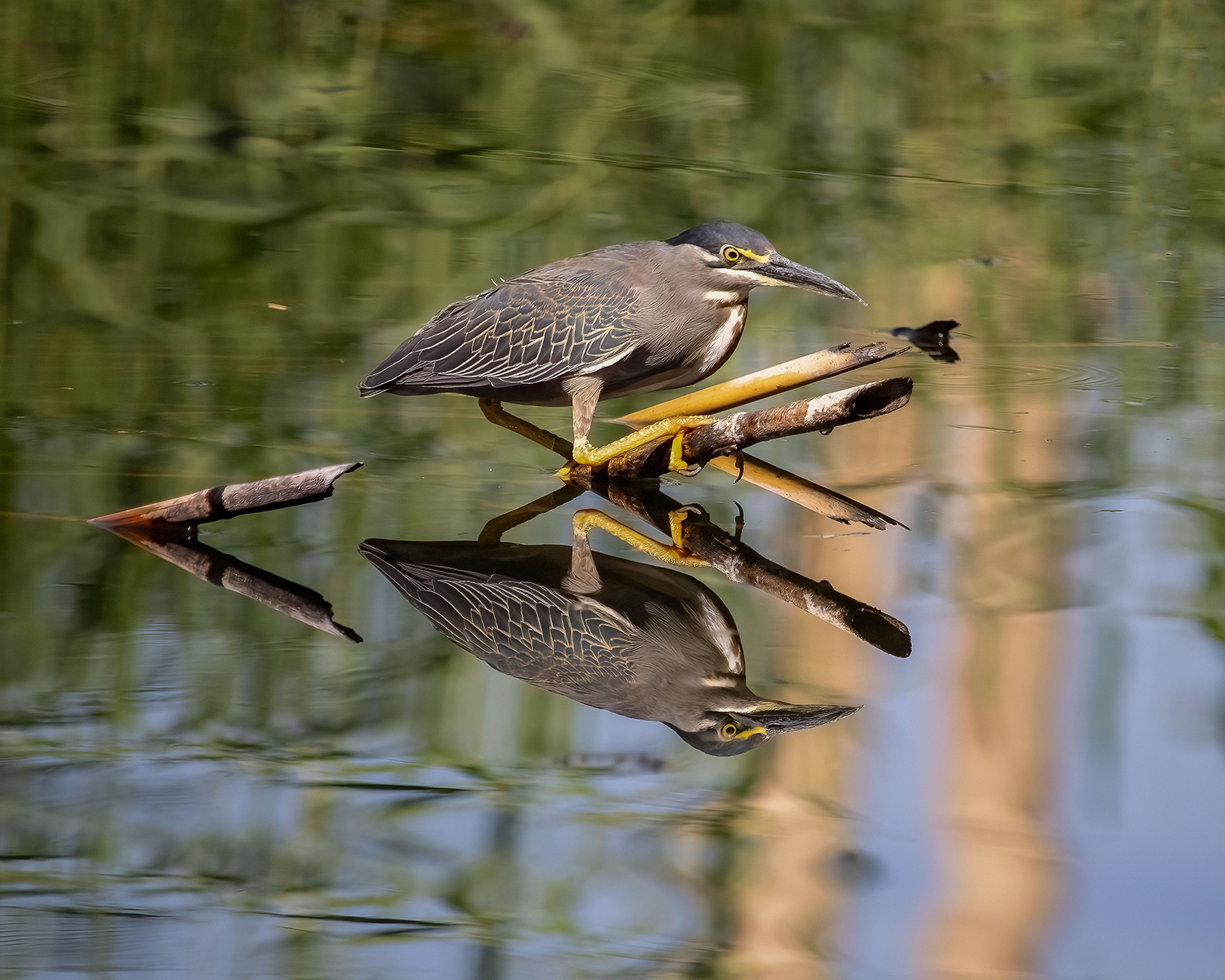
Unlike herons that wade actively through shallow water, the Little Heron favors a sit-and-wait strategy. It will crouch low at the water’s edge, sometimes for many minutes without a single movement, before striking with a lightning-fast lunge of the neck. Patience is the entire hunting strategy.
5. Its diet is surprisingly varied
Small fish make up the bulk of its diet, but the Little Heron is an opportunist — insects, crustaceans, and small amphibians are all fair game. Along the rocky margins of the Nile at Aswan, it takes full advantage of the small fish and invertebrates that shelter among the submerged stones.
6. It is a genuine breeding resident of Aswan
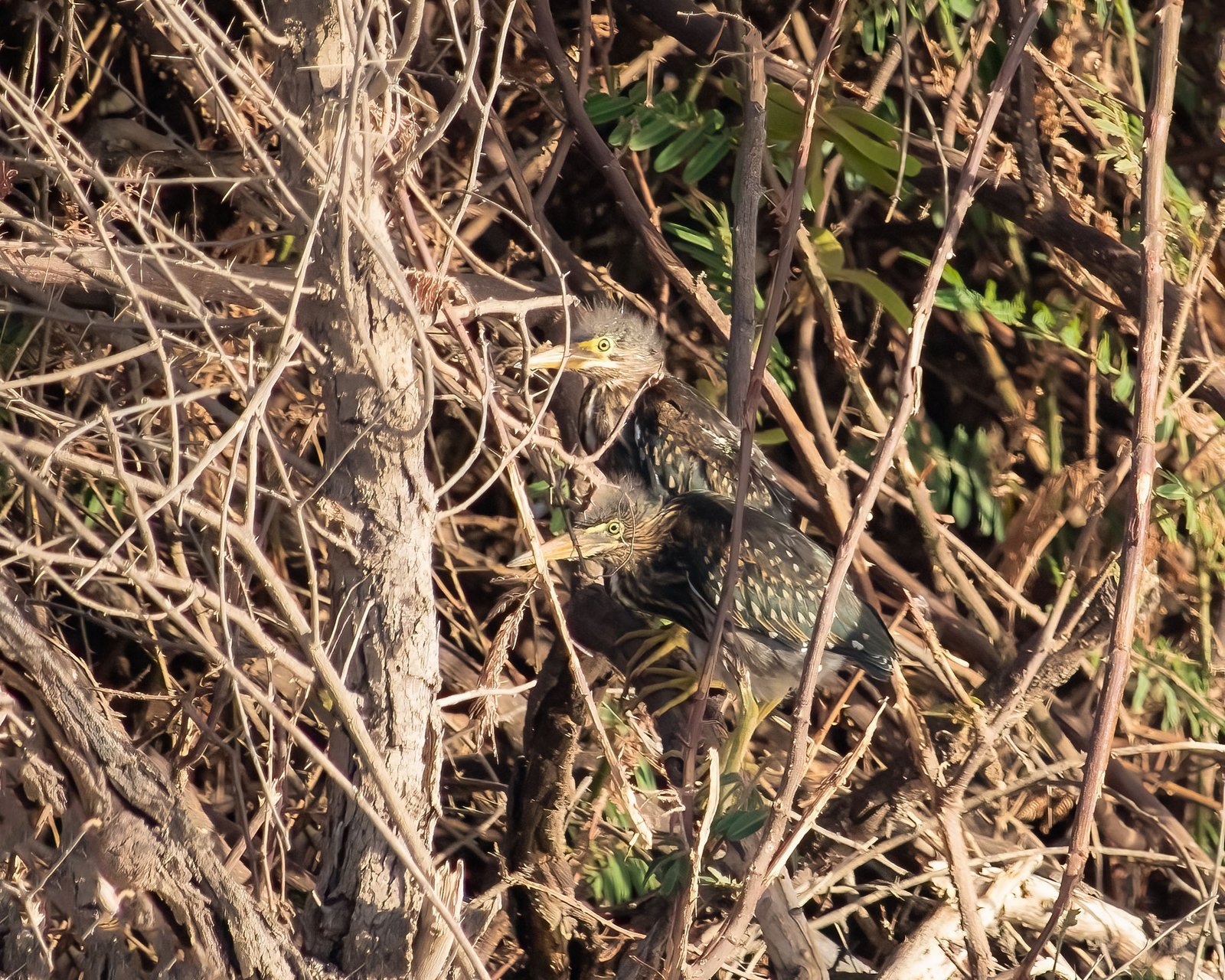
This is one of the most exciting facts for local birders: the Little Heron is not just a visitor to Aswan — it breeds here. Pairs build a simple platform nest of sticks, tucked into low shrubs or reed cover close to the water, and raise their young directly on the Nile’s islands and quiet shorelines.
Confirming breeding in the field is one of the most satisfying parts of guiding on the Nile, and it’s exactly what happened when Ismael Khalifa photographed Little Heron chicks on one of Aswan’s river islands — a direct, documented record of successful breeding right here on the water we guide every week.
7. It has excellent night vision for low-light hunting
While most active at dawn and dusk, the Little Heron is well equipped to keep hunting well after the light fades. Its large eyes are adapted for low-light conditions, allowing it to continue ambushing prey during the dim hours when many other waterbirds have already gone quiet.
On the Nile, this means a patient observer lingering into last light may catch this heron still working the water’s edge long after the more conspicuous herons have settled in for the night.
8. Both parents share the workload
Little Heron pairs share incubation duties, typically for around three weeks, and both adults continue to feed the chicks after hatching. It takes roughly another three weeks before the young birds are ready to fledge — a long, vulnerable stretch during which the adults rarely stray far from the nest site.
9. Its camouflage is genuinely exceptional
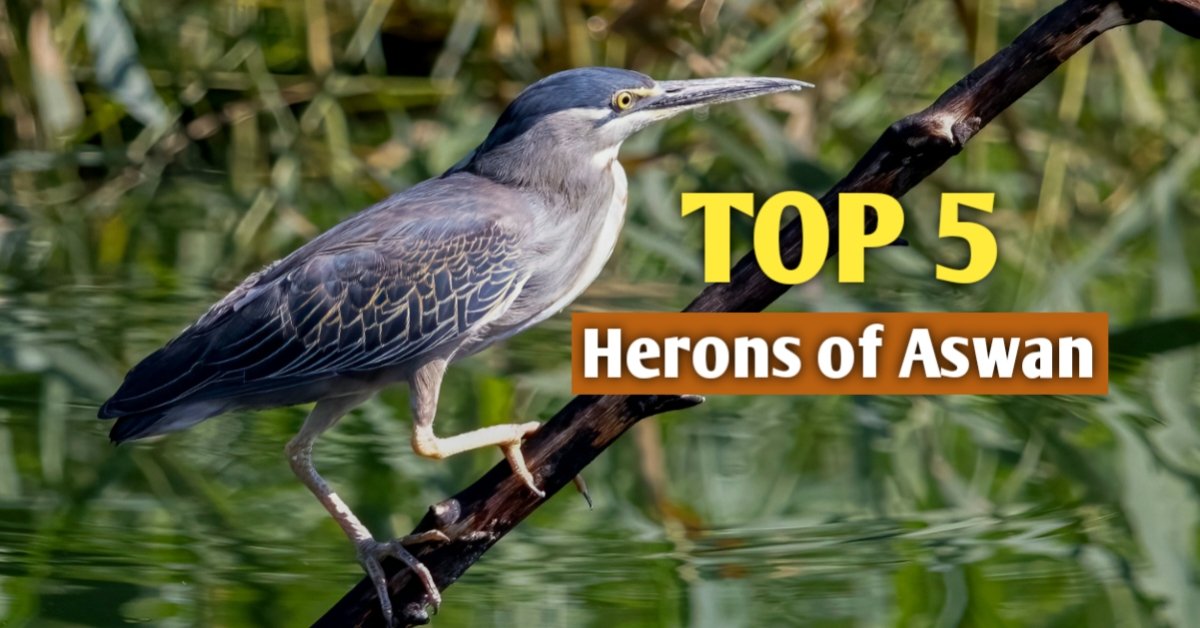
The Little Heron’s streaked, muted plumage isn’t just attractive — it’s a near-perfect match for the mottled light and shadow of wet rock, reed stems, and riverbank debris. Even experienced birders often locate this species by catching a flicker of movement rather than spotting the bird outright. It rewards a slow, quiet approach far more than it rewards a quick scan.
10. It’s a small bird with a big lesson for visiting birders
More than almost any other species on the Nile, the Little Heron teaches patience. It won’t reveal itself to a boat moving quickly or a birder scanning in a hurry. But slow down, watch the quiet margins where rock meets water, and it has a way of appearing exactly where you’d least expect it — a reminder that some of the Nile’s best encounters go to those willing to simply wait.
Want to see the Little Heron for yourself? Join Ismael Khalifa on a guided birding trip along the Nile in Aswan, where quiet, patient hunters like this one are part of the everyday magic of the river.