Last August, I joined a truly special birding trip, one I’ll never forget. I had the honor of accompanying some talented Egyptian wildlife photographers on a two-day birding and photography journey to Lake Nasser, near Abu Simbel.
Our little crew Ahmed Daoud, Noha Mohie, Mahmoud Elshamy, and myself (Ismael Khalifa) set off with our cameras, binoculars, and that familiar mix of hope and excitement that every birder knows before an adventure.
We didn’t know it then, but this two-day adventure would later be remembered as what I now call “the trip of blessings.”
Day One: On the Land, Chasing Light and Possibilities
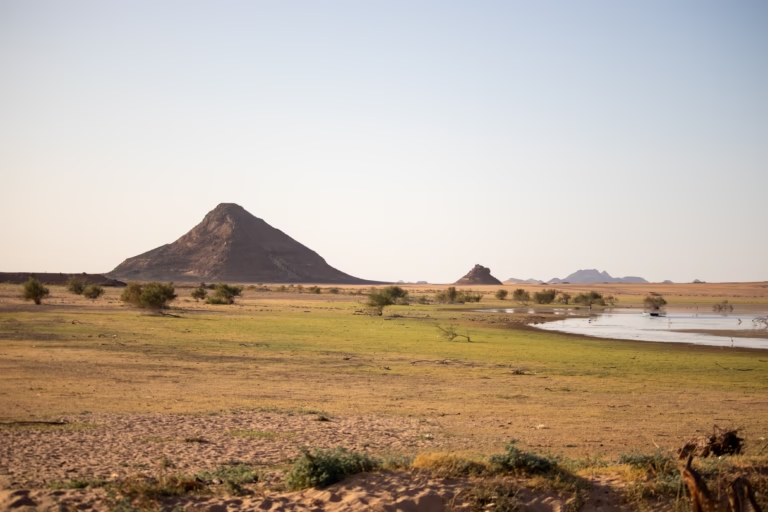
We reached Abu Simbel about two hours before sunset, just in time to enjoy the soft golden light settling over the desert and the lake. Without wasting a minute, we grabbed our gear and started our first birding session, a land-based walk near the lake’s edge.
That evening felt full of promise. In less than an hour, we managed to spot three of our target species: a graceful Yellow-billed Stork, standing tall and elegant in the fading light, a Kittlitz’s Plover darting along the shoreline, quick and alert,
and, right before dusk, a Reed Cormorant flying overhead.
By the time we wrapped up, the sky had turned deep blue and the stars began to take over. We headed back for the night, tired but excited for what awaited us the next morning.
Day Two: A Historic Discovery on Lake Nasser
The next morning began early, with the soft light of dawn spilling across Lake Nasser. Our boat glided quietly over the still water, the temples of Abu Simbel standing majestically in the distance. It was one of those calm, silent mornings when everything feels in perfect balance: light, wind, and water.
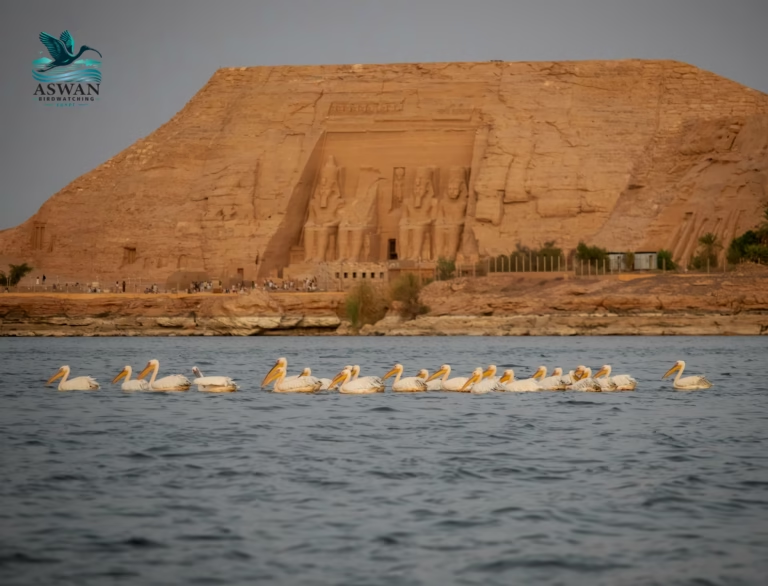
As we sailed our first few meters away from the city, a flock of Great White Pelicans glided gracefully across the lake, their wide wings glowing in the golden morning light. Behind them, the temples of Abu Simbel rose in silent majesty.
Such a scene can’t be witnessed every day — it was a perfect shot. That photograph captured the very soul of the trip: Egypt’s ancient wonder blending seamlessly with the wild freedom of its living nature.
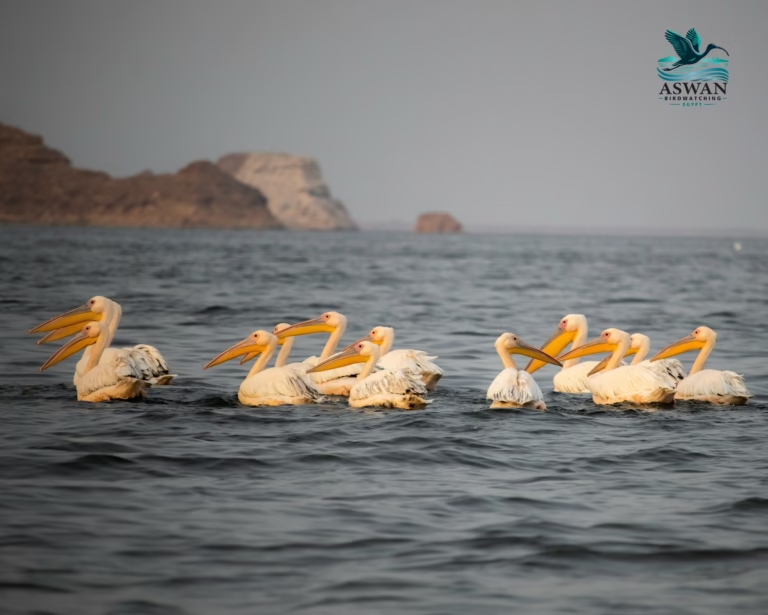
That breathtaking moment felt like a sign — as if the lake itself was welcoming us.
The pelicans’ peaceful presence, framed by the ancient temples, gave us a rush of optimism. It was as though nature was whispering that luck was on our side, and that more wonders were waiting just ahead.
The scene filled us with quiet confidence and joy — the kind of feeling that turns a good trip into an unforgettable one.
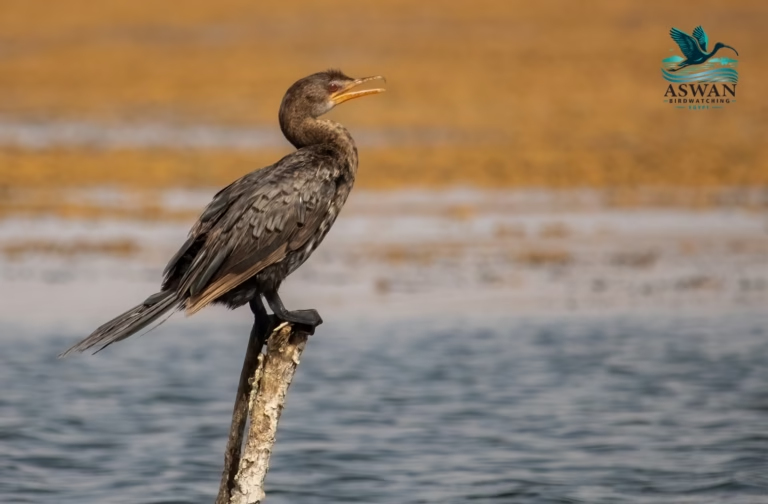
We sailed for a while, scanning the shoreline for any movement. Then our eyes caught something unusual on a small reed island nearby. From a distance, I could see a Black Kite perched on a branch at the far right corner of the island. But wait — there were also a few dark shapes that looked suspiciously like Reed Cormorants scattered around the area.
Our main target that morning was actually the Village Weaver. So, we hesitated for a moment — should we continue toward the weavers’ colony, which I had already visited several times since January, or change course to check out those small, dark birds on the reed island?
After a quick discussion, curiosity won. We turned the boat and headed toward the green little island. As we drew closer, the view became clearer — and there was no doubt anymore. Several Reed Cormorants (Microcarbo africanus) were moving in and out of the vegetation.
At first, we assumed they were just resting.
But then… we noticed something different. They weren’t just resting.
They were nesting.
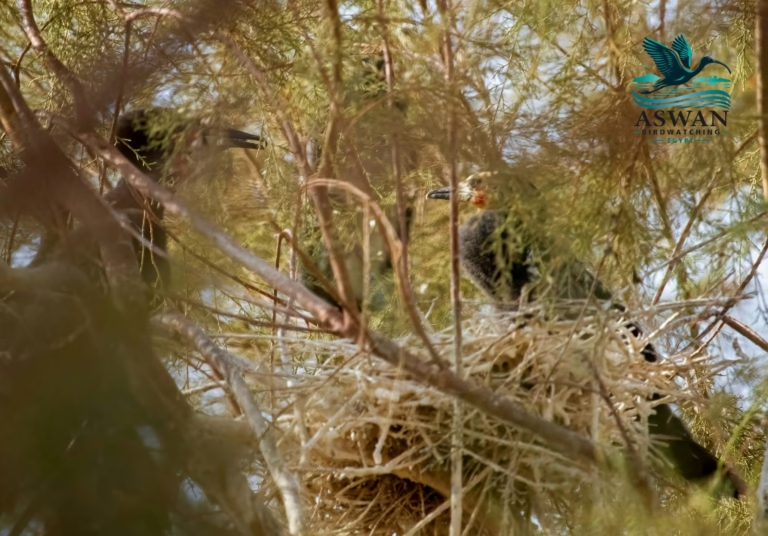
We had just documented the first confirmed breeding of Reed Cormorants in Egypt in over a century — a once-in-a-lifetime ornithological discovery. Wow!
It was impossible not to feel overwhelmed. The realization that we were witnessing history — and capturing it through our lenses — was beyond anything we could’ve hoped for.
You can read more about the sightings of Reed Cormorant here: The First in a Century: Breeding Record for Reed Cormorant in Egypt: (https://aswanbirdwatching.com/the-first-in-a-century-breeding-record-for-reed-cormorant-in-egypt/)
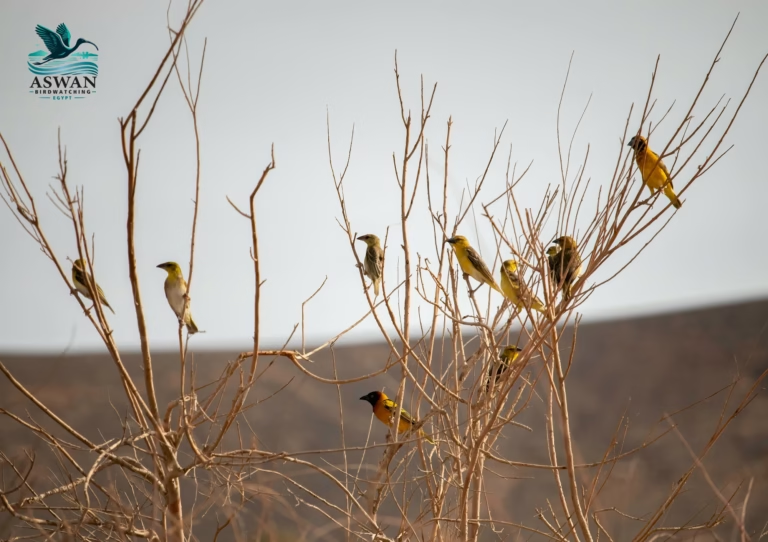
We also encountered the Village Weaver, one of Africa’s most fascinating birds and our main target for the whole lake trip. Watching these yellow architects was mesmerizing.
That evening, as the sun set over the lake, we sat on deck reviewing photos and sipping tea, smiling quietly — a mix of disbelief and pure happiness.
Still Day Two: A Record-Breaking Flock of Crimson-Rumped Waxbills
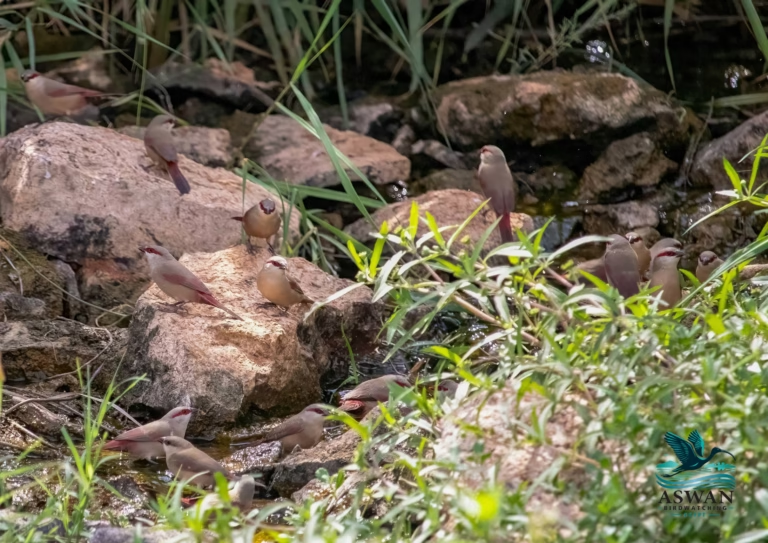
As if one record-breaking sighting wasn’t enough, the lake had more surprises for us. Later that same day, in a tranquil bay surrounded by reeds, we came across a flock of 17 Crimson-rumped Waxbills — the largest group ever recorded in Egypt!
Only two or three individuals had been seen in my personal earlier sightings. Seeing 17 together felt like a reward from nature itself: https://aswanbirdwatching.com/exclusive-crimson%e2%80%91rumped-waxbills-cooling-off-in-lake-nasser/
Why I Call It “The Trip of Blessings”
When I look back on those two days, I understand why I keep calling it “the trip of blessings.” Everything just aligned: rare birds, good friends, perfect light, and the feeling that nature was truly sharing its secrets with us.
Traveling with such a talented wildlife photographer like Ahmed Daoud was a gift. His calm focus, creative vision, and deep love for Egypt’s wildlife reminded me that bird photography is more than images — it’s storytelling through patience and passion.
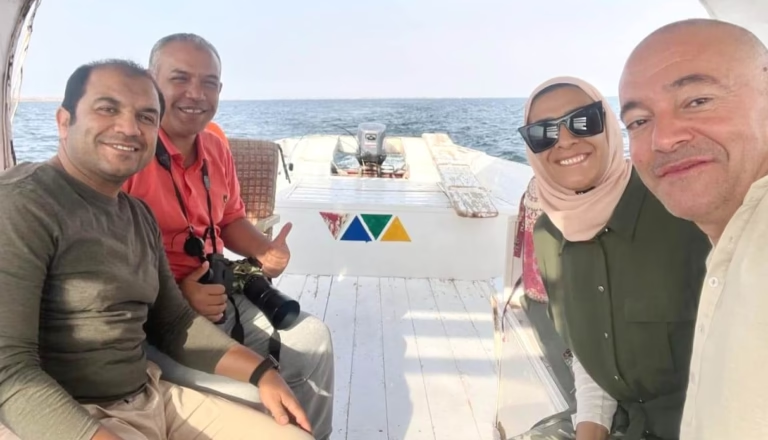
Daoud and his wife Noha were one of the kindest and most peaceful couples I’ve ever traveled with.
Beyond their shared passion for nature and photography, they carried a beautiful sense of calm wherever they went. Between bird sightings, they often sat quietly, simply absorbing the stillness of Lake Nasser — meditating, capturing beautiful shots, and softly praising God for His wonderful creations.
Their presence added a special serenity to the trip, reminding us that birding isn’t only about chasing rare species, but also about finding peace in the beauty of the moment.
When we finally returned to Aswan, we were sunburnt, tired, and completely happy. Our memory cards were full, but our hearts were even fuller.
Abu Simbel had given us an adventure to remember — and one that truly deserved its name: The Trip of Blessings.