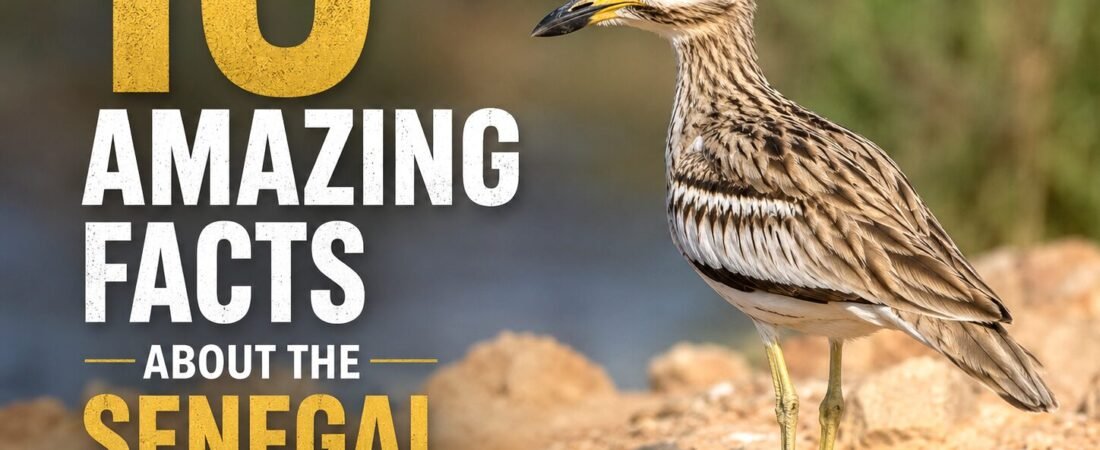
If you’ve spent an evening on the Nile near Aswan, you’ve almost certainly heard the Senegal Thick-knee before you’ve seen it. A long, wailing, almost human cry drifting across the water in the dark — eerie the first time, unmistakable every time after.
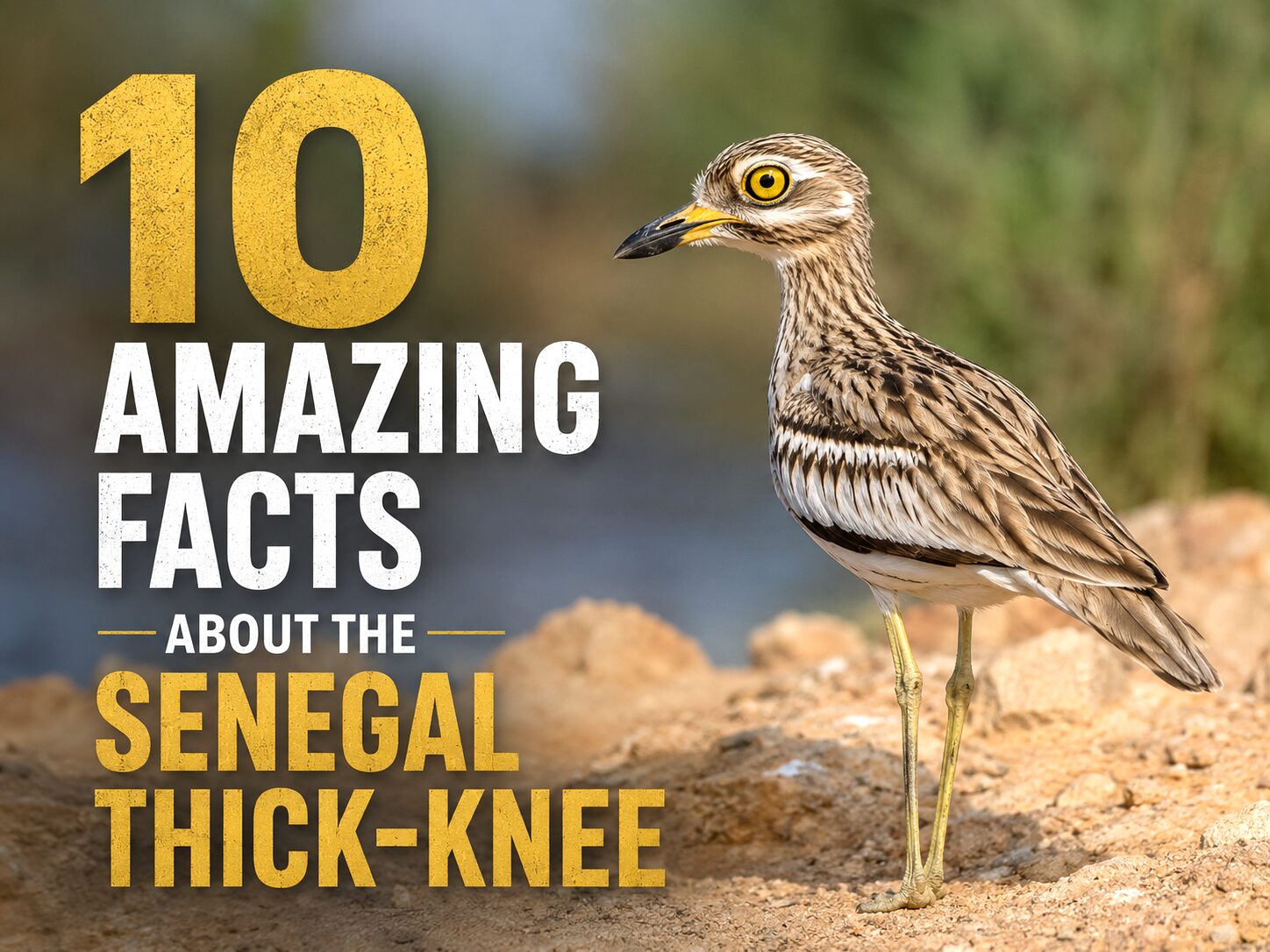
This stocky, big-eyed wader is one of the true characters of Egyptian birding, and it has far more going on beneath its mottled brown plumage than most visitors realise. Here are ten facts that make this bird genuinely fascinating.
1. Its “knee” isn’t a knee at all
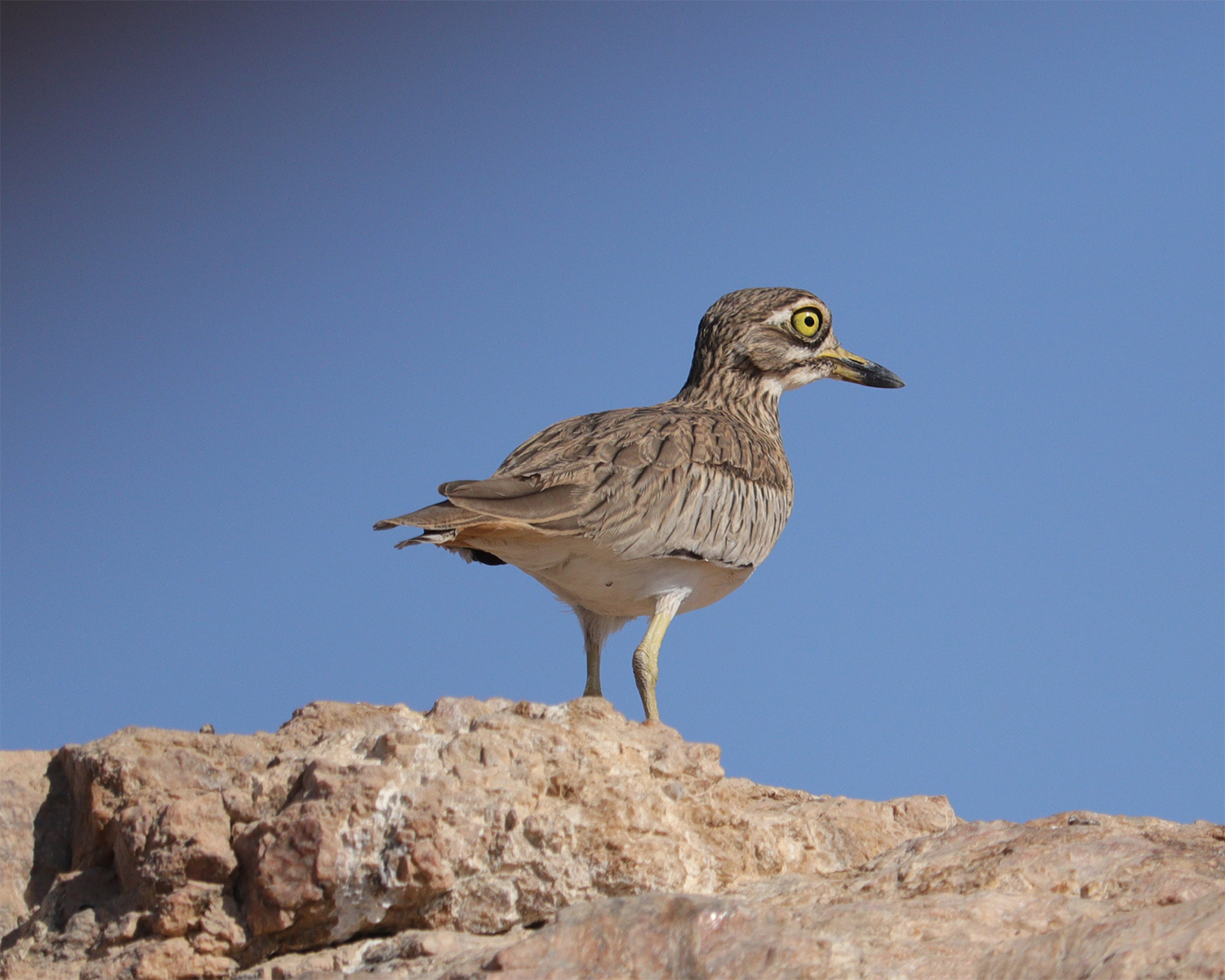
The name “thick-knee” comes from the prominent, swollen-looking joint partway up the bird’s long leg. But here’s the twist: that joint isn’t a knee in the anatomical sense at all — it’s the bird’s ankle (the intertarsal joint). What looks like a knee bulging halfway down the leg is actually where the foot bones meet the lower leg bones. True knees, like ours, are hidden up under the feathers near the body, just as they are in nearly all birds.
2. It has some of the largest eyes, relative to body size, of any wader
Look closely at a Senegal Thick-knee and the first thing you’ll notice is the eyes — enormous, golden-yellow, and almost reptilian in their intensity. This isn’t decorative. The species is overwhelmingly active at dawn, dusk, and through the night, and those oversized eyes are a direct adaptation for low-light hunting, gathering every available photon as the bird stalks insects across darkened riverbanks and fields.
3. It’s nicknamed the “wailing bird” for good reason
The Senegal Thick-knee’s call is one of the most distinctive sounds of the African and Egyptian night: a long series of piercing, almost mournful “pi-pi-pi-pi-pi” notes that can carry remarkable distances over still water. In several African cultures, this haunting vocalisation has earned the bird the evocative nickname “wailing bird” — and once you’ve heard it echo across the Nile at dusk, you’ll understand exactly why.
4. Its eggs are nearly invisible on the ground
Rather than building a nest, the Senegal Thick-knee simply scrapes a shallow depression directly into bare ground, sand, or gravel — and lays two mottled, blotchy brown eggs that blend so completely with the surrounding substrate that even experienced observers can walk within a few metres without spotting them. It’s one of nature’s simplest and most effective camouflage strategies: no elaborate nest, just perfect disguise.
5. Both parents share incubation duties
Unlike many bird species where incubation falls largely to the female, Senegal Thick-knee pairs share the job cooperatively. Both the male and female take turns sitting on the eggs, a partnership that continues into the care of the chicks once they hatch — a relatively unusual level of shared parental investment among waders.
6. The chicks can walk and feed themselves almost immediately
Senegal Thick-knee chicks are what ornithologists call “precocial” — they hatch already covered in down, with their eyes open, and within hours are mobile enough to follow their parents and begin picking at food themselves. This is a dramatic contrast to many garden birds, whose chicks are born blind, featherless, and entirely dependent. For a ground-nesting bird in an environment full of predators, getting your offspring mobile fast is a serious survival advantage.
7. Males perform a curious “knee-knocking” display
During courtship and territorial disputes, Senegal Thick-knees engage in an unusual behaviour that has been described as a “knee-knocking” dance — males posturing and apparently striking their leg joints together as a display of dominance or to attract a mate. It’s an odd and rarely-witnessed piece of behaviour, and another reminder of how much individual character this species carries.
8. It barely needs to migrate at all
Across most of its enormous range — stretching from Senegal and the Gambia in West Africa all the way through the Sahel, Egypt, and East Africa to Kenya and Tanzania — the Senegal Thick-knee is essentially sedentary. Rather than undertaking long migratory journeys, it makes only small local movements, typically shifting in response to changing water levels or seasonal food availability. The Nile population around Aswan is present and visible year-round, which is one of the reasons it has become such a reliable highlight on local birding boat trips.
9. It’s a master of “freeze and disappear”
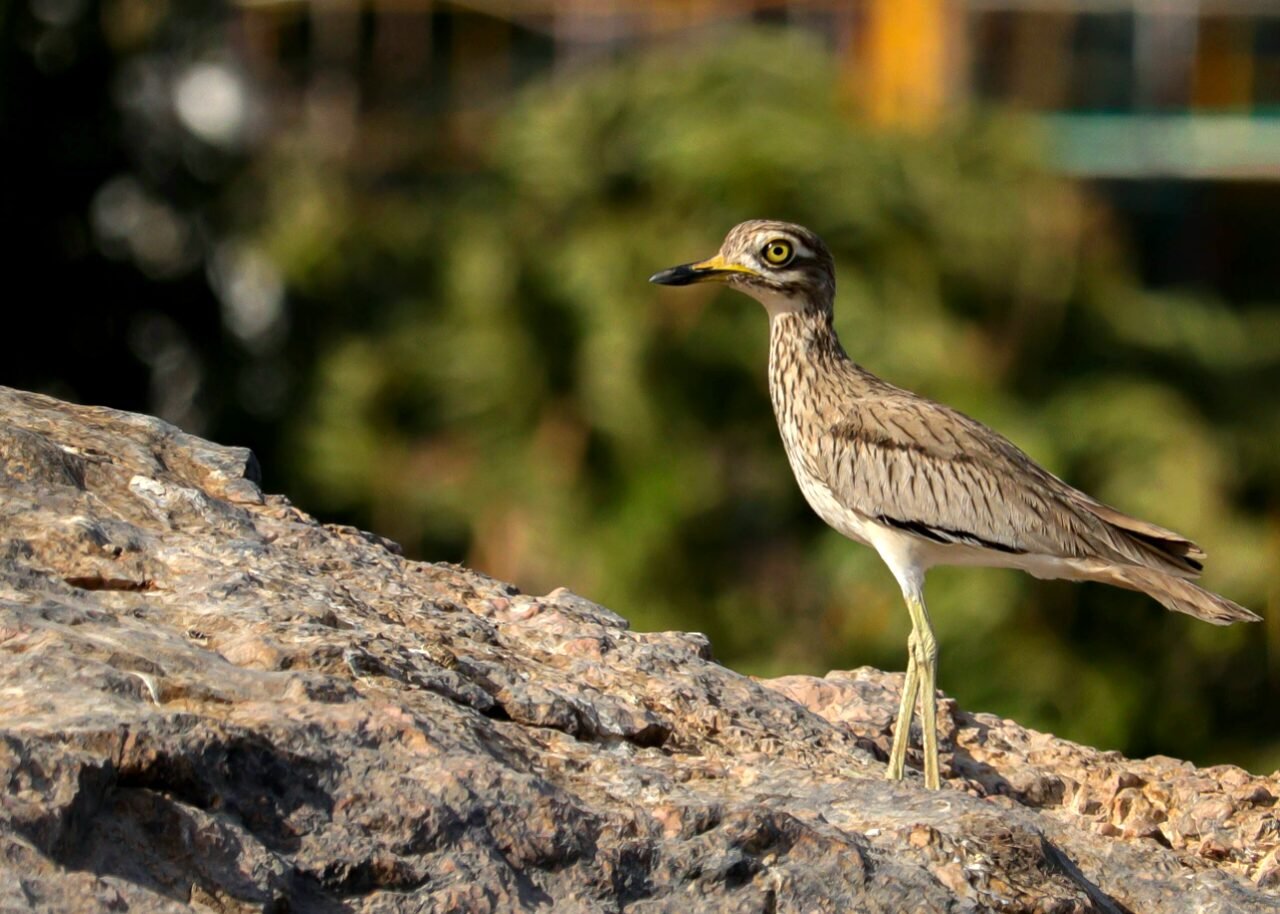
When alarmed, the Senegal Thick-knee’s first instinct is rarely to fly. Instead, it freezes completely still, crouching low with its neck extended flat along the ground, relying entirely on its intricately patterned brown and grey plumage to vanish into the background of rock, sand, and scrub. Only as a last resort, with a potential threat closing in, will it finally break and run or fly. This is precisely why the species can be maddeningly difficult to spot on a rocky Nile shoreline — even when it’s standing in plain sight.
10. Despite the name, it has nothing exclusively to do with Senegal
The Senegal Thick-knee was named after the country where it was first formally described in the 19th century, but its true range tells a much bigger story. The species occupies an extraordinary breadth of Africa — from the Atlantic coast of Senegal in the west, across the entire Sahel belt, down through Egypt’s Nile Valley, and onward through East Africa as far south as Tanzania. Along the Nile around Aswan, it’s right at home — one of the easiest of Egypt’s resident Afrotropical specialities for visiting birders to find, especially on the river’s quiet, rocky islands at dusk.
Want to hear the Senegal Thick-knee’s call for yourself, echoing across the Nile at dusk? Our Classic Nile Birding Trip regularly encounters this species among the river’s rocky islands.
Get in touch to plan your visit.