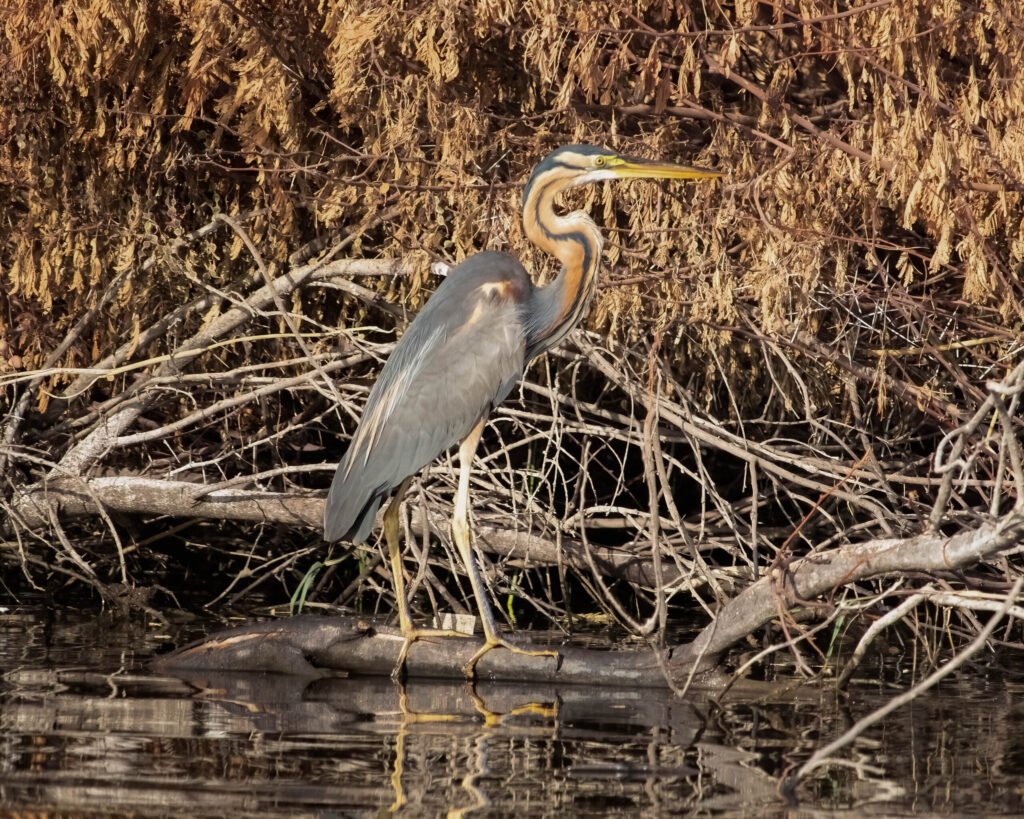
The Purple Heron is one of the most elegant and mysterious birds you can encounter along the Nile. Although often overshadowed by its larger cousin, the Grey Heron, this stunning species is a favorite among experienced birdwatchers thanks to its striking plumage, secretive behavior, and remarkable hunting skills.
In Aswan, the Purple Heron can often be found in reedbeds, marshes, and quiet stretches of the Nile, where patient observers may be rewarded with unforgettable views of this beautiful bird.
Here are ten incredible facts about the Purple Heron that make it one of Egypt’s most fascinating waterbirds.

1. Its Name Comes from Its Beautiful Plumage
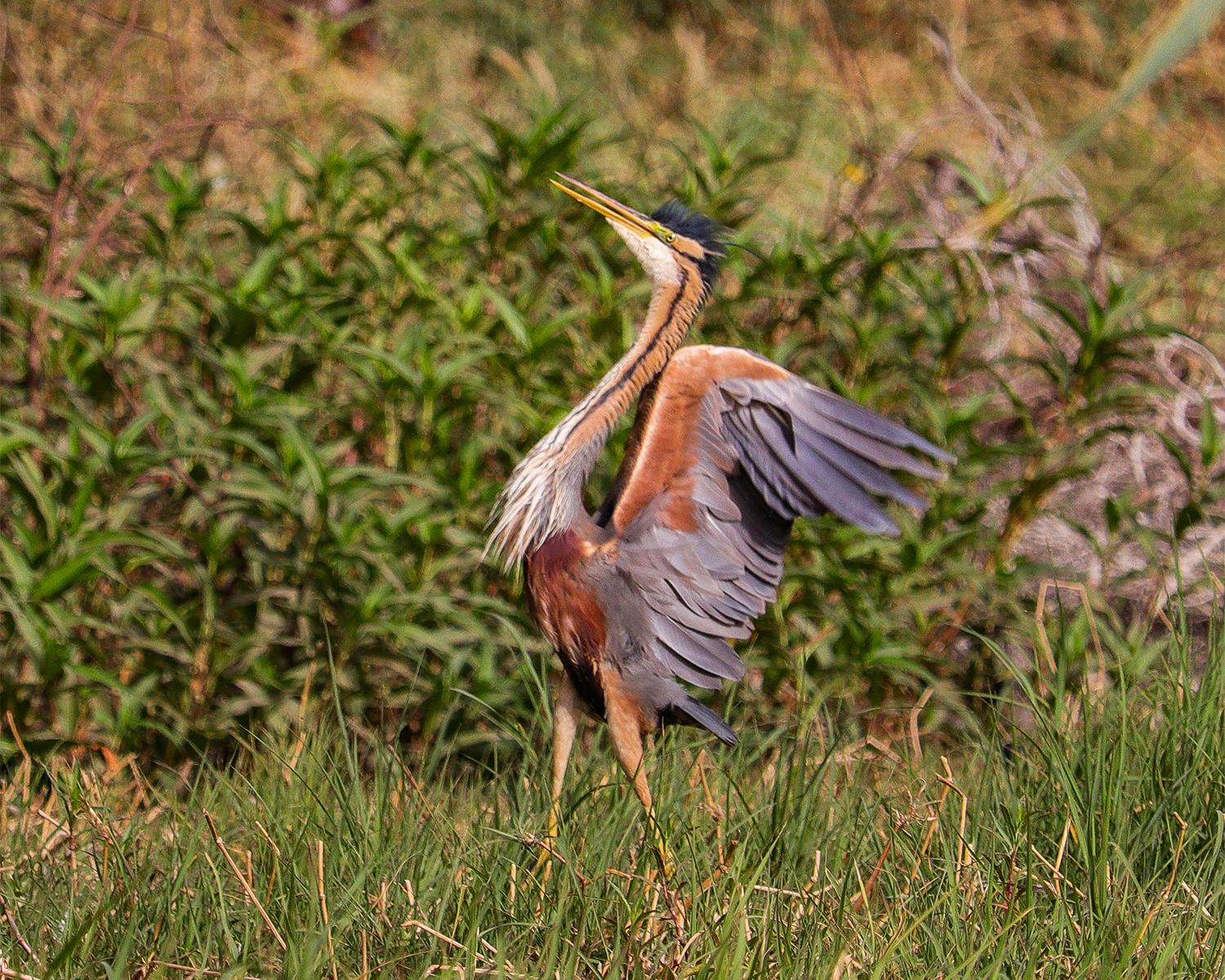
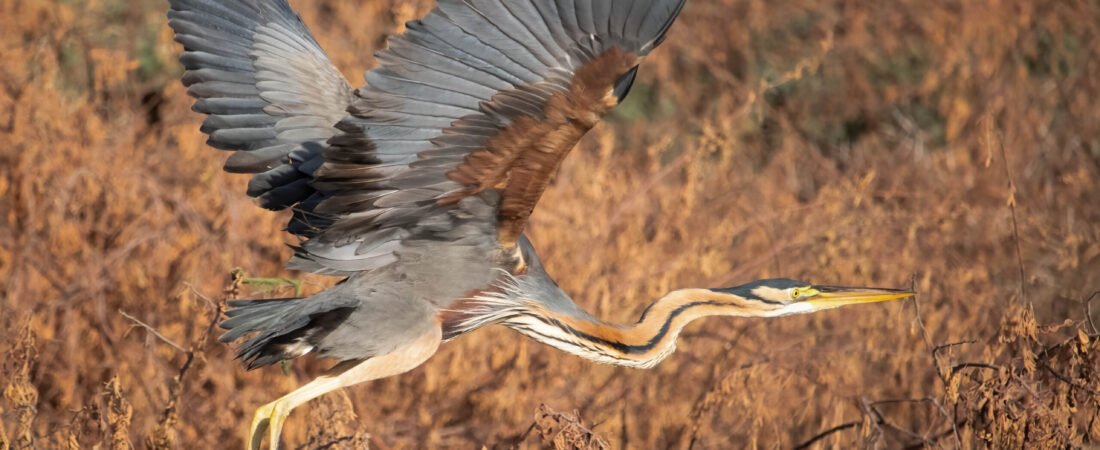
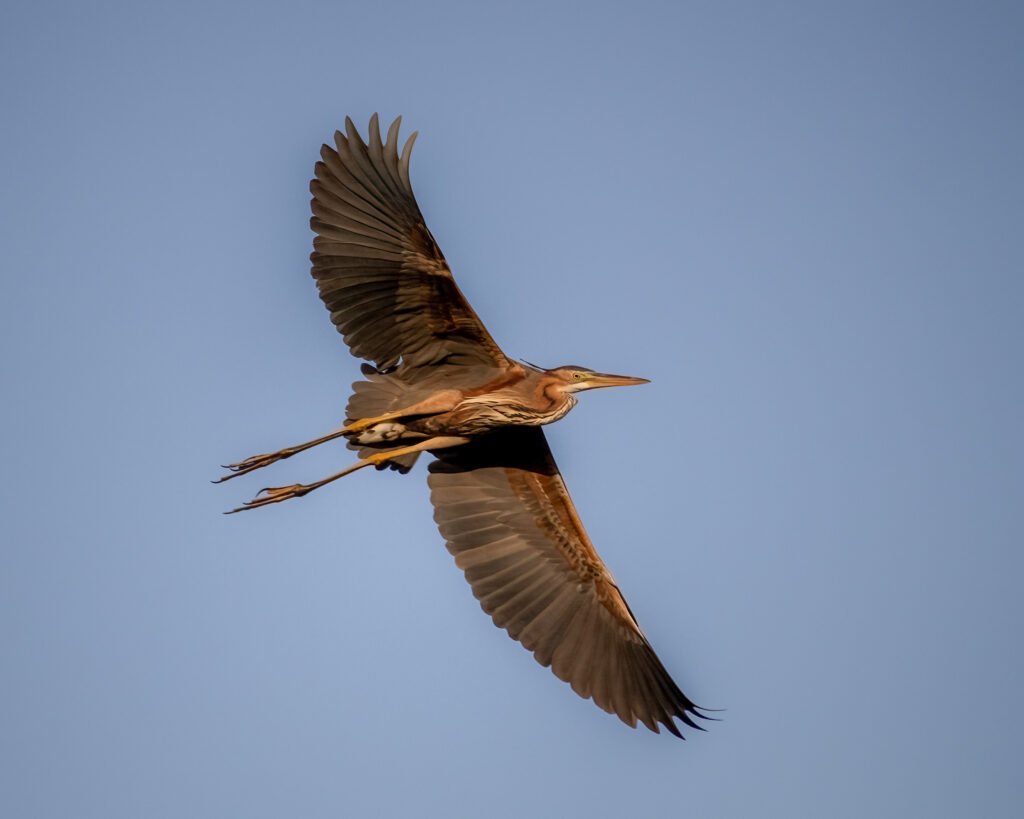
The Purple Heron (Ardea purpurea) gets its name from the rich chestnut, reddish-brown, and purplish tones that decorate its neck, chest, and wings.
Unlike the mostly grey appearance of the Grey Heron, the Purple Heron displays a much warmer and more colorful palette, especially when seen in good morning or evening light.
2. It Is a Master of Camouflage
One of the Purple Heron’s most remarkable abilities is its camouflage technique.
When threatened, it often stretches its neck vertically and points its bill toward the sky. Combined with its striped neck pattern, this posture allows the bird to blend almost perfectly among tall reeds and papyrus.
Many birdwatchers walk past a Purple Heron without ever noticing it.
3. It Is More Secretive Than the Grey Heron
While Grey Herons are often seen standing openly along riverbanks, Purple Herons prefer to remain hidden.
They spend much of their time inside dense vegetation and emerge cautiously to hunt. This secretive nature makes every sighting feel like a special reward for birdwatchers.
4. Purple Herons Are Expert Hunters
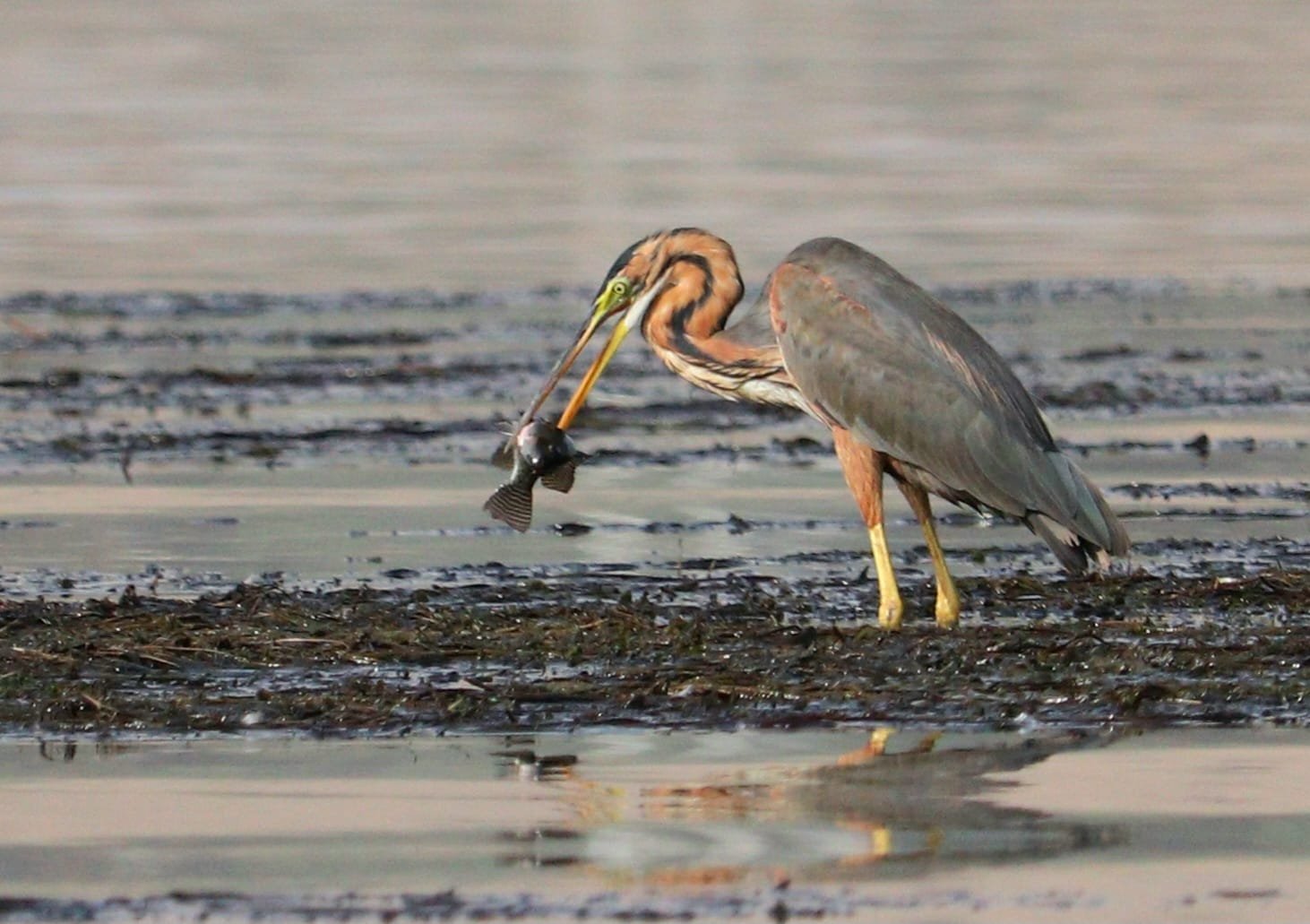
Like other herons, the Purple Heron is a highly skilled predator.
Its diet includes: Fish,Frogs, Small reptiles, Aquatic insects, Crustaceans, and occasionally small mammals.
The bird often stands motionless for long periods before striking with lightning speed.
5. They Have Surprisingly Long Necks
The Purple Heron possesses an exceptionally long and flexible neck that can be folded into an “S” shape.
This unique structure allows the bird to launch its bill forward with incredible speed and precision when capturing prey.
6. They Are Strong Migrants
Many Purple Herons breeding in Europe migrate thousands of kilometers to spend the winter in Africa.
Egypt serves as an important migration corridor between Europe and Africa, making the country a key location for observing these birds during migration periods.
Aswan, situated along the Nile Valley, provides excellent stopover habitats for migrating herons.
7. They Can Fly Long Distances Without Rest
Purple Herons are capable of impressive migratory journeys.
Some individuals travel from breeding grounds in countries such as Netherlands, France, and Germany to wintering areas across sub-Saharan Africa.
During migration, they often fly at night and can cover vast distances over deserts and seas.
8. Their Nests Are Hidden Deep in Reedbeds
Purple Herons build their nests in dense marsh vegetation where predators have difficulty reaching them.
The nests are usually constructed from reeds and sticks and are often hidden from view.
This nesting strategy helps protect eggs and chicks from disturbance.
9. They Play an Important Role in Wetland Ecosystems
As top predators within freshwater habitats, Purple Herons help regulate populations of fish, amphibians, and aquatic invertebrates.
Their presence is often considered an indicator of healthy wetlands with abundant wildlife and good water quality.
For conservationists, finding breeding Purple Herons is usually a positive sign that a wetland ecosystem remains productive and relatively undisturbed.
10. Aswan Is One of the Best Places in Egypt to See Them
The Nile around Aswan offers excellent habitat for Purple Herons.
Birdwatchers regularly encounter them in:
- Nile reedbeds
- Quiet backwaters
- Marshy islands
- Irrigation canals
- Wetland edges
Early morning birdwatching trips often provide the best opportunities, when Purple Herons leave their roosts and begin feeding along the river.