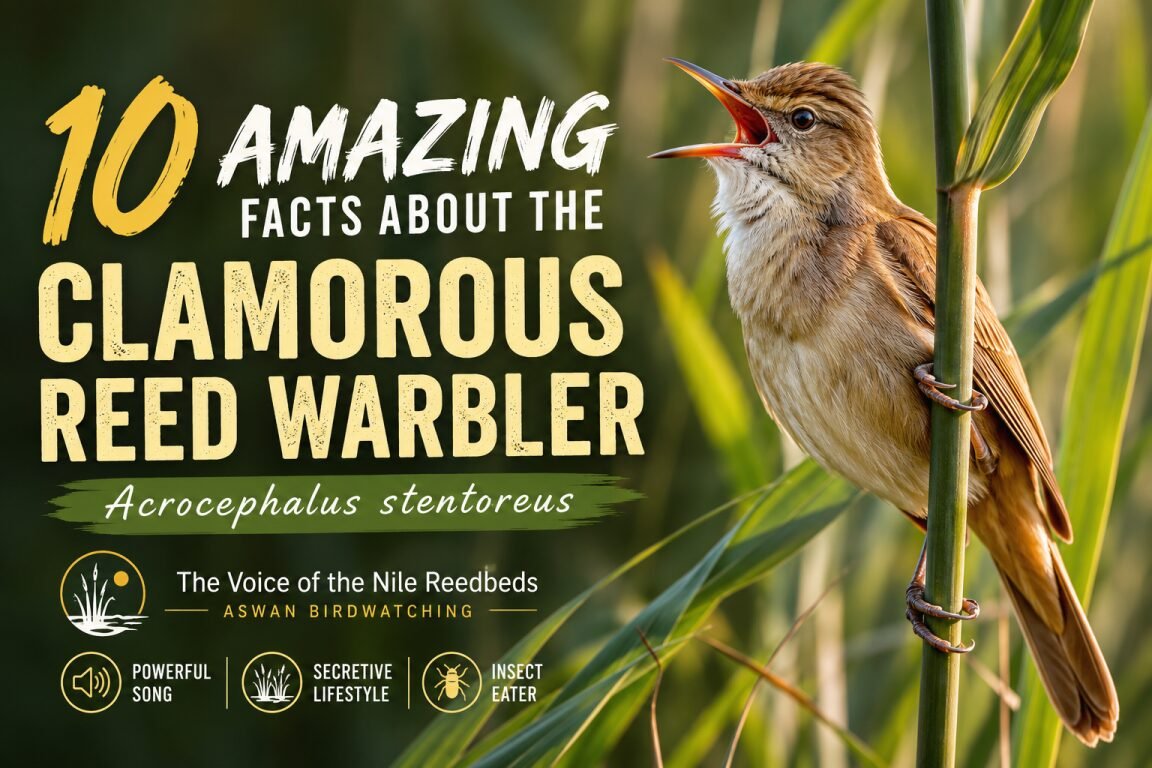
There is a rule I share with every birding guest who joins me on the Nile at Aswan: before you see the Clamorous Reed Warbler, you will hear it. Almost certainly from several metres away. Probably before the boat has even cleared the first stand of reeds. And once you’ve heard it; that rich, insistent, rattling proclamation rolling out across the water from somewhere deep in the reed stems. you will never confuse it with anything else again.
The Clamorous Reed Warbler (Acrocephalus stentoreus) is one of the most characteristic sounds of the Egyptian Nile, and one of the most rewarding birds to get to know properly. Behind its unremarkable brown plumage lies a creature of extraordinary complexity: a skilled architect, a gifted mimic, a territorial warrior, and one of the most geographically wide-ranging warblers on earth. Here are ten facts that tell its real story.
1. Its name comes from a Latin word meaning “thunderous”
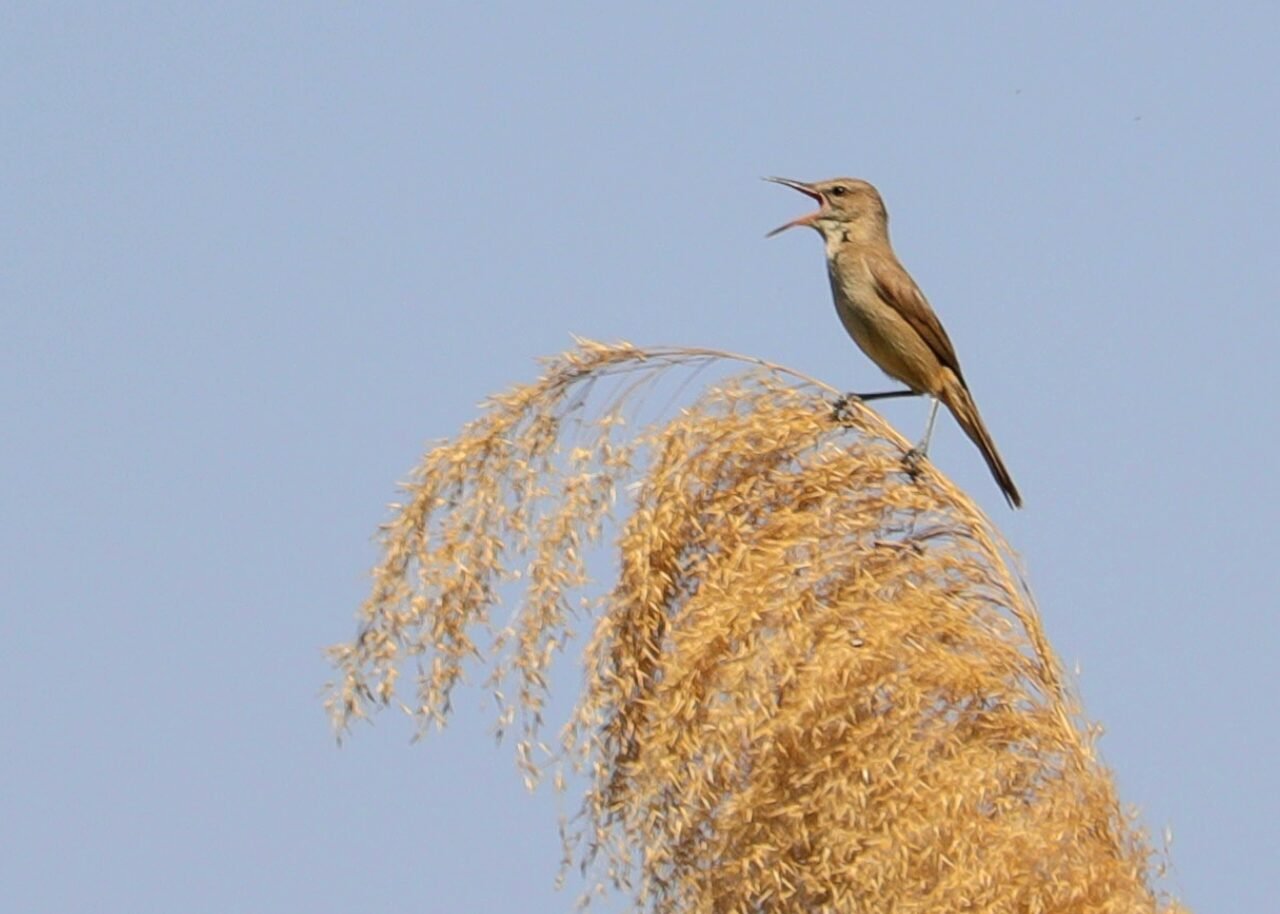
The species epithet stentoreus derives from Stentor, the herald in Homer’s Iliad whose voice, the poet tells us, was as loud as fifty men combined. It is a name given with full intention and complete accuracy. The song is a loud, jumbled series of harsh grating sounds, and calls include loud, forceful, hard-sounding chucks and churrs, a voice built not for subtlety but for penetration through dense, sound-absorbing reedbed vegetation. On a still morning on the Nile, a single Clamorous Reed Warbler can fill an entire bend of the river with its declaration. When several territories overlap, the combined effect is genuinely remarkable.
2. It is one of the largest warblers in the world
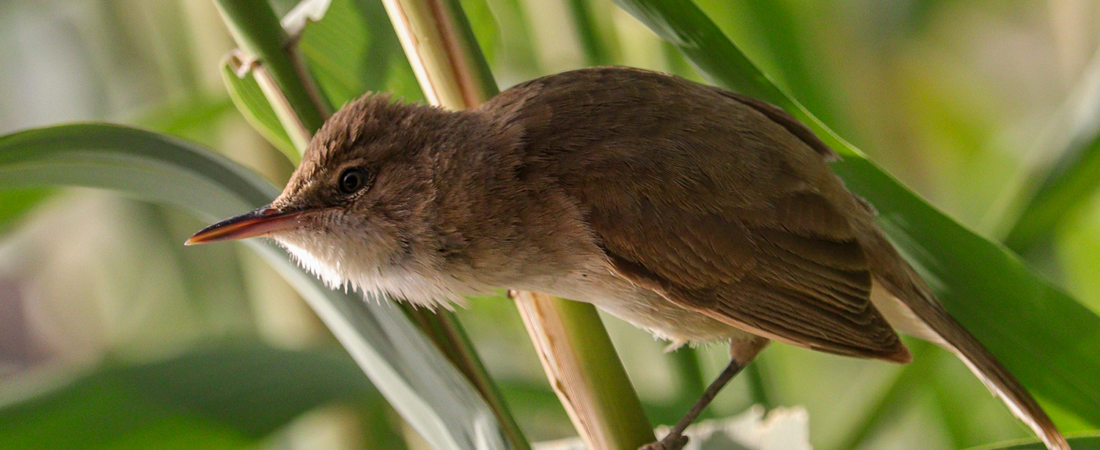
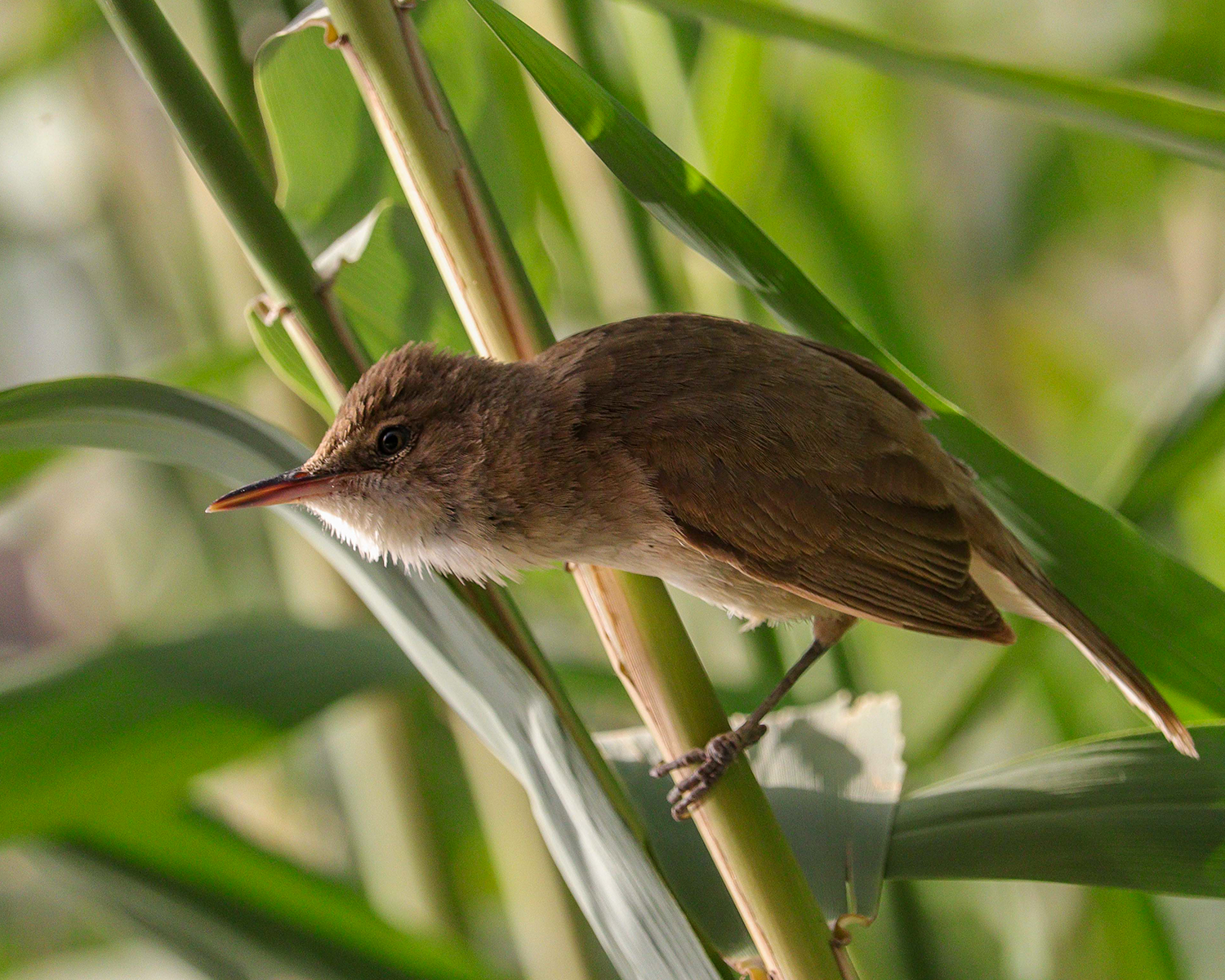
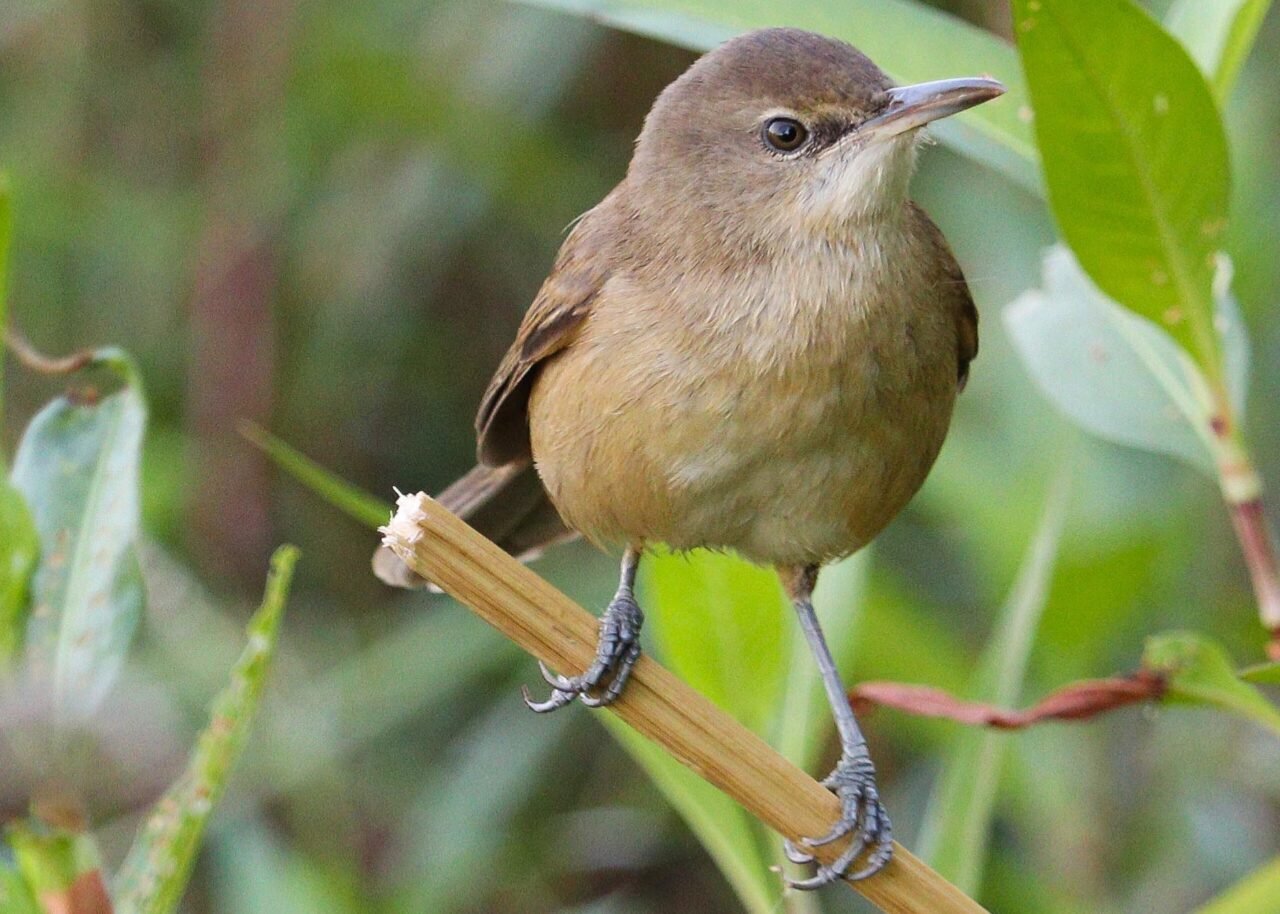
The Clamorous Reed Warbler is a robust warbler, comparable in size to a song thrush, measuring 18–20 cm in length, with an unstreaked brown back, a contrasting whitish underbelly, and a strong, pointed bill. For a warbler; a family many birders associate with tiny, flitting, difficult-to-see birds ; this is a genuinely substantial creature. That powerful bill is not decorative: it is the tool of an active, energetic predator capable of tackling prey that most warblers wouldn’t attempt. Its flat forehead and long, heavy bill give it a slightly thuggish, purposeful silhouette that is instantly recognisable once you know what to look for.
3. Its range spans half the globe — from the Nile to the Pacific
The Clamorous Reed Warbler is widely but somewhat patchily distributed across Central and southern Asia, with a toehold in Africa, where it occurs in Egypt and Sudan through the Nile Valley and at various desert oases, as well as along the Red Sea coast south to northern Somalia, thence across the southern Levant, Middle East, Central Asia, the Indian Subcontinent, and southwest China, before reappearing in insular South-East Asia, from Java and Borneo east to the westernmost Lesser Sundas.
This extraordinary distribution; from the reedbeds of the Egyptian Nile to the wetlands of Borneo; makes it one of the most geographically wide-ranging warblers on earth, spanning an arc of roughly 12,000 kilometres. And yet, despite this vast range, the species shows remarkable consistency in its habits and preferred habitat wherever it occurs.
4. Egypt’s population is the type subspecies — the original
Acrocephalus stentoreus stentoreus (Hemprich & Ehrenberg, 1833) is the nominate subspecies, occurring in Egypt. This means that when German naturalists Heinrich Hemprich and Christian Ehrenberg first formally described and named the species in 1833, the birds they were looking at and listening to were almost certainly birds of the Nile Valley. Egyptian birds, in other words, are the scientific reference point for the entire species across its vast global range. When birders anywhere in the world look up Acrocephalus stentoreus in a field guide, they are reading a description anchored in the reedbeds of the Egyptian Nile.
5. It Is a Permanent Resident in Southern Egypt
While many European warblers migrate thousands of kilometers every year, the Clamorous Reed Warbler is largely a resident species in southern Egypt.
This means birdwatchers can observe it throughout the year, making it a reliable target species during birding tours in Aswan.
6. It builds one of the most structurally elegant nests of any Nile bird
The female builds the nest alone, constructing a deep cup made of reeds and placing it above water in dense vegetation. But the engineering achievement goes well beyond a simple cup. The nest is woven with precision around three, four, or five vertical reed stems, creating a structure that rises and falls with the reeds in wind or current without detaching or collapsing.
The walls are interlaced tightly enough to hold the clutch of eggs even when the stems sway significantly. It is, in miniature, a feat of flexible architecture that any engineer might admire — a structure designed to be both rigid enough to protect its contents and flexible enough to survive its environment.
7. Males are fiercely territorial — and will sing for hours to prove it
Male Clamorous Reed Warblers are highly territorial, especially during breeding season. They use their loud songs not only to attract females but also to warn other males to stay away. A territory holder will sing persistently from prominent reed stems; often the tallest available perches in his patch; for extended periods, delivering his proclamation with an energy and stamina that seems disproportionate to his modest size.
On the Nile at Aswan, it is not unusual to have the same individual singing almost continuously for the better part of an hour without apparent fatigue. This is, from a biological standpoint, a genuine honest signal: sustained, powerful song requires real physical investment, and a male that can maintain it is demonstrating genuine quality to any female within earshot.
8. It is socially monogamous — but the males are opportunistic
Clamorous Reed Warblers are socially monogamous, but males may attempt to father the offspring of several females. This distinction; between social monogamy and genetic monogamy; is one that modern ornithology has revealed to be widespread across the bird world, and the Clamorous Reed Warbler is no exception.
A male may pair with one female and help raise her young, while simultaneously attempting to attract additional females to his territory. The female, for her part, incubates the clutch of three to six eggs alone for approximately two weeks before the chicks hatch, at which point both parents contribute to the intensive task of feeding the rapidly growing brood. The chicks fledge 11–13 days after hatching — a remarkably swift development that gets them out of the vulnerable nest as quickly as possible.

9. Most populations never migrate at all
In a world full of long-distance migratory warblers — birds that make extraordinary journeys between Europe and Africa, or between Asia and the tropics — the Clamorous Reed Warbler is something of an exception. The species is mainly resident and probably largely sedentary across much of its broad distribution, but those populations breeding in Central Asia migrate to the Indian Subcontinent in winter.
The Egyptian Nile population — the birds that sing from the reedbeds around Aswan year-round — are permanent residents. They do not leave. They are there in January and in July, in the cool clear mornings of winter and the scorching midday heat of summer. For a birder visiting Aswan at any time of year, this means the Clamorous Reed Warbler is a guaranteed encounter — a reliable, year-round voice of the Nile that does not require seasonal timing to find.
10. It thrives in habitats that most birds have abandoned — and that is exactly the point
Over most of its range, the Clamorous Reed Warbler is usually associated with freshwater marshes and wetland vegetation, sometimes also crop fields, but in places including much of the Arabian Peninsula as well as parts of the Indian Subcontinent the species is tied to coastal mangrove formations.
Dense, tangled, difficult, waterlogged vegetation — the habitat that most birds find inaccessible and most humans find impenetrable — is precisely where this warbler thrives. Its strong legs grip multiple reed stems simultaneously, allowing it to move through vertical vegetation with a fluency that seems almost gravity-defying. Its slender, streamlined body pushes between stems without resistance. Its loud voice compensates for the visual barrier of the reeds, allowing communication across distances that line-of-sight signalling could never achieve.
In a real sense, the Clamorous Reed Warbler has made a home in the places the world has overlooked. And it has made that home so completely, so successfully, that the reeds without its voice seem not merely quieter but actually diminished — as if the habitat itself is incomplete without its proclamation.