
When most birders think of Egypt, their minds immediately turn to the Nile Delta, the Mediterranean coast, or the migration bottlenecks of Sinai. Yet far to the south lies one of the country’s most rewarding and least-explored birding destinations — a place where the Nile threads its way through the Sahara and where African wildlife flourishes against a backdrop of ancient temples and golden desert landscapes.
Welcome to Aswan.
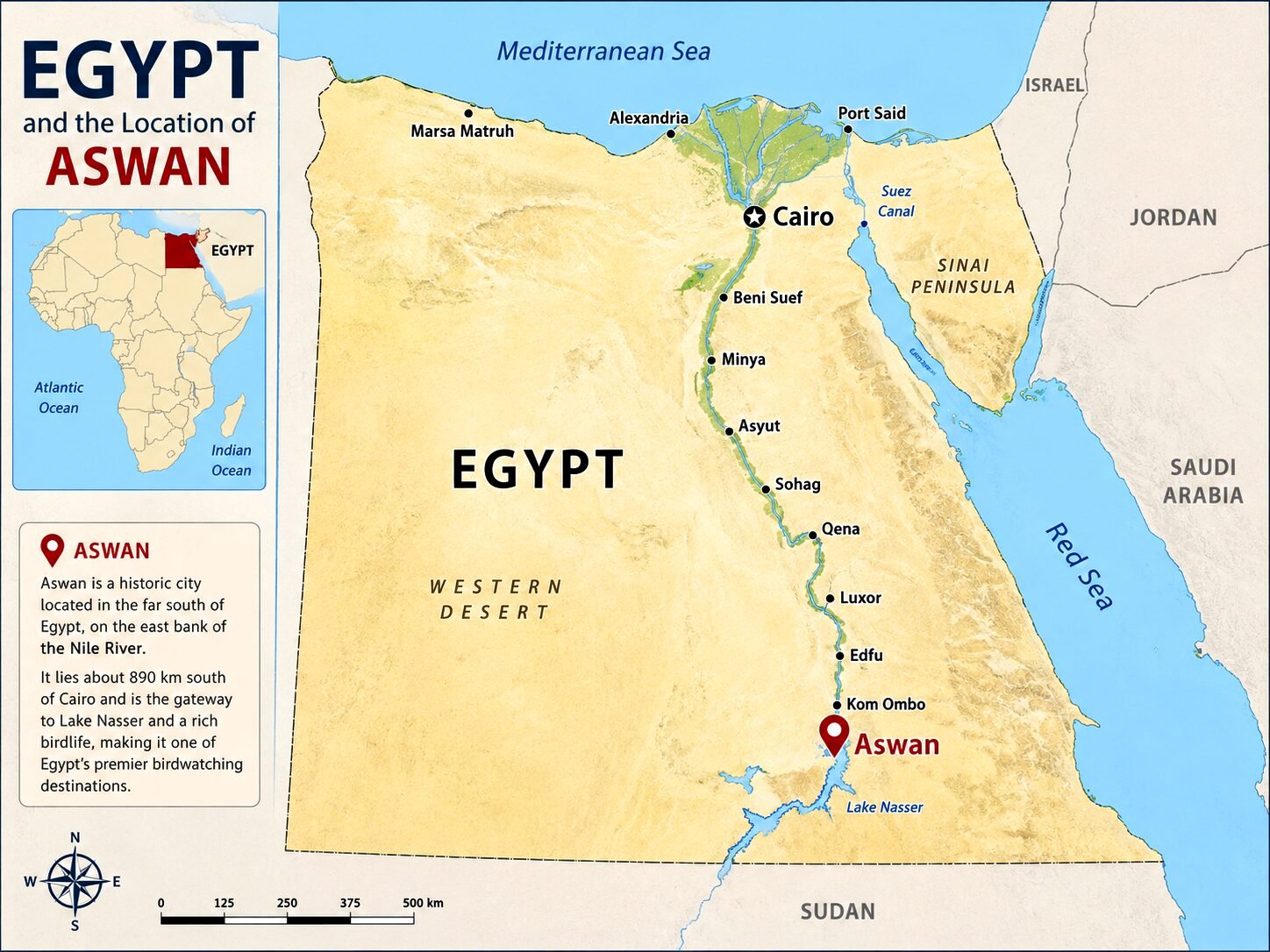
Perched at the southern gateway of Egypt, Aswan occupies a unique position at the crossroads of the Palearctic and Afrotropical realms. Here, the lush riverbanks of the Nile, the vast waters of Lake Nasser, and the surrounding desert combine to create an extraordinary diversity of habitats. The result is a birding destination unlike any other in the country, where Nile Valley specialties, African waterbirds, desert species, and thousands of migratory birds can all be encountered within a remarkably small area.
Whether you are searching for the dazzling Nile Valley Sunbird, watching Yellow-billed Storks glide across the waters of Lake Nasser, or witnessing the seasonal passage of migrants moving between Europe and Africa, Aswan offers unforgettable birding in one of the world’s most spectacular settings.
This guide covers everything you need to know about birdwatching in Aswan, including the best sites, target species, seasonal highlights, and practical tips for planning your visit.
Why Aswan for Birdwatching?
Most birders who visit Egypt focus on the north: the Mediterranean coast, Suez Canal corridor, and Nile Delta. These are excellent sites, and their reputation is well-earned. But Aswan offers something different: a concentration of resident African species alongside spectacular migration, set against one of the most dramatically beautiful landscapes on Earth.
The city sits at the meeting point of three distinct habitats — the Nile riverine zone, the Saharan desert, and the vast reservoir ecosystem of Lake Nasser. Each supports a different community of birds. On a single day in Aswan, you can go from watching Nile Valley Sunbirds in flowering acacia trees along the riverbank in the morning, to scanning Lake Nasser for African Skimmers and Yellow-billed Storks by afternoon.
Aswan also has a practical advantage that birders rarely talk about: it’s an easy city to navigate, with most birding sites accessible by short felucca or motorboat ride. You’re not spending half your day in a minibus.
Best Birdwatching Sites in Aswan
1. The Nile Islands (Cataract Islands Area)
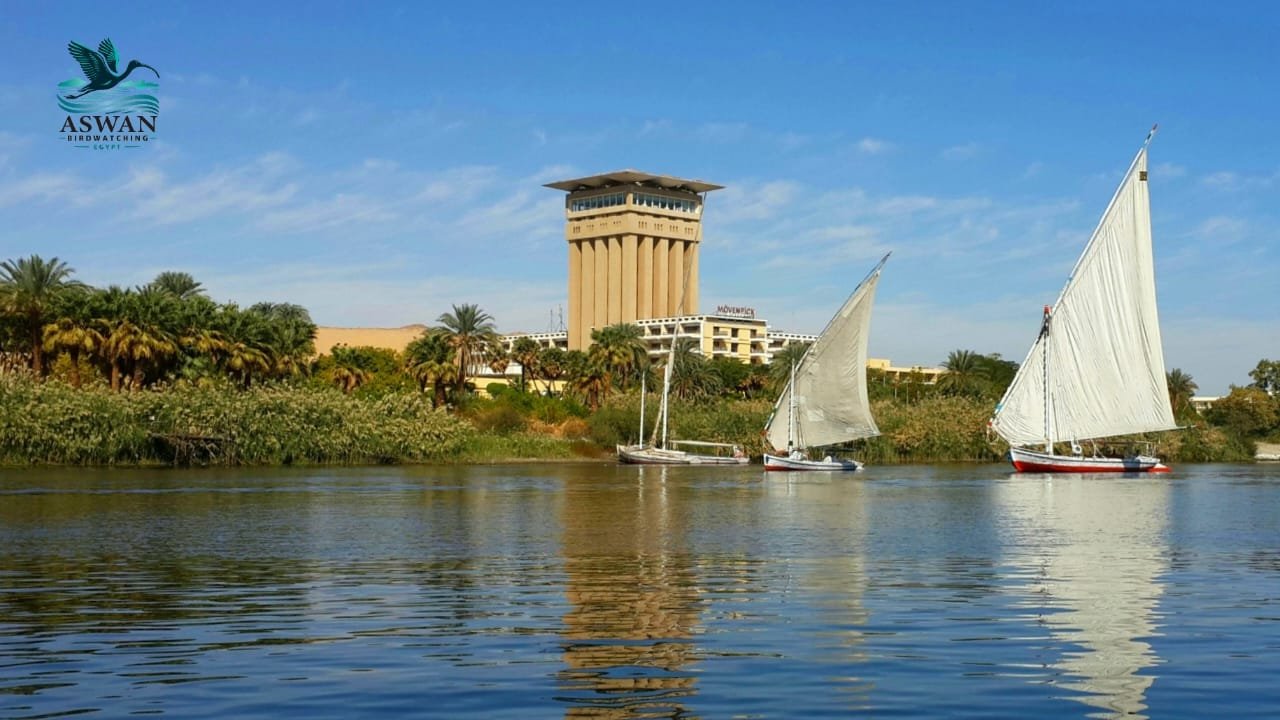
This is Aswan’s premier birding location and the centerpiece of a classic Nile birding trip. The cluster of islands between the Old Cataract Hotel and Elephantine Island including Kitchener’s Island (Aswan Botanical Garden), Saluga & Ghazal Nature Reserve, and the uninhabited sandy outcrops in between forms a mosaic of reedbeds, sandy beaches, flowering trees, and calm backwaters that attract an extraordinary range of species.
Key species: Nile Valley Sunbird, African Swamphen, Pied Kingfisher, African Green Bee-eater, Striated Heron, Squacco Heron, Purple Heron, Senegal Thick-knee, Spur-winged Lapwing, Osprey, Little Bittern, Common Kingfisher, various warblers and wagtails.
How to access: A private motorboat trip covers the key hotspots in 3 hours. Early morning (7am – 10am) and late afternoon (3pm – 6pm) give the best light and highest bird activity.
2. Lake Philae (Agilkia Island Area)
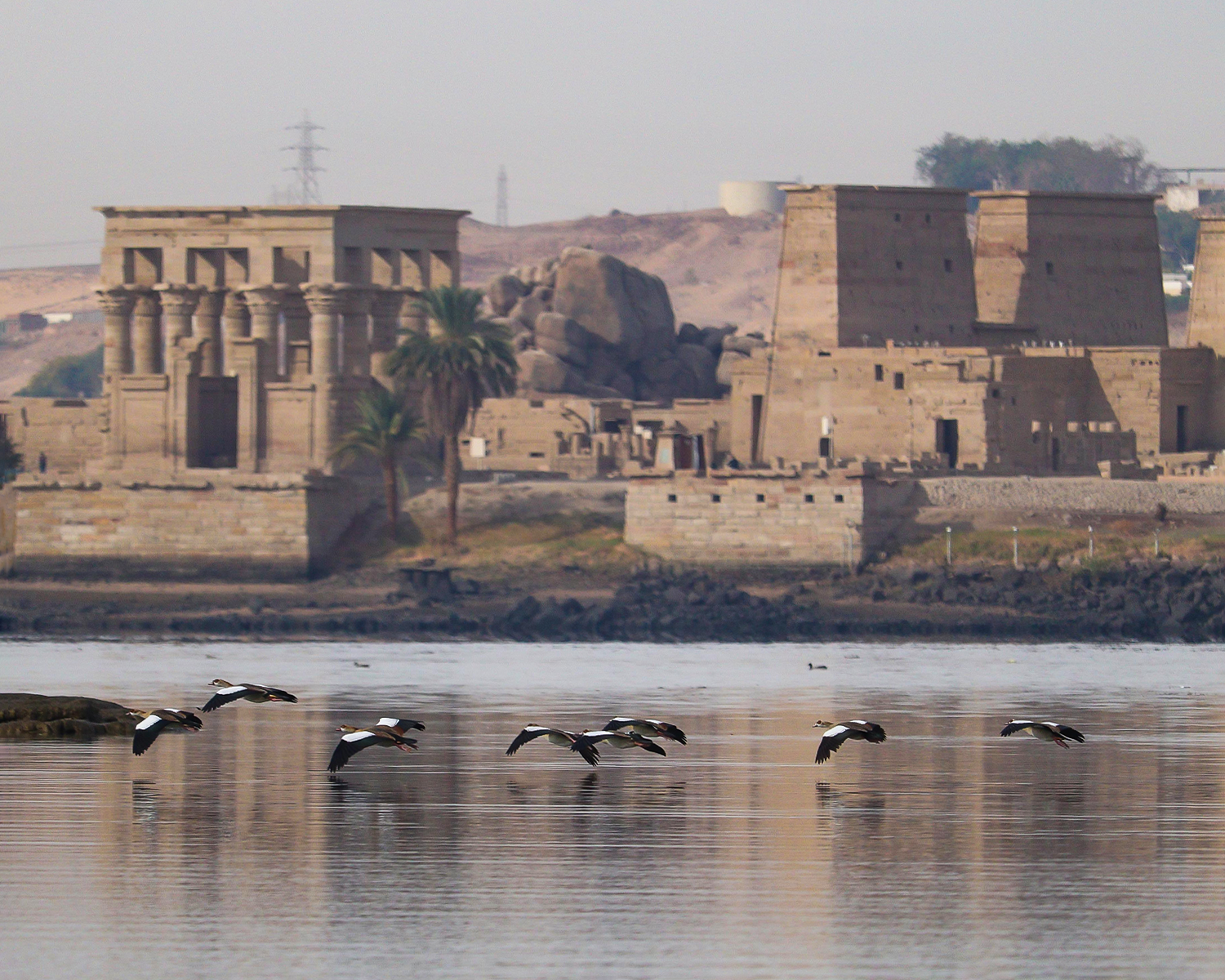
The area around the Temple of Philae (now relocated to Agilkia Island) offers excellent birding in a stunning archaeological setting. The calm waters between the dam and the island attract herons, egrets, and kingfishers, while the rocky outcrops and sparse desert scrub around the lake margins provide habitat for desert species rarely seen in the main river corridor.
Key species: Reed Cormorant, Night Heron, African Darter, various egrets, White Wagtail, and desert-edge species.
How to access: A private motorboat trip covers the key hotspots in 3 hours. Early morning (7am – 10am) and late afternoon (3pm – 6pm) give the best light and highest bird activity.
3. Lake Nasser (Abu Simbel Area)
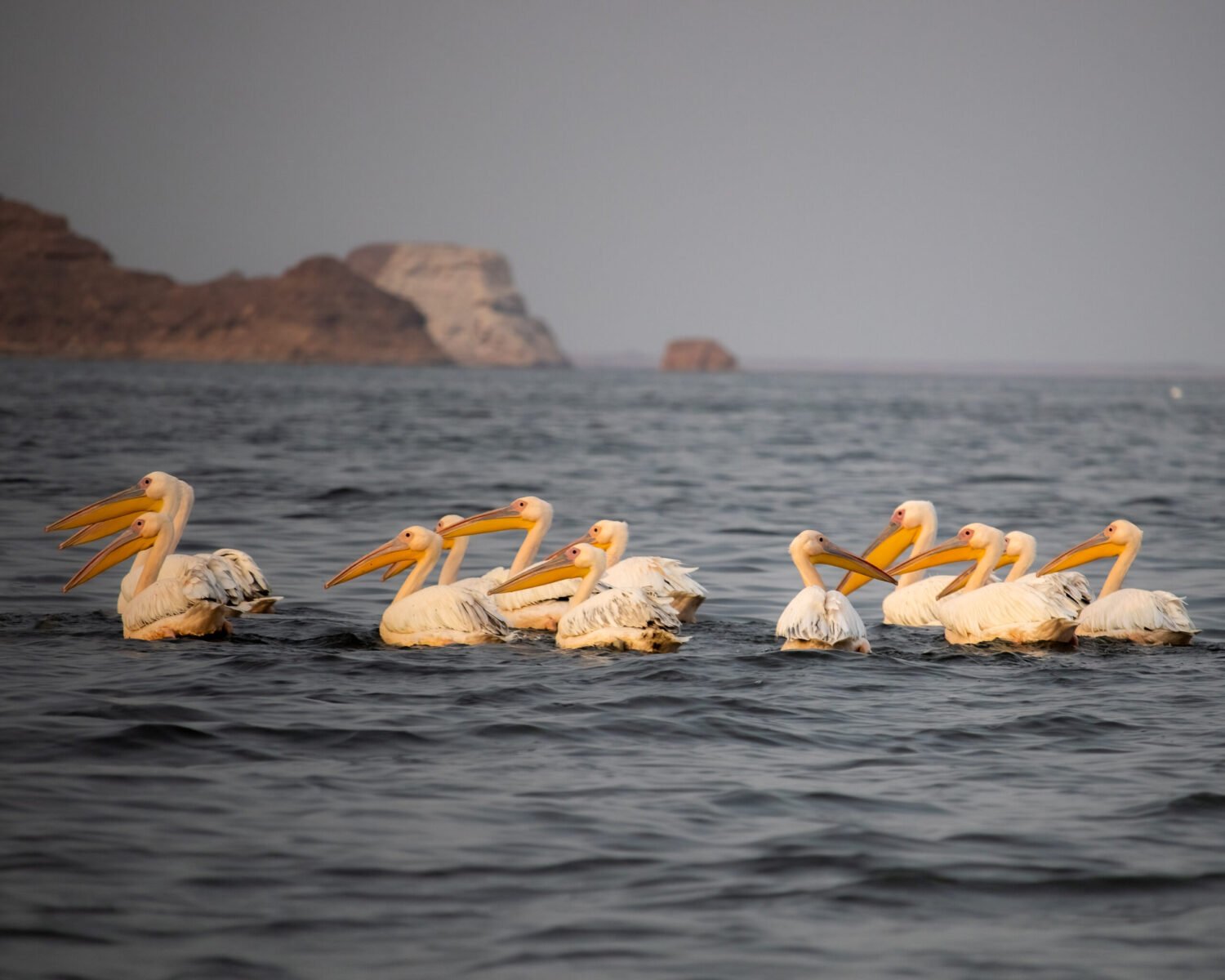
Lake Nasser is one of Africa’s largest artificial lakes, stretching over 500 km south into Sudan. The Egyptian section (particularly around Abu Simbel) is an outstanding waterbird site and one of the most underbirded significant wetlands in northeast Africa.
This is where you find Aswan’s most spectacular species: large concentrations of pelicans, storks, and herons; African Pied Wagtail nesting on sandy islands; Village Weaver, Plain Martin, Kittlitz’s Plover, Crimson-rumped Waxbill; and a remarkable diversity of waders along the lake margins. In winter, the lake holds thousands of ducks, including Ferruginous Duck and occasionally rarer Palearctic visitors.
The area also produced one of Egypt’s most significant recent ornithological discoveries ” the first confirmed breeding record of the Reed Cormorant (Microcarbo africanus) in over 120 years, documented here in August 2025.
Key species: African Pied Wagtail, Village Weaver, Yellow-billed Stork, Crimson-rumped Waxbill, Reed Cormorant, Purple Heron, Sooty Falcon, Shoveler, Ferruginous Duck, various terns and waders.
How to access: Abu Simbel is a 45-minute flight or 3.5-hour drive from Aswan. Dedicated Lake Nasser birding trips are best done as an overnight or full-day excursion.
4. Aswan Desert Edge
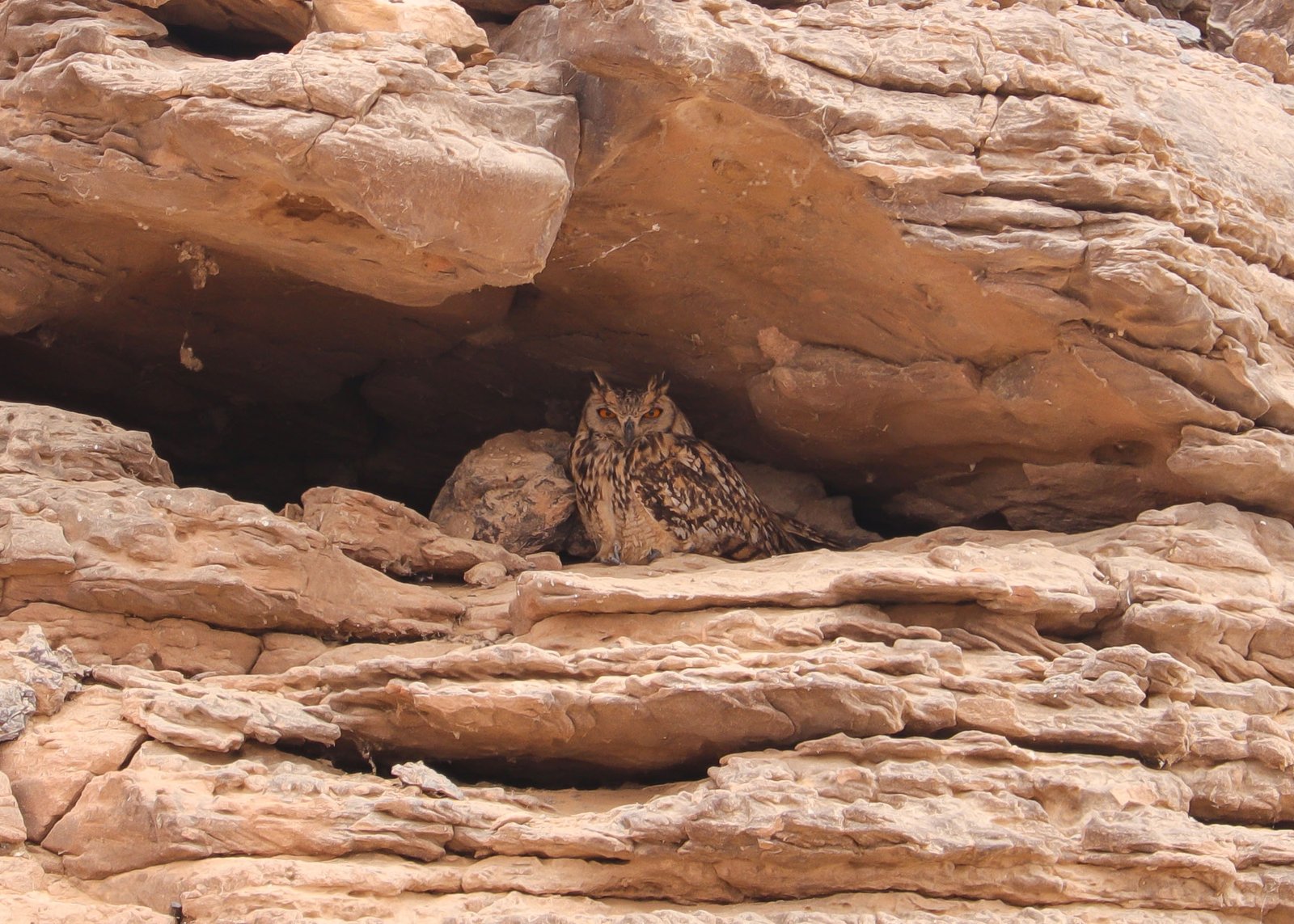
The interface between irrigated land and the open Sahara on Aswan’s east bank is an underappreciated birding habitat. Hooded Wheatear, Desert Lark, Brown-necked Raven, and Cream-coloured Courser are residents here. During migration, the desert edge can produce excellent falls of passerines, particularly warblers, flycatchers, and chats, that have crossed the Sahara overnight and descended exhausted onto the first available cover.
When to Visit: Seasonal Guide
Understanding Aswan’s birding seasons is critical for planning your trip.
October – November: Peak Migration
This is arguably the most exciting period. Vast numbers of Palearctic migrants warblers, flycatchers, shrikes, harriers, raptors funnel through the Nile Valley on their way to sub-Saharan Africa. The concentration of birds moving through in a narrow corridor can be extraordinary. Temperatures are comfortable (25 °C- 30 °C), and resident species are still active.
December – February: Winter
The peak season for waterbirds. Lake Nasser and the Nile hold large numbers of wintering wildfowl, and resident species are at their most visible in the clear, cool air. Temperatures drop to pleasant levels (15°C – 25°C) and the light is superb for photography. This is the most popular season for visiting birders from Europe and North America.
March – April: Spring Migration
Return migration brings a fresh wave of Palearctic species moving northward. Some species appear only in spring passage particularly waders, terns, and certain warbler species. April can also offer the first appearances of breeding visitors to the region.
May – September: Summer
Aswan in summer is extreme (40 °C -45 °C) and most migratory species are absent. However, this is the season for Aswan’s breeding residents, including Nile Valley Sunbird, African Swamphen, Pied Kingfisher, and various herons. It’s a specialist season demanding but rewarding for those focused on the African resident community.
Target Species: Aswan’s Most Wanted
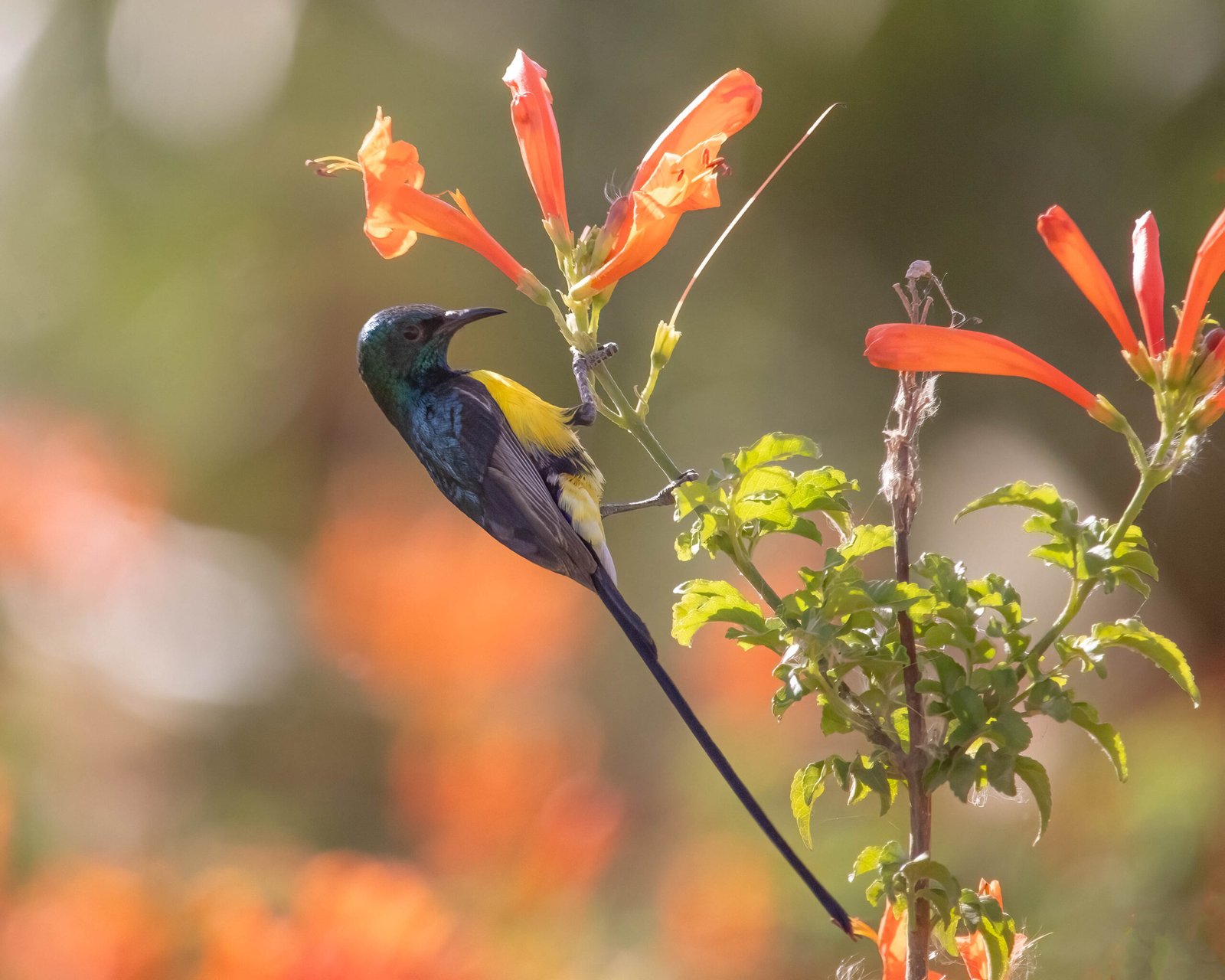
Nile Valley Sunbird (Hedydipna metallica): A Nile Valley endemic and one of the most sought-after species on any Egyptian birding trip. The male is iridescent green and purple; the female quietly beautiful. Most reliably seen on Kitchener’s Island in flowering acacias.
Senegal Thick-knee (Burhinus senegalensis): Widespread along the riverbanks but easy to miss against the sandy ground. Best detected by its haunting calls at dusk.
Greater Painted-snipe (Rostratula benghalensis): One of Aswan’s most elusive wetland species. Often hidden in dense vegetation, this beautifully patterned bird rewards patient observers with unforgettable views.
Graceful Prinia (Prinia gracilis): A common but charismatic resident of reedbeds and riverside vegetation. Its lively behavior and distinctive calls make it one of the easiest birds to encounter around Aswan.
Clamorous Reed Warbler (Acrocephalus stentoreus): True to its name, this large reed warbler is usually heard before it is seen. Its loud, scratchy song echoes through reedbeds along the Nile.
African Pied Wagtail (Motacilla aguimp): A striking black-and-white wagtail frequently seen along riverbanks, islands, and lakeshores. It often feeds close to the water’s edge and is a sought-after African specialty.
Yellow-billed Stork (Mycteria ibis): One of the most impressive waterbirds in southern Egypt. Its bright yellow bill and graceful feeding behavior make it a highlight of any birding trip.
African Green Bee-eater (Merops viridissimus): A dazzling emerald-green bird that perches conspicuously on reeds and shrubs. Often seen hawking insects above the Nile, it is one of Aswan’s most iconic African species.
Village Weaver (Ploceus cucullatus): Famous for its intricate hanging nests, this colorful weaver is a common sight in gardens and riverside trees. Breeding males are particularly eye-catching.
Reed Cormorant (Microcarbo africanus): A small African cormorant regularly encountered on the Nile and around Lake Nasser. It is often seen perched on rocks or dead trees with wings spread to dry.
White-throated Kingfisher (Halcyon smyrnensis): A spectacular kingfisher with vivid blue wings, a rich chestnut head, and a bright red bill. Despite its name, it is often found far from water, hunting insects and small reptiles.
African Swamphen (Porphyrio madagascariensis): Large, electric-blue, and surprisingly secretive in the reedbeds. Aswan’s Nile islands are one of the most reliable sites in Egypt.
Three-banded Plover (Charadrius tricollaris): One of Aswan’s most sought-after African specialties. Although it occurs along the Nile and around Lake Nasser, it can be surprisingly difficult to find due to ongoing changes in its preferred shoreline habitats. Access restrictions and security considerations around some breeding areas can further complicate the search, making a successful sighting particularly rewarding for visiting birders.
Practical Information for Visiting Birders
Best base: Aswan city, which has a full range of accommodation from budget guesthouses to the historic Old Cataract Hotel. Most Nile birding sites are within a short boat ride of the corniche.
Getting there: Aswan has a domestic airport with direct flights from Cairo (1 hour) and Luxor (30 minutes). Many birders combine Aswan with a stop in Luxor (4 hours north by train), which has its own excellent birding sites.
What to bring: Binoculars (8*42 or 10*42), a field guide covering northeast Africa and the Middle East (Collins Bird Guide for Britain and Europe or Stevenson & Fanshawe’s Birds of East Africa for the Lake Nasser species), sun protection, and plenty of water. A spotting scope is worth the effort for Lake Nasser waterbird watching.
Apps: eBird is essential for logging sightings and accessing recent reports from other birders. Merlin Bird ID (Cornell Lab) covers all Egyptian species and includes sound identification.
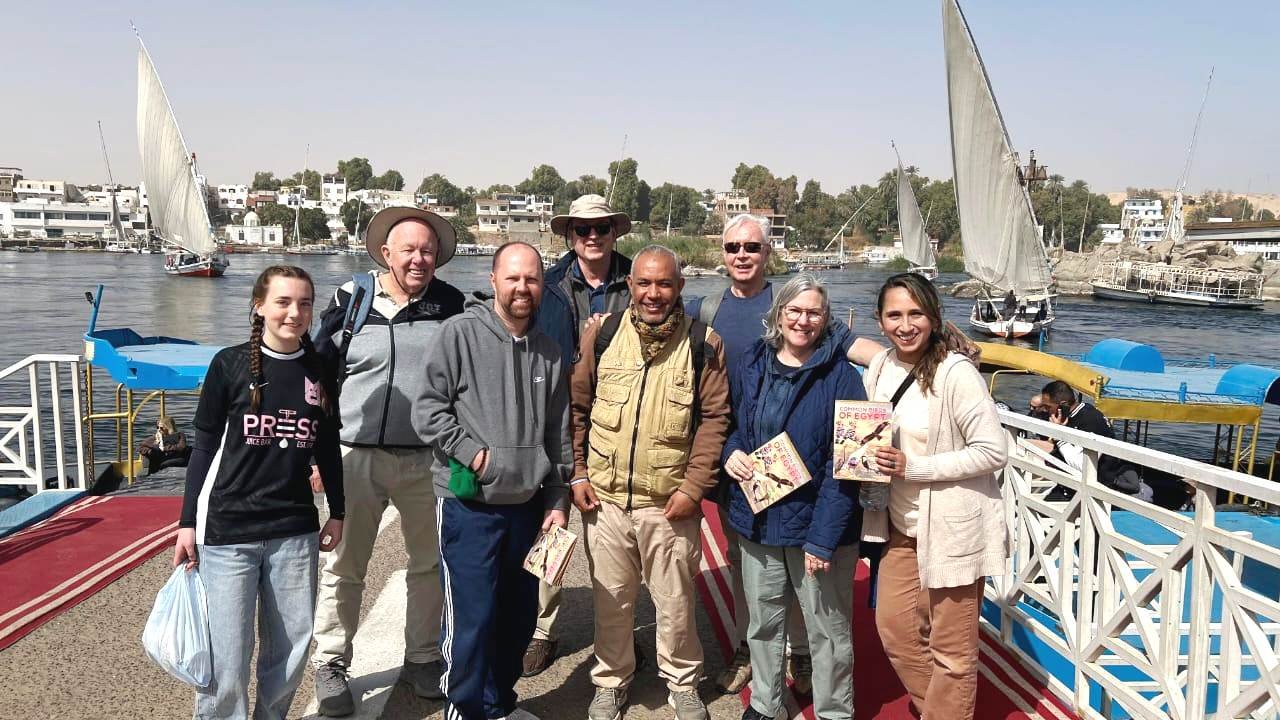
Guided vs. independent: Most of Aswan’s best birding sites are accessible by boat, and local knowledge of timing and exact locations makes a significant difference in your species list. A local guide familiar with current bird activity on the islands can double your tally on a half-day trip compared to independent exploration.
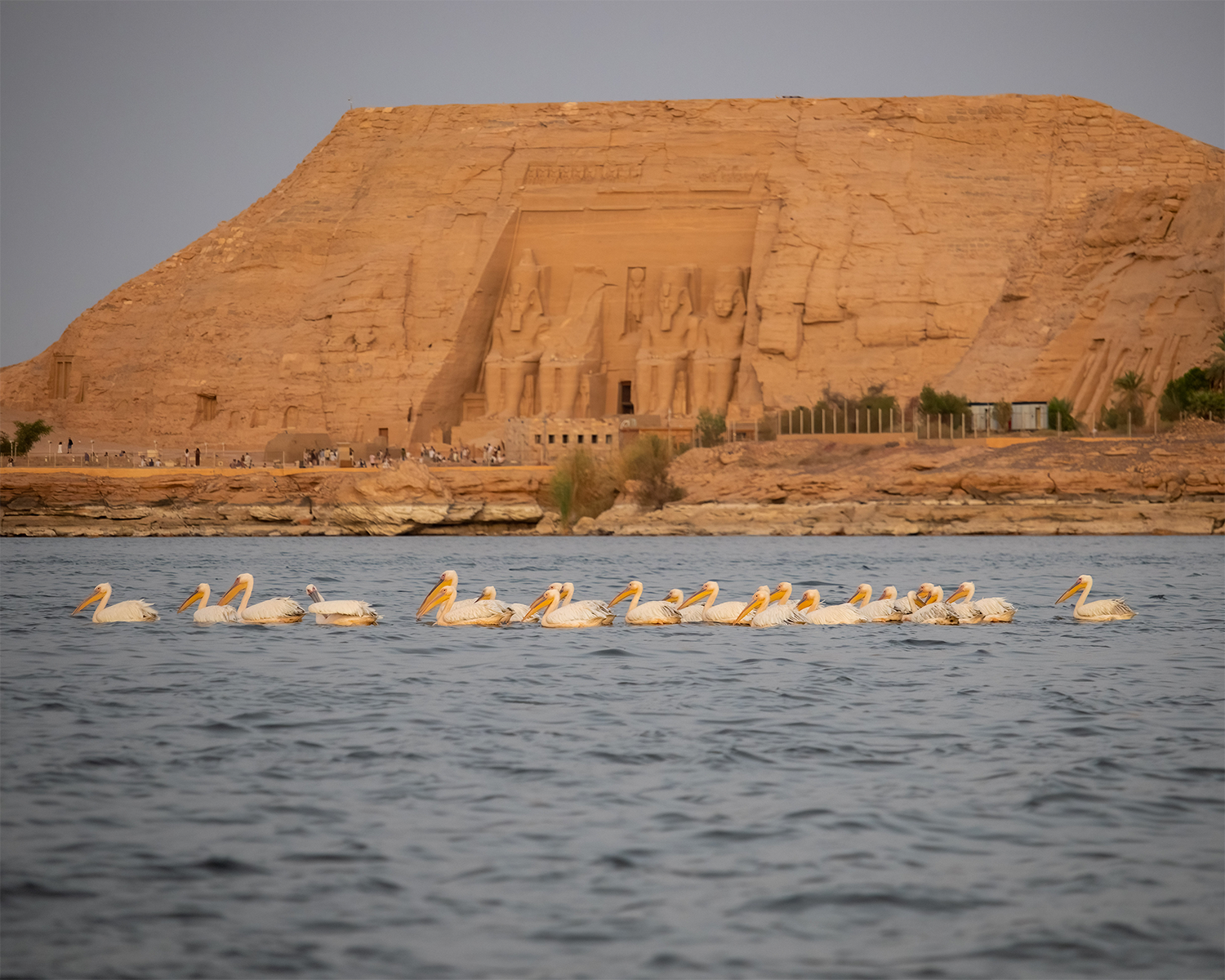
Combining Birdwatching with Aswan’s Heritage
One of Aswan’s great advantages as a destination is that birdwatching fits naturally alongside a cultural visit. The Nile birding route passes several of Egypt’s most important monuments: the Agha Khan Mausoleum, the Tombs of Nobles at Qubbet el-Hawa, the Temple of Philae, and the Aswan High Dam. You can watch African Swamphens foraging in the reedbeds while Elephantine Island (one of the oldest continuously inhabited sites in Egypt) rises behind you. This combination of nature and archaeology is genuinely unique and makes Aswan an unusually rich destination for travellers who want more than a single-focus trip.
Ready to Bird Aswan?
Whether you’re a dedicated lister chasing Nile Valley endemics, a wildlife photographer looking for dramatic waterbird shots on Lake Nasser, or simply a curious traveller who wants to add something unexpected to an Egypt itinerary, Aswan rewards attention.
Guided birdwatching trips on the Nile and Lake Nasser are available year-round, tailored to your target species, photography interests, and available time. Browse trip options: https://www.aswanbirdwatching.com/trip-options/ or get in touch directly via WhatsApp to plan your visit.