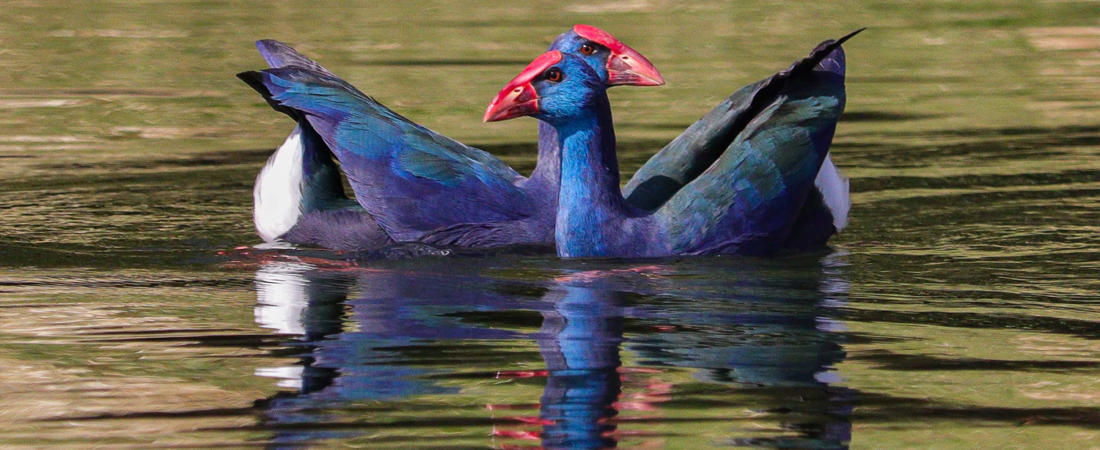
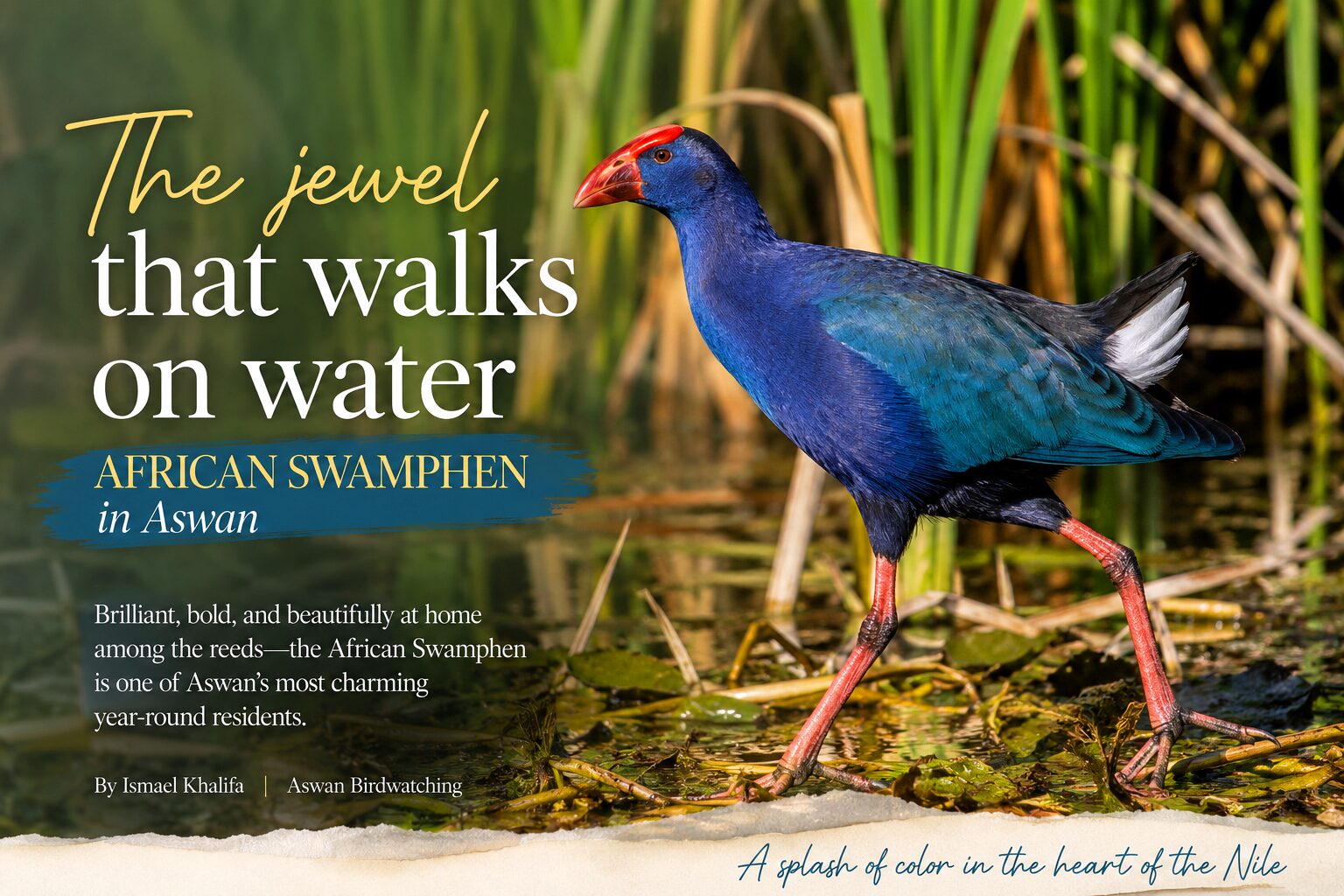
The African Swamphen (Porphyrio madagascariensis) is one of the most striking and easily recognizable birds found along the Nile in Aswan. With its dazzling blue-purple plumage, bright red bill, and oversized pink legs, this spectacular rail often becomes a favorite among visiting birdwatchers and photographers.
Although many visitors come to Aswan searching for specialties such as the Nile Valley Sunbird or African Pied Wagtail, the African Swamphen is one of the most reliable resident birds in the region and can be seen throughout the year in suitable wetland habitats. It is a true symbol of the lush reedbeds that line the Nile River in southern Egypt.
Quick Facts About the African Swamphen
Scientific Name: Porphyrio madagascariensis
Family: Rallidae (Rails and Crakes)
Length: 45–50 cm
Wingspan: 90–100 cm
Conservation Status: Least Concern
Arabic Name: فرخة سلطانية
Status in Aswan: Common Resident Breeder
The African Swamphen was once considered part of the Purple Swamphen complex but is now recognized as a separate species. It occurs across much of sub-Saharan Africa, Madagascar, and the Nile Valley of Egypt.
How to Identify an African Swamphen
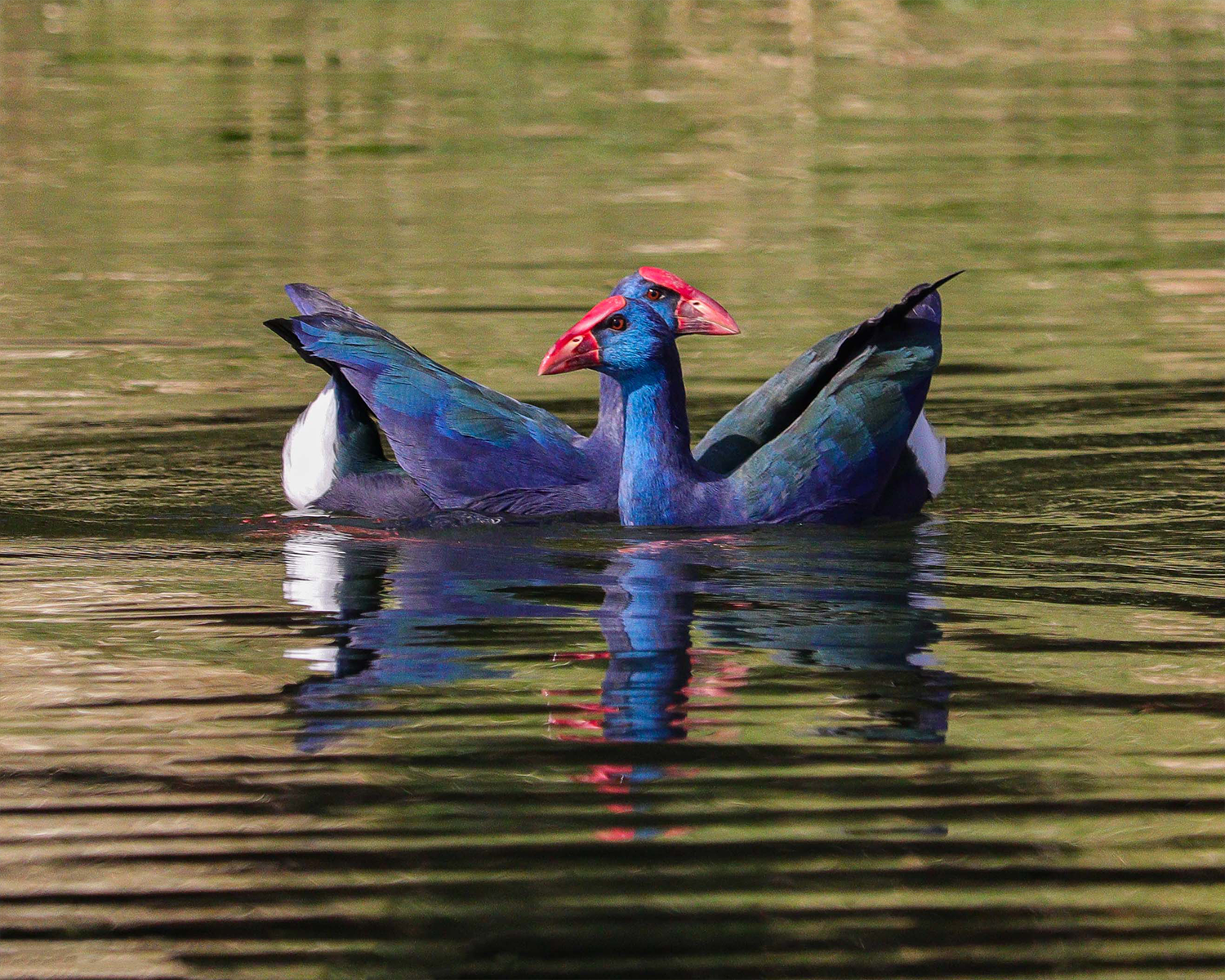
Few birds in Egypt are as colorful as the African Swamphen.
Key identification features include:
- Deep blue and violet body plumage
- Greenish-blue or bronze-green upperparts
- Large bright red bill and frontal shield
- Long pinkish-red legs
- Enormous toes that allow it to walk effortlessly across floating vegetation
- White undertail often visible when the bird flicks its tail
Its appearance is often described as a cross between a moorhen and a tropical parrot.
Where Can You See African Swamphens in Aswan?
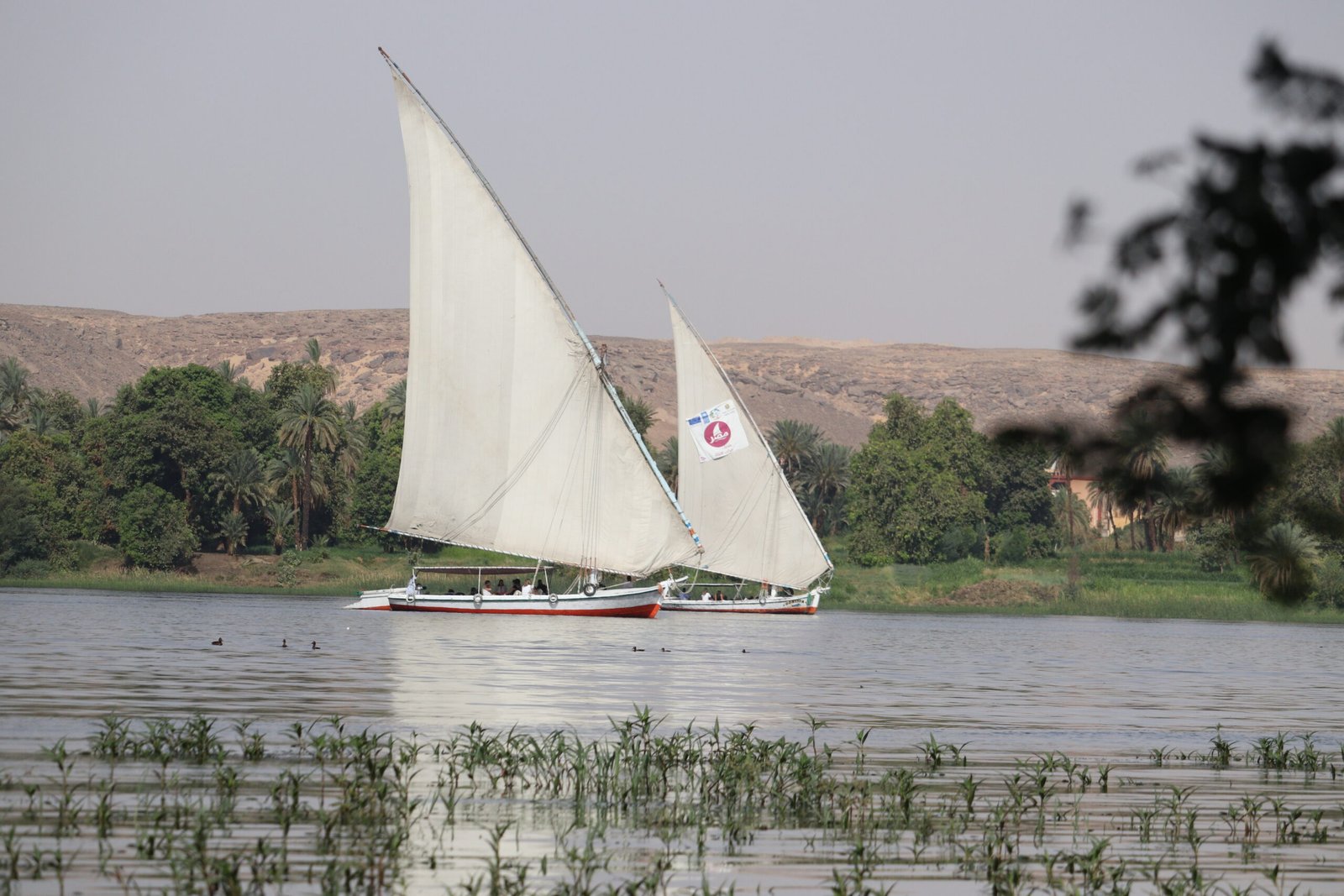
The African Swamphen thrives in the wetlands of Aswan, particularly where dense reedbeds provide shelter and nesting opportunities.
Some of the best locations include: The Nile islands around Aswan, Reedbeds near Kitchener’s Island, West Bank wetlands, and Quiet backwaters and lagoons along the Nile
The species prefers freshwater habitats with extensive reeds, sedges, and other emergent vegetation. It is especially associated with marshes, slow-flowing rivers, and reed-fringed lakes.
A Resident Breeder in Aswan
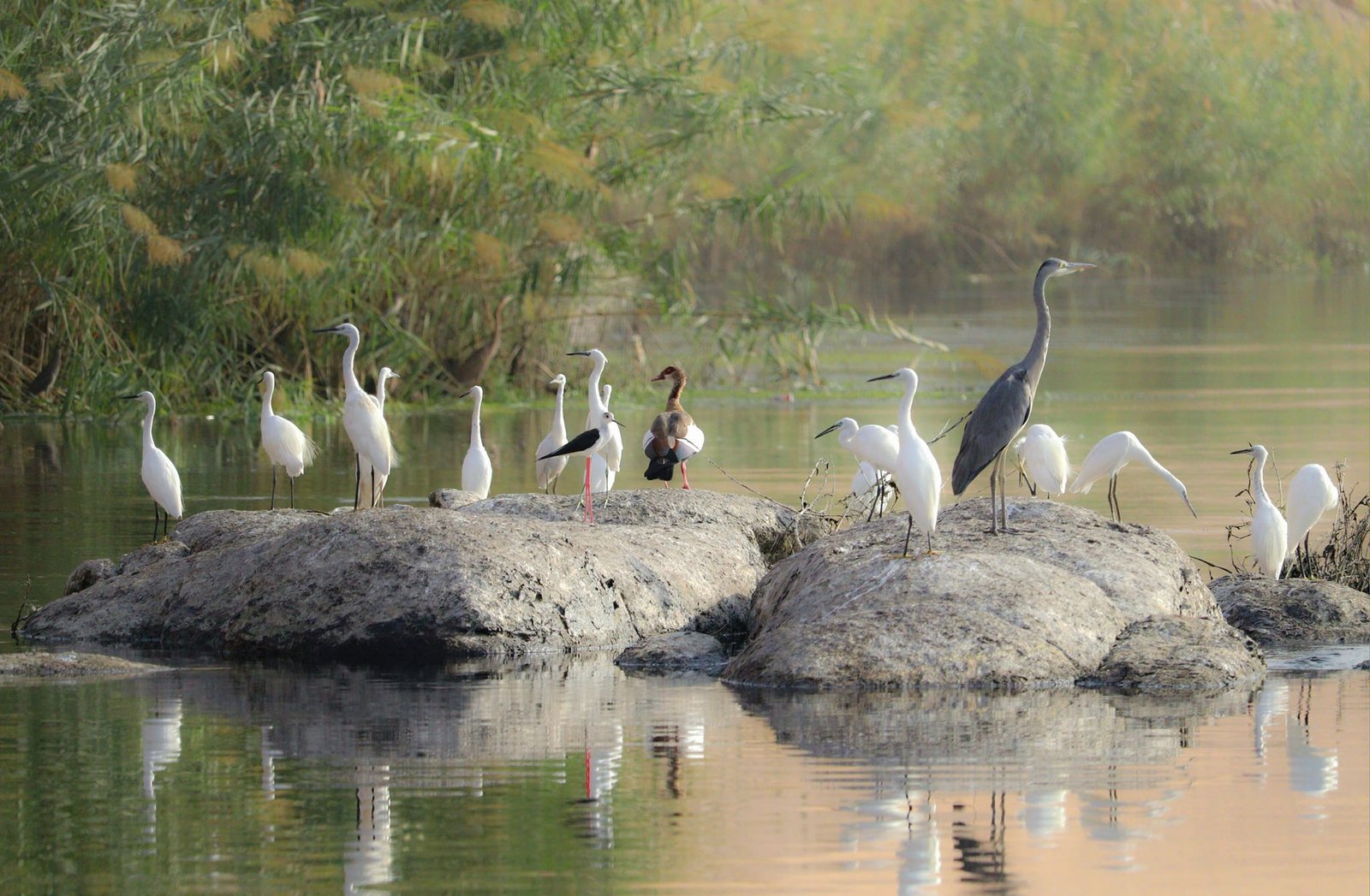
Unlike many bird species that only pass through Egypt during migration, the African Swamphen is a year-round resident breeder in Aswan.
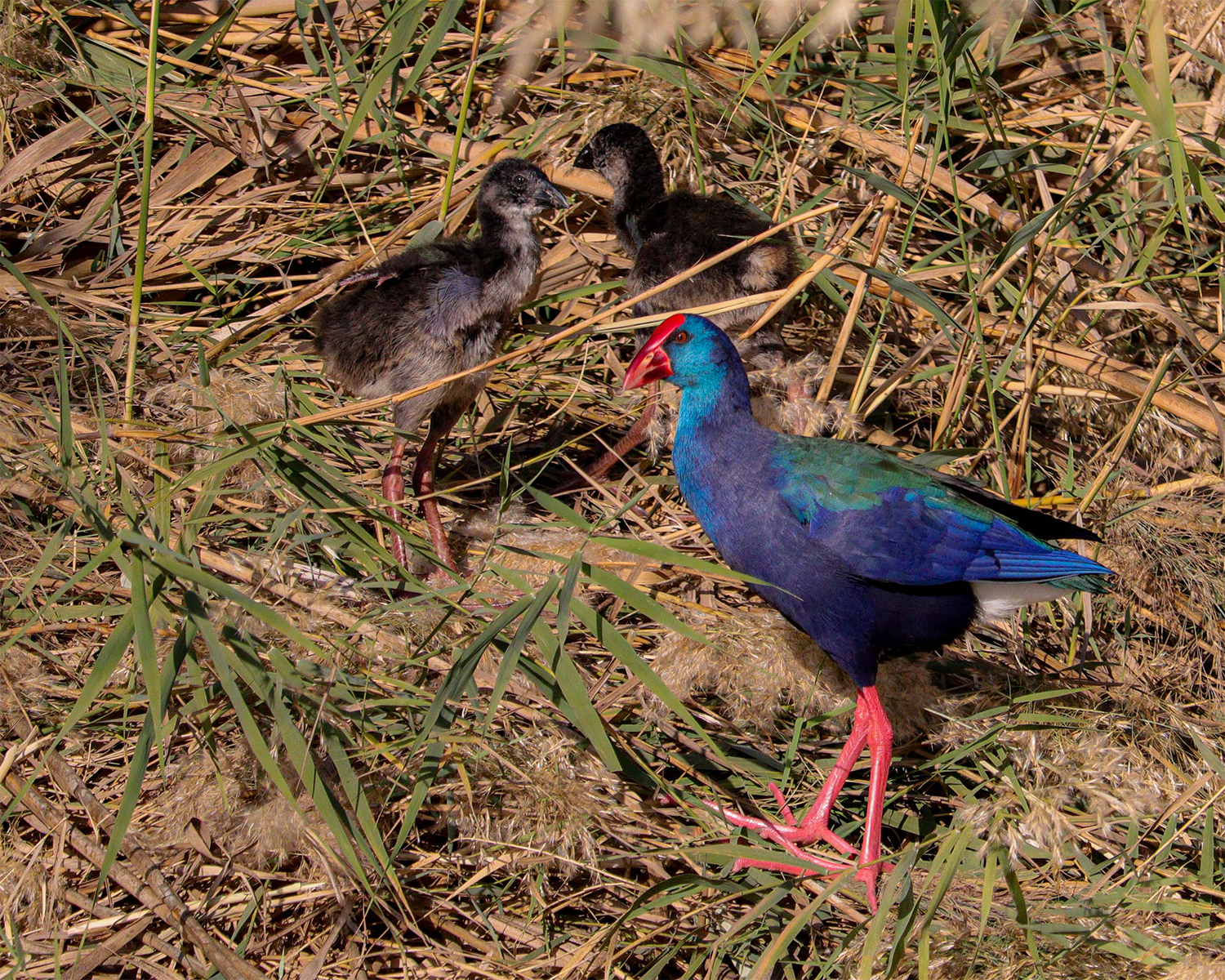
Pairs establish territories within dense reedbeds where they construct large nests hidden among the vegetation. The nests are typically built over shallow water and are carefully concealed from predators. Both parents participate in nest building, incubation, and chick-rearing.
During spring and summer, birdwatchers in Aswan frequently encounter adults accompanied by fluffy black chicks or partially grown juveniles moving through the reeds.
What Does the African Swamphen Eat?
The African Swamphen is primarily vegetarian but is actually an opportunistic feeder. Its diet includes:
- Reed shoots
- Grass stems
- Aquatic plants
- Seeds
- Roots
- Snails
- Insects
- Small frogs
- Other aquatic invertebrates
One of its most fascinating behaviors is the way it uses its feet. Like a parrot, it often grasps food with one foot while feeding, making it one of the most dexterous birds in the Nile wetlands.
Birdwatching Tips
To observe African Swamphens at their best:
- Visit wetlands early in the morning.
- Scan reed edges carefully.
- Listen for their loud, harsh calls.
- Use a boat trip to access otherwise hidden reedbeds.
- Watch for feeding birds walking across floating vegetation.
Although often conspicuous, they can disappear surprisingly quickly into dense reeds when disturbed.
Why Birders Love the African Swamphen
For many visitors to Aswan, the African Swamphen provides the perfect introduction to Nile birdlife. Its brilliant colors, unusual behavior, and year-round presence make it one of the most rewarding species to observe.
Whether you are a beginner enjoying your first birdwatching trip or an experienced Western Palearctic birder exploring southern Egypt, the African Swamphen is a bird that never fails to impress.
The next time you join a birdwatching tour in Aswan, keep an eye on the reedbeds—you are almost guaranteed to encounter this magnificent resident of the Nile.