
If you’ve birded with us on the Nile, you’ve probably seen it happen. The trip ends, and within minutes, a neat list of every species we spotted lands in your inbox, complete with locations, times, and even a map. That’s eBird at work, and if you’re serious about birdwatching anywhere in the world, it deserves a permanent spot on your home screen. Let’s talk about what makes this unassuming little app one of the most quietly powerful tools in modern birding.
What Exactly Is eBird?
eBird started in 2002 as a joint project between the Cornell Lab of Ornithology and the National Audubon Society, built on a refreshingly simple idea: every birdwatcher, anywhere, has unique knowledge worth capturing. Instead of letting that knowledge live and die in a dusty field notebook, why not gather it, organize it, and share it with the world?
More than two decades later, that simple idea has become something extraordinary. eBird now runs in 99 languages, has collected checklists from over a million birders worldwide, and recently crossed a staggering milestone: two billion bird sightings logged, alongside three million bird sound recordings. To put that in perspective, that’s more than 100 million individual bird observations added every single year — and the number keeps climbing by roughly 20% annually.
It’s not an exaggeration to call eBird one of the largest biodiversity science projects on Earth. And the best part? You’re invited to be part of it, one checklist at a time.

Why Birders Actually Love Using It
Numbers are impressive, but let’s be honest — most of us don’t open eBird because we care about global biodiversity statistics. We open it because it makes birding more fun.
It keeps score, beautifully. Every species you log builds your personal life list, your country list, your year list — even your “birds seen in Aswan” list. Watching those numbers grow is deeply satisfying, and eBird does the bookkeeping for you automatically.
It tells you where to go. Planning a trip somewhere new? eBird’s hotspot maps show you exactly where other birders have had luck, what they saw, and when. Before you even land in a new country, you can know roughly what to expect.
It shows you what’s around, right now. Rare bird alerts, recent sightings nearby, seasonal arrivals — eBird turns your phone into a live feed of what’s happening in the bird world around you.
It works offline. Out on the Nile with no signal? No problem. eBird’s mobile app logs your checklist offline and syncs automatically the moment you’re back online.
The Part That Makes It Genuinely Important
Here’s where eBird stops being just a nice hobby app and becomes something quietly remarkable: every checklist you submit becomes real scientific data.
Researchers have used eBird data in more than 1,250 peer-reviewed scientific studies. Conservation organizations rely on it to track population trends, identify important habitats, and make real decisions about protecting species and places. When you log a Pied Kingfisher on the Nile or a Yellow-billed Stork at Lake Nasser, you’re not just satisfying your own curiosity — you’re adding a tiny, verified data point to a dataset that scientists around the world actually use.
This is what’s often called citizen science, and it’s one of the most beautiful ideas in modern conservation: ordinary people, doing something they love, accidentally building one of the most valuable scientific resources on the planet.
eBird and Egypt
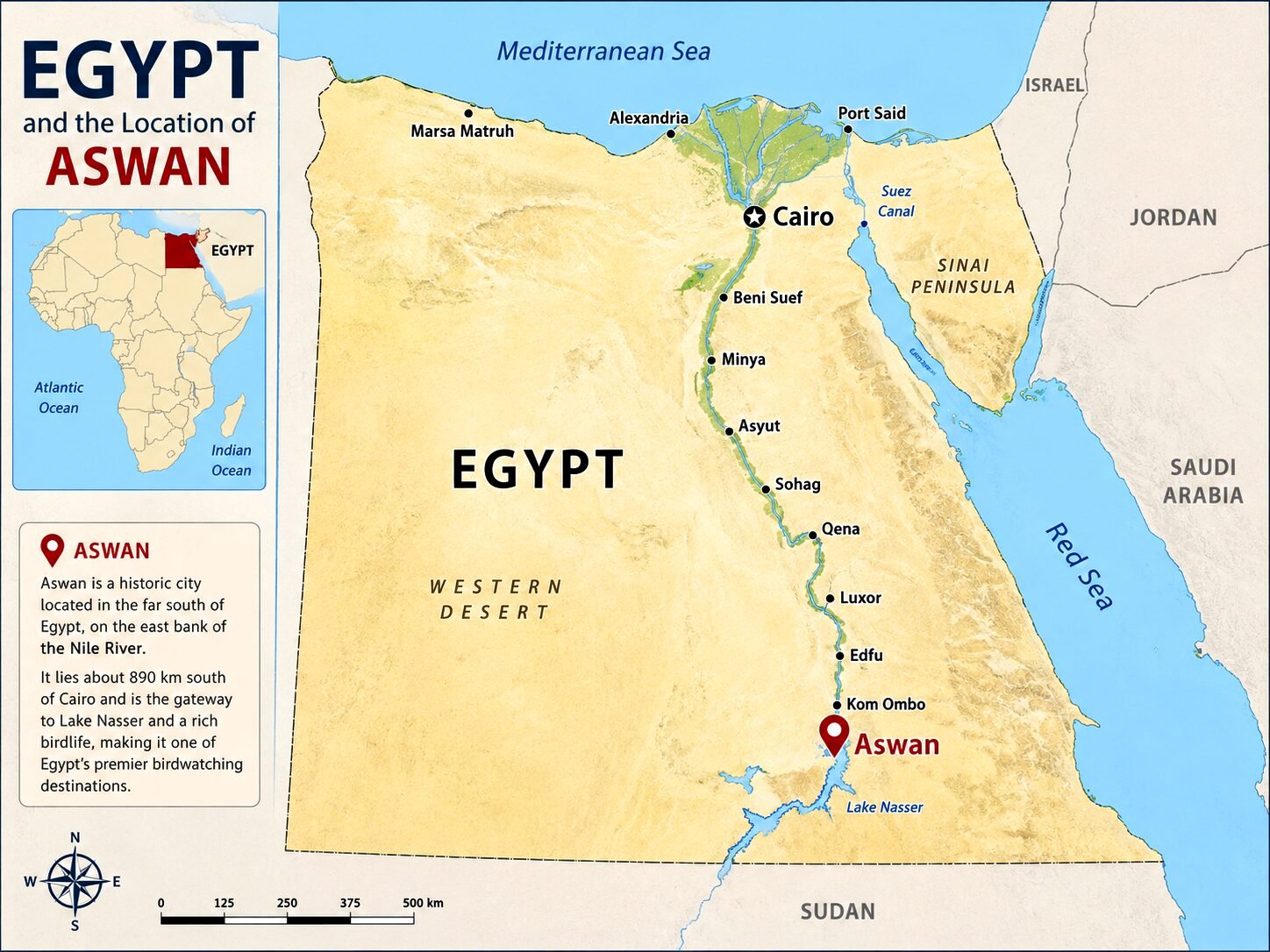
Egypt’s bird records on eBird have grown enormously in recent years, and every trip we run adds more data to that picture — new arrival dates, shifting ranges, and the occasional genuinely exciting rarity. If you’ve ever wondered how we know exactly when the Yellow-billed Storks typically arrive at Lake Nasser, or how confident we can be about which species you’re likely to see on a Nile boat trip in any given month — the answer is eBird. Years of accumulated checklists, submitted by birders just like you, quietly building the clearest picture we’ve ever had of Egypt’s birdlife.
Getting Started Is Refreshingly Simple
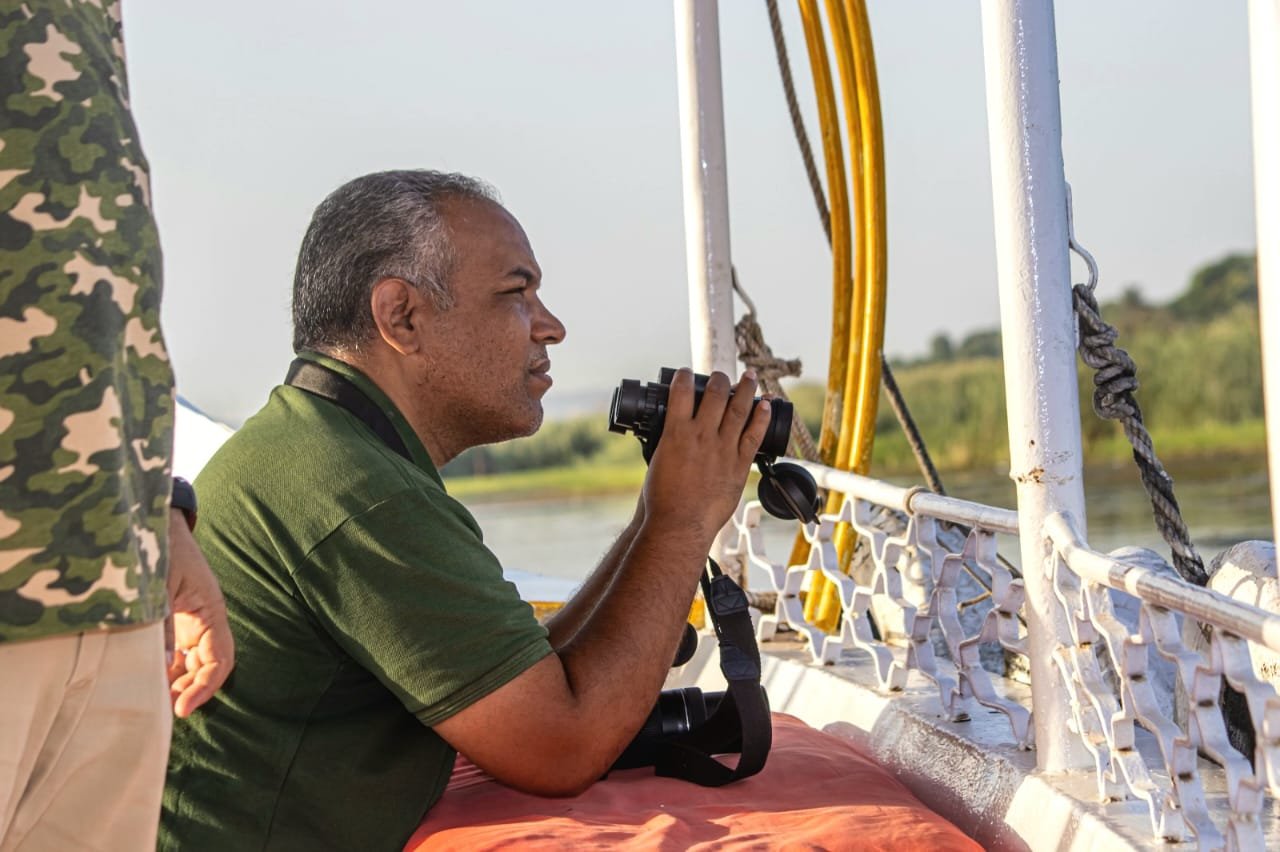
You don’t need to be an expert to use eBird — in fact, it’s one of the best tools for becoming one. Download the free app, create an account, and the next time you’re out with your binoculars, just hit “Start Checklist.” Log what you see, submit it when you’re done, and that’s it. Your personal birding history starts building itself.
And if you join us for a trip in Aswan, don’t be surprised if you leave not just with photographs and memories, but with a tidy little eBird checklist in your inbox — a small, permanent record of the morning the Nile showed you something wonderful.
Curious how many species you could add to your own eBird list on a morning with us? Get in touch and let’s find out.

Related Articles:
Birdwatching in Egypt: 20 Must-See Birds and Where to Find Them