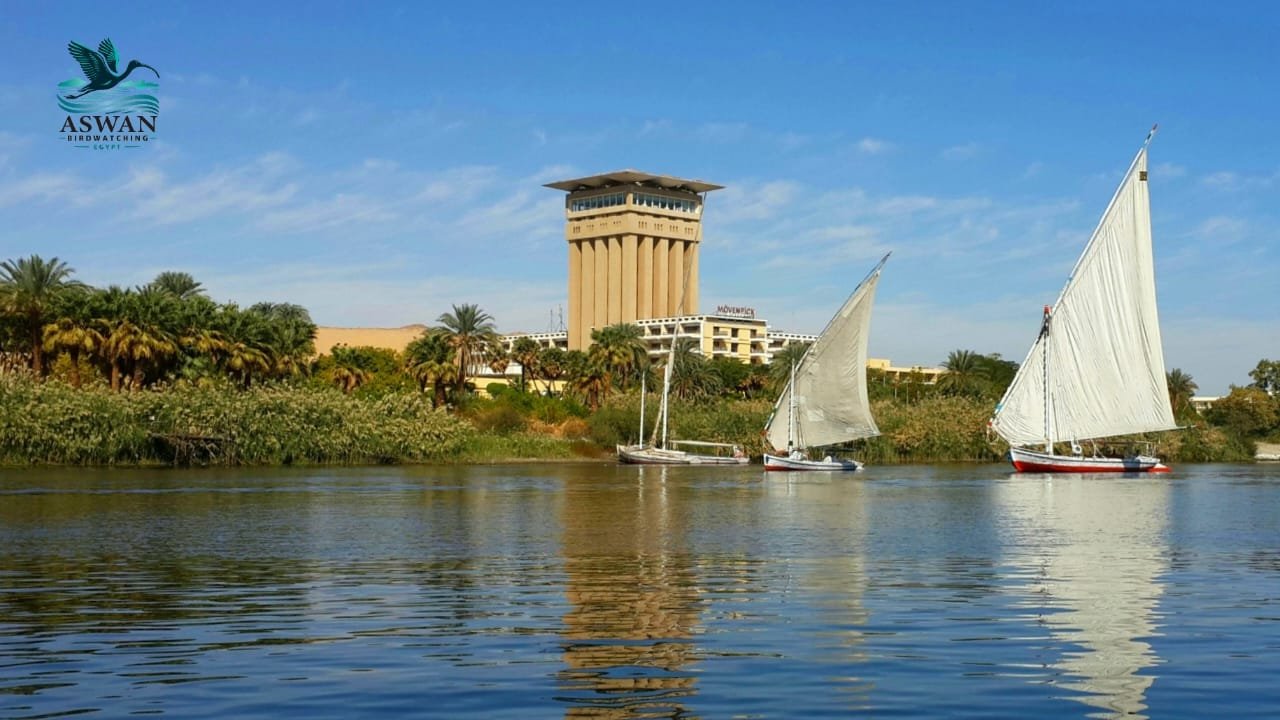
Along the green banks and sandy islands of the Nile in Aswan, one bird often makes its presence known long before you actually see it.
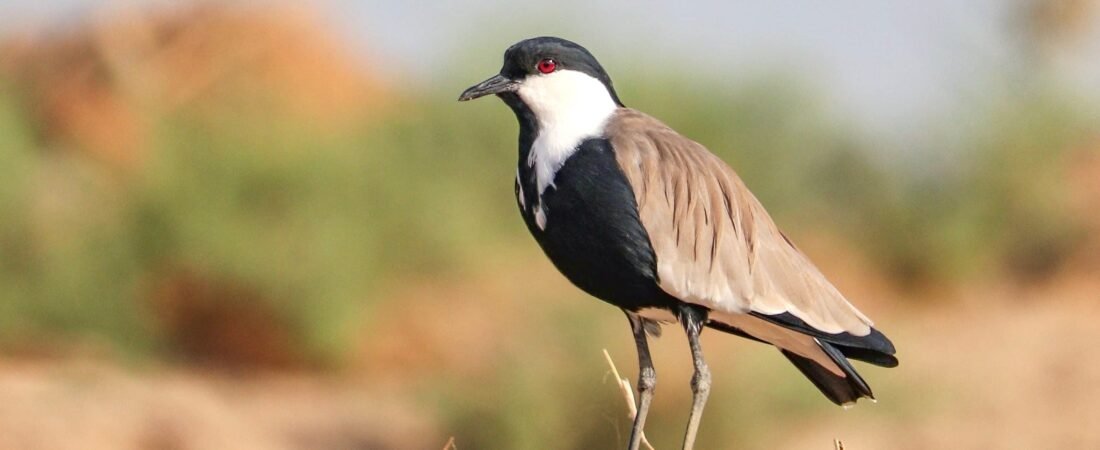
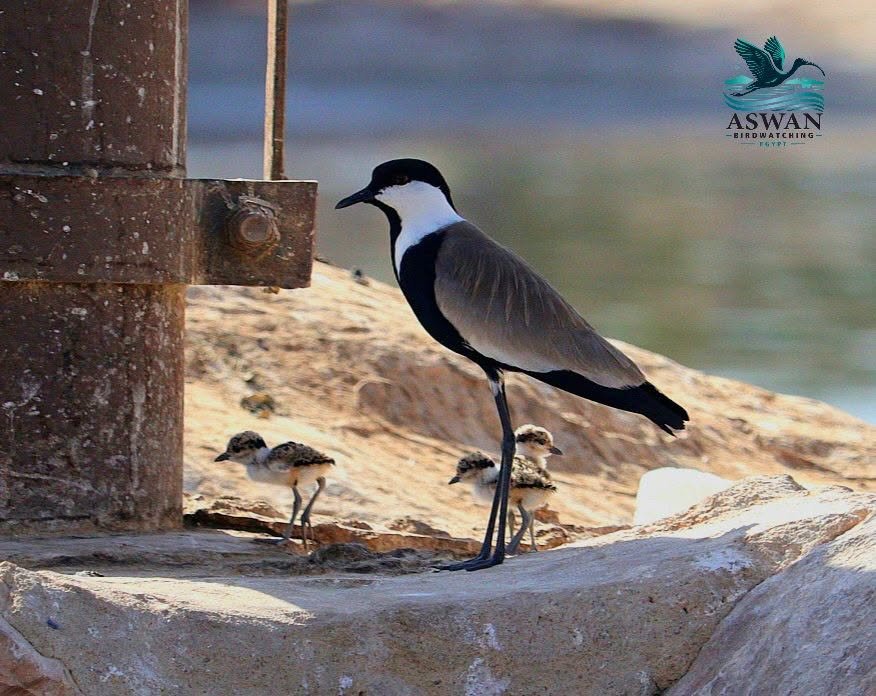
A sharp, repeated call suddenly breaks the quiet of the river. Look towards an exposed sandbank or patch of cultivated land and you may find an elegant black, white and brown wader standing alert, watching everything around it. Spur-winged Lapwing (Vanellus spinosus), one of the most distinctive birds of the Nile Valley and a familiar sight during birdwatching in Aswan.
For visiting birders, it may not be the rarest species on an Aswan checklist, but its striking appearance, fearless personality and close association with the Nile make every encounter memorable.
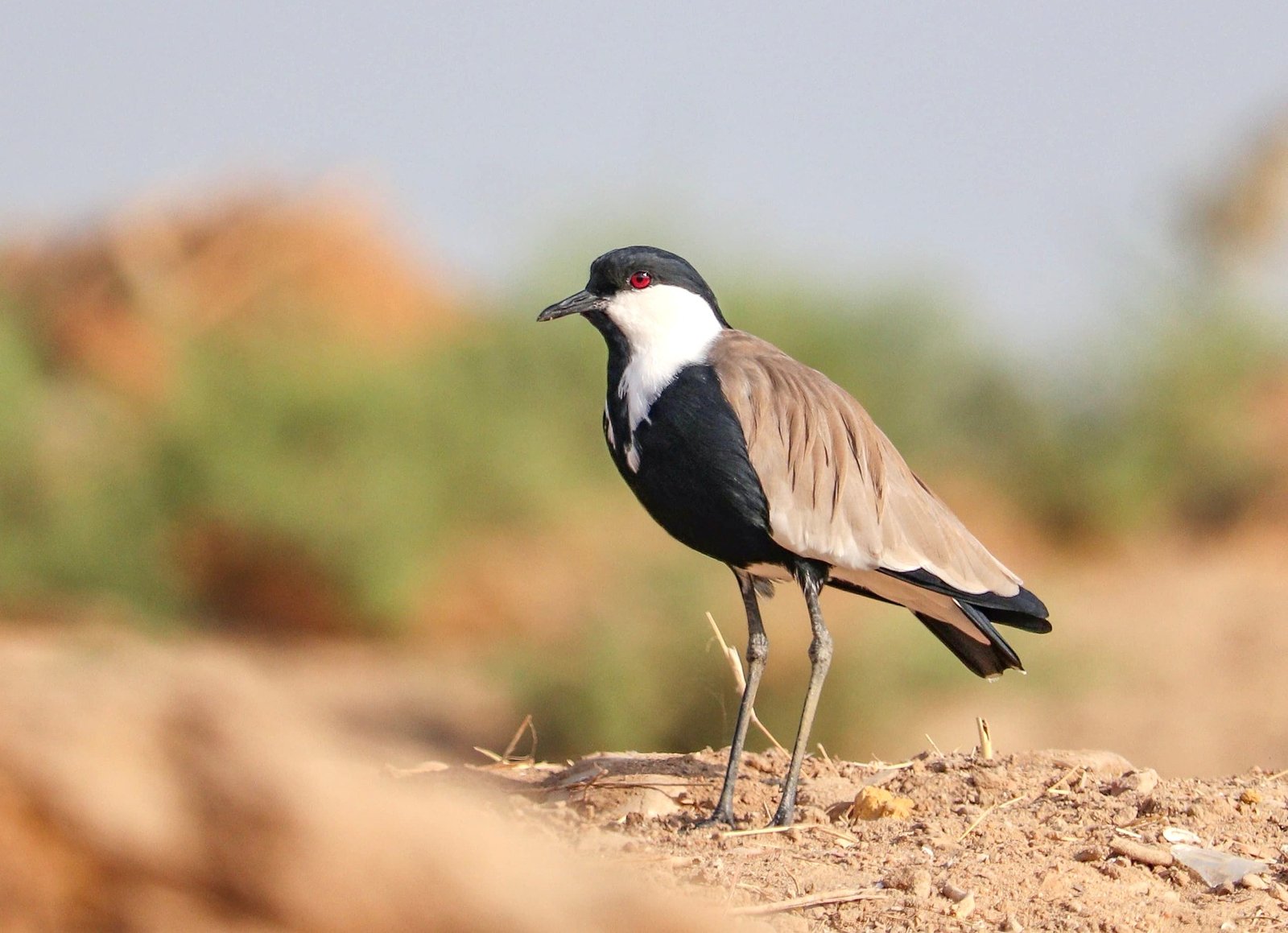
How to Identify a Spur-winged Lapwing
The Spur-winged Lapwing is a medium-sized member of the plover family, Charadriidae. Its bold plumage makes identification relatively straightforward.
Look for a combination of:
- A black crown, throat and breast
- Large white cheeks and white sides to the neck
- Brownish-grey back and upperwings
- White underparts contrasting strongly with the black breast
- Long, dark legs
- A black bill
- A striking black-and-white wing pattern when the bird takes flight
Adults are roughly 25–30 cm long.
Its voice is equally useful for identification. Spur-winged Lapwings are extremely vocal birds, producing loud, piercing, repeated calls, particularly when disturbed or defending a territory.
Once you learn that call, you may start detecting Spur-winged Lapwings around Aswan before your binoculars find them.
Why Is It Called the “Spur-winged” Lapwing?
The name comes from a fascinating feature that is easy to overlook through binoculars: the bird possesses a small spur on the bend of each wing.
This is not merely decorative.
Spur-winged Lapwings are courageous and highly territorial, especially around nesting areas. When a potential predator approaches, the normally elegant wader can turn into a determined defender, calling loudly and confronting intruders.
This bold character is one of the reasons I like to think of the Spur-winged Lapwing as one of the guardians of the Nile’s shores.
Spur-winged Lapwing in Aswan
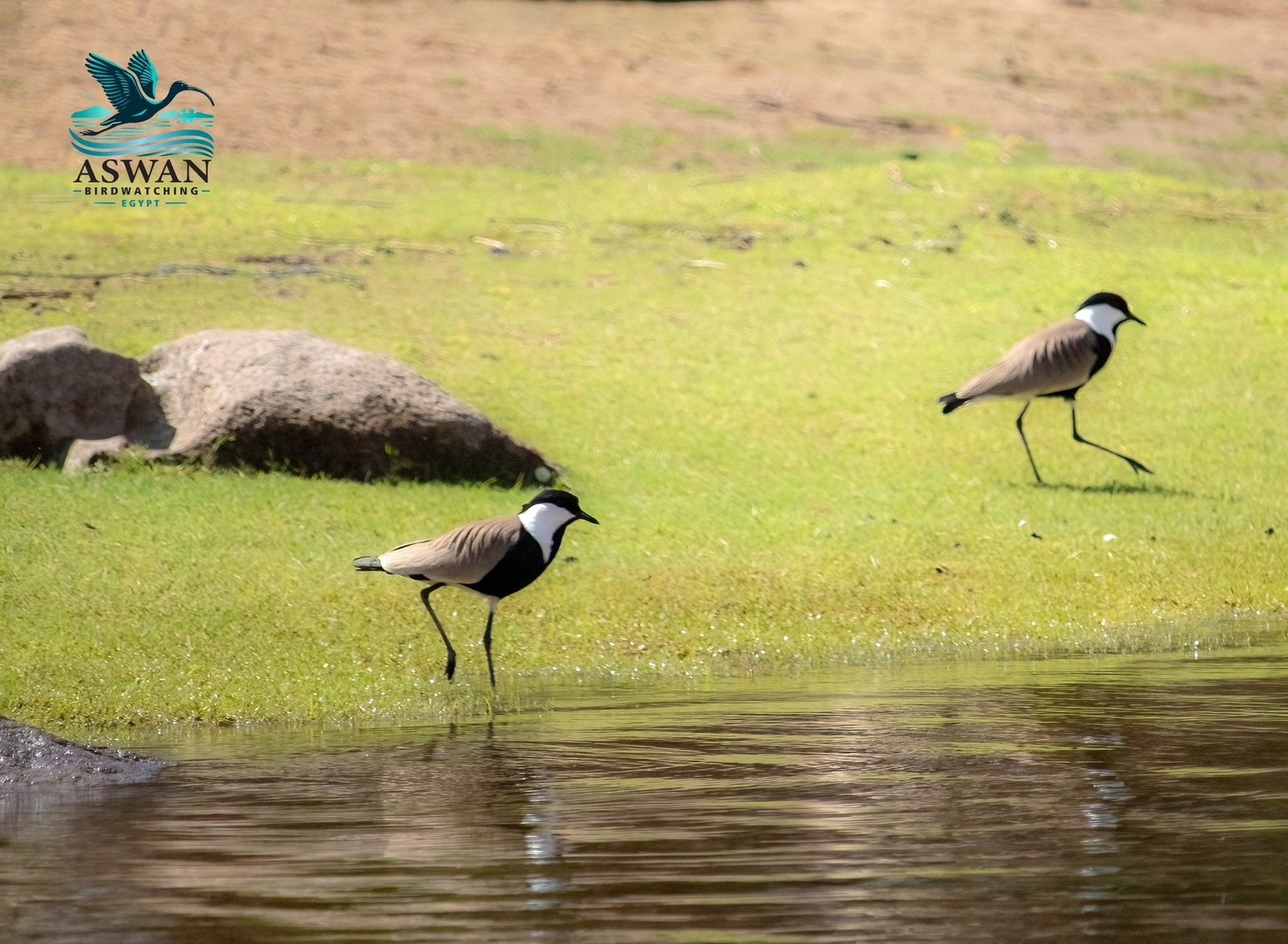
In Aswan, the Spur-winged Lapwing is closely associated with the Nile and its mosaic of islands, sandy shores, cultivated fields and shallow wetland habitats.
The Nile Islands and Cataract area are particularly good places to look for the species. Here, reedbeds, exposed sandbanks, farms and quiet backwaters create suitable habitat for a remarkable diversity of birds, including Spur-winged Lapwing, Senegal Thick-knee, Pied Kingfisher, African Green Bee-eater, African Swamphen, Nile Valley Sunbird and several species of herons.
For me as a local birdwatching guide, the Spur-winged Lapwing is part of the character of birding on the Nile.
Sometimes a bird stands motionless on an exposed shore. At other times a pair suddenly becomes noisy and flies around the boat, particularly if we have unknowingly approached an area they consider their territory.
Its voice becomes part of the soundtrack of the river.
Breeding: A Fearless Parent
The breeding behaviour of the Spur-winged Lapwing reveals another side of its personality.
Unlike birds that build elaborate nests in trees or reedbeds, Spur-winged Lapwings nest on the ground, usually using a shallow scrape or natural depression on relatively bare ground, mudflats or similar open habitat.
That leaves the eggs and chicks potentially vulnerable.
The parents compensate with vigilance.
When danger approaches, adults can become extremely vocal and defensive. This is why birdwatchers and photographers should be particularly careful around agitated lapwings.
If a bird repeatedly alarm-calls, circles you or behaves unusually defensively, there may be eggs or chicks nearby.
The best response is simple: give the birds more space.
Good birdwatching should never come at the expense of the bird.
Where to See Spur-winged Lapwing in Aswan
A Nile birdwatching trip in Aswan offers an excellent chance of encountering Spur-winged Lapwings together with many of southern Egypt’s characteristic birds.
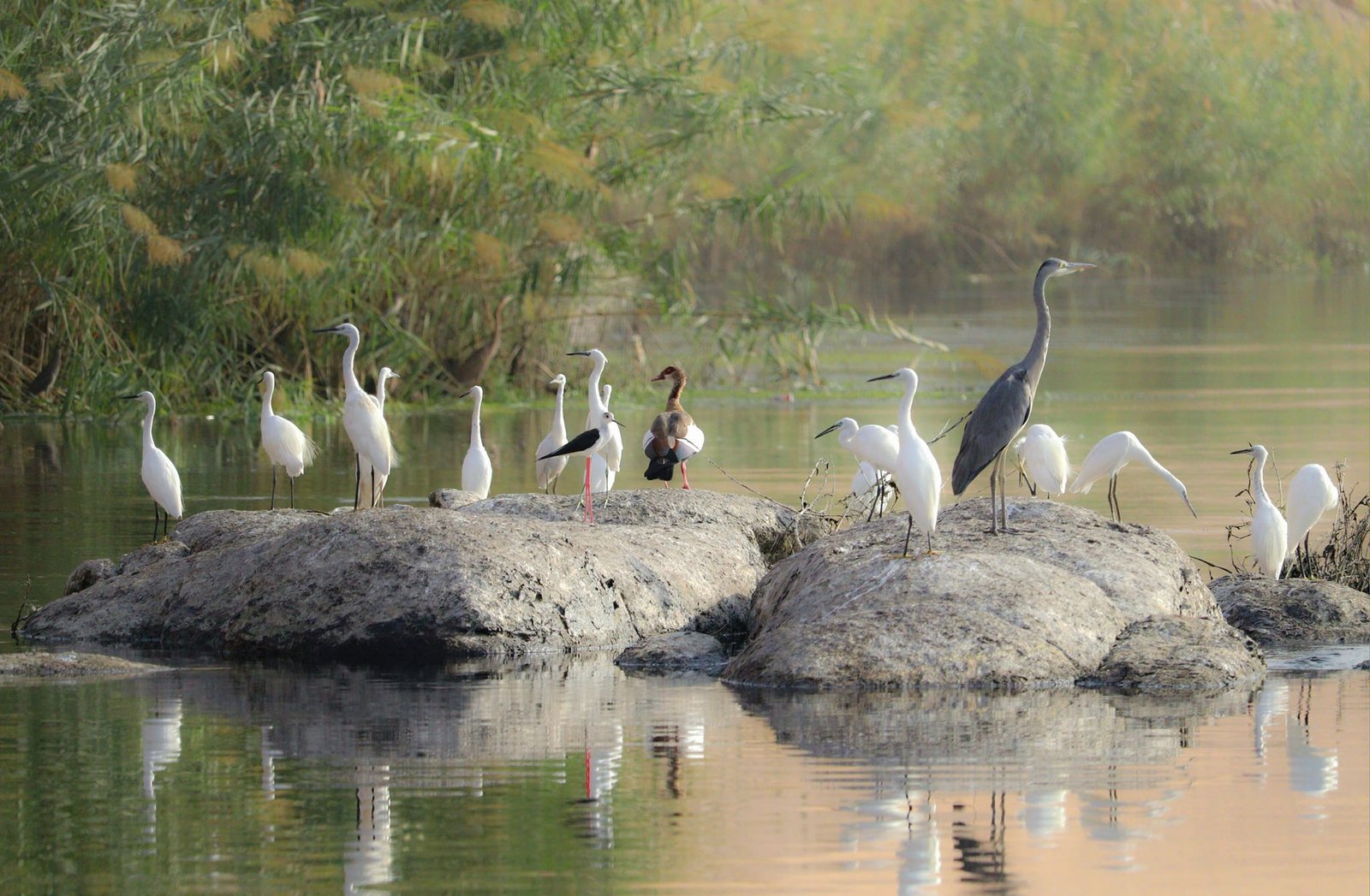
The islands and quiet channels around Aswan combine several habitats within a relatively small area: rocky shores, sandy banks, reedbeds, farmland, shallow water and vegetated islands.
That diversity is exactly what makes birdwatching here so rewarding.
On a single outing, the lapwing may share the landscape with Senegal Thick-knee, African Swamphen, Nile Valley Sunbird, Pied Kingfisher, African Green Bee-eater, Striated Heron, Purple Heron and many other Nile birds.
For international birders—particularly those exploring the southern edge of the Western Palearctic—Aswan also offers the opportunity to experience an exciting mixture of African, Palearctic and Nile Valley species.