Late May is not a season many visiting birders choose for Aswan. The heat is building, the migration has largely wound down, and the tourist boats have thinned out on the Nile. But for those who know what to look for, late spring is one of the most rewarding times of year to be on the water here. The Afrotropical oversummering species are settling in, the resident birds are in full breeding activity, and the lake — vast, quiet, and shimmering in the heat — is entirely your own.
When Lukas and his companions Helmut and Rainer arrived in Aswan in May 2025, they already had a clear picture of what they wanted. They had come from Austria specifically to target Egypt’s most sought-after speciality species — the birds that simply cannot be found anywhere else in the Western Palearctic.
I had been looking forward to our time together, and from the moment I picked them up by boat directly from the Nile hotel on the afternoon of 22 May, I knew this was going to be a memorable few days.
Here’s the summerized trip report for this incridible birding expedition:
An Afternoon on the Nile
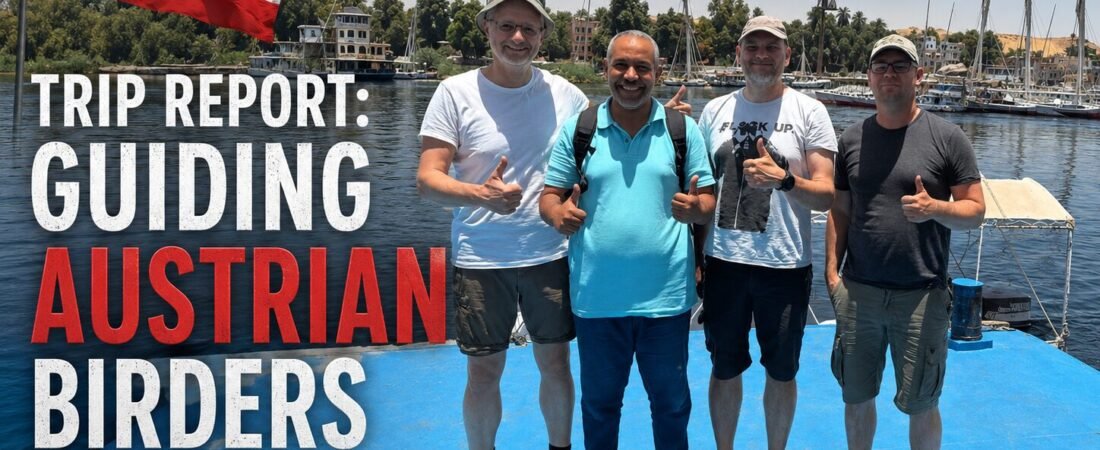
There is no better way to arrive in Aswan as a birdwatcher than by boat. I always say this to my guests, and I say it because it is true. The road from the hotel takes you past shops and traffic and noise. The river takes you into something else entirely.
That first evening on the Nile set the tone for everything that followed. Within the first hour we had recorded all the classic Nile specialities that the group had been hoping for: African Swamphen (Porphyrio p. madagascariensis) moving through the reedbeds with its extraordinary blue plumage catching the last light; Senegal Thick-knee calling from the rocky islands, that haunting wail carrying across the water; Nile Valley Sunbird — the jewel of the Aswan Nile, the male glittering green and blue in the acacia flowers; Green Bee-eater hawking insects from the waterside vegetation; and Striated Heron, compact and secretive, hunched at the edge of the reeds.
Two additional species added a pleasant bonus to the evening: a Common Sandpiper teetering along the shoreline in its characteristic fashion, and a Little Bittern — always a pleasing find — slipping between the stems of a reedbed as we drifted past. By the time we returned to the hotel, the group had everything they had hoped to see on the Nile. But there was much more to come.
South to Lake Nasser
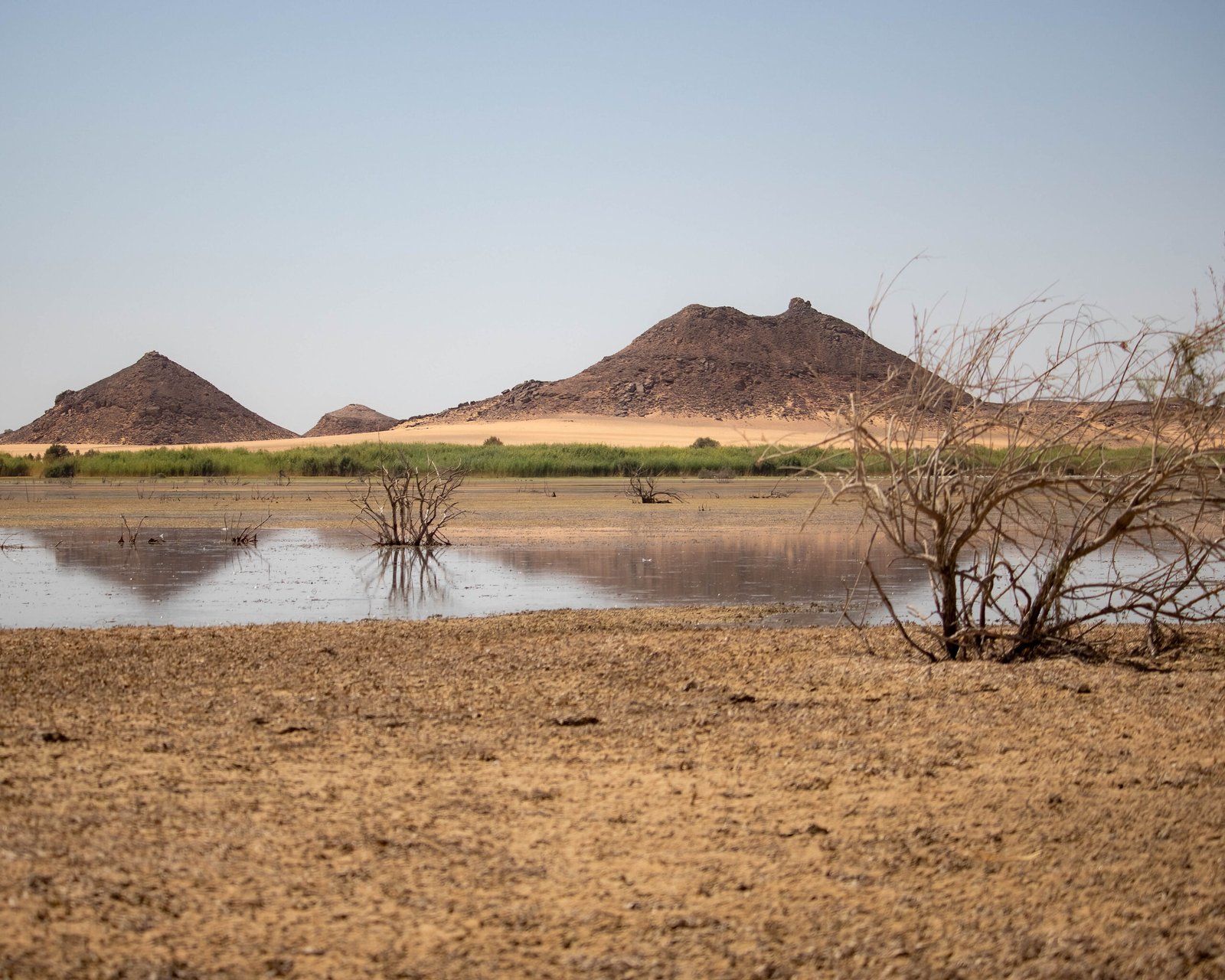
The following morning — 23 May — I was at the hotel at 05:30. We had a long and exciting day ahead: the drive south to Abu Simbel, with Lake Nasser as our primary destination.
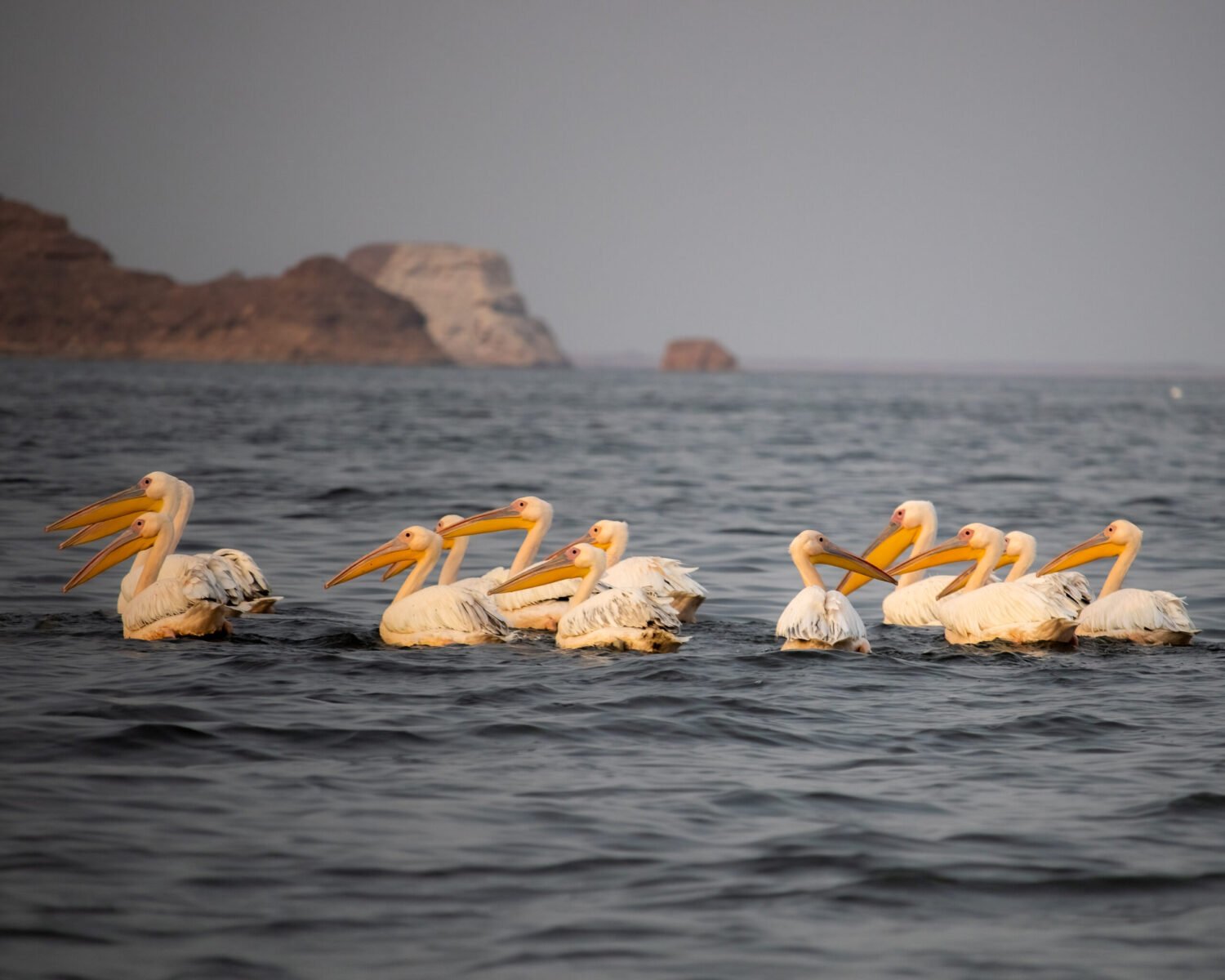
The day produced an immediate and significant highlight even before we reached Abu Simbel. During a stop at a site on Lake Nasser, we observed Reed Cormorant (Microcarbo africanus) — a species with a remarkable story attached to it here in Egypt. This small, agile cormorant formerly bred in wetlands in northern Egypt but disappeared after the last confirmed breeding record in 1903. It was only rediscovered in Egypt in 2024, and in 2025 — the very year of our visit — breeding was confirmed once again. Seeing this bird on Lake Nasser, against that backdrop of red sandstone cliffs and Nubian blue sky, felt genuinely special.
After checking into the Nubian House in Abu Simbel and taking shelter from the midday heat — temperatures were already pushing past 40°C by midday at that time of year — we headed out in the evening to search for one of the group’s most-wanted target species.
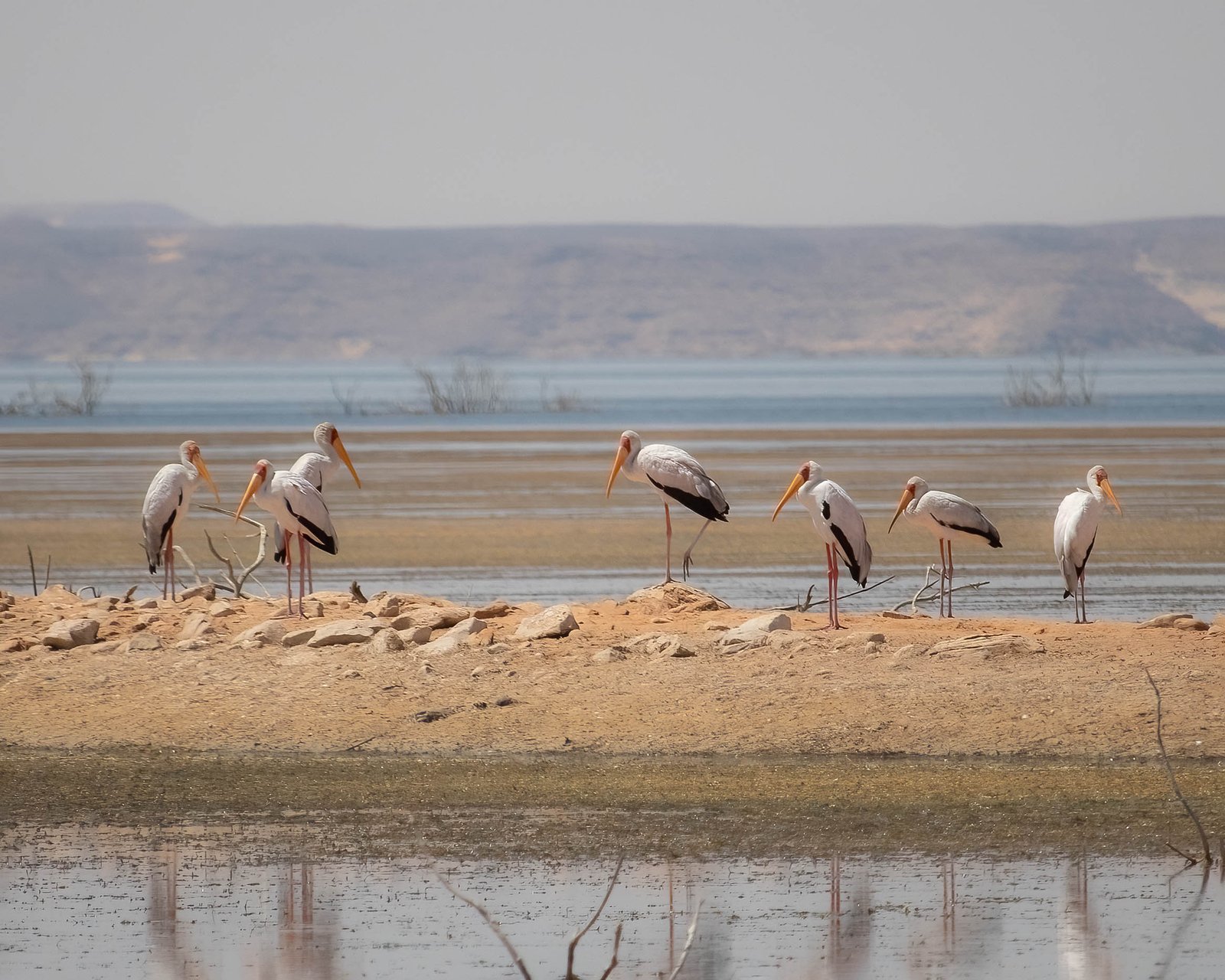
Our drive to a site on Lake Nasser late that afternoon produced exactly what we were hoping for. Two Yellow-billed Storks (Mycteria ibis) stood at the water’s edge in the fading light — tall, white, utterly composed, their bare red faces and long yellow bills unmistakable. For me, even after many years of guiding here, the Yellow-billed Stork never loses its impact. It is an African bird in the truest sense, a species of papyrus swamps and East African lakes that has no business being in Egypt — and yet here it is, every summer, along these southern shores. The group was delighted.
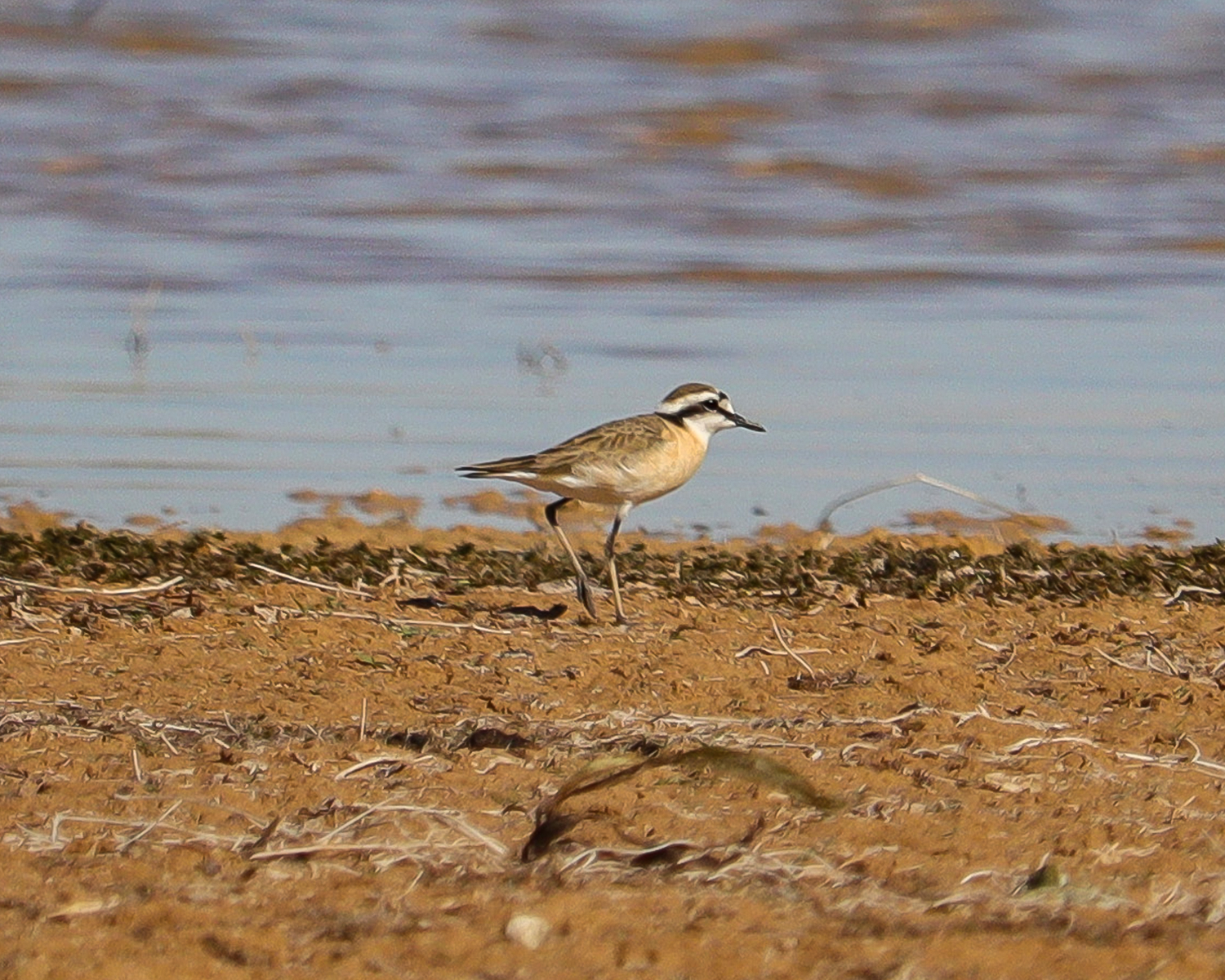
That same evening visit also produced Kittlitz’s Plover (Charadrius pecuarius) — another Afrotropical species and a personal favourite of mine, a small, warm-toned plover that runs ahead of you on the lakeshore in a most confiding way. Around it was an impressive supporting cast: Garganey, Northern Shoveler, African Swamphen, Eurasian Spoonbill, White-winged Tern, Whiskered Tern, Black-tailed Godwit, Ruff, Wood Sandpiper, Curlew Sandpiper, Temminck’s Stint, Little Stint, Kentish Plover, Slender-billed Gull, White Stork, and Sedge Warbler — a remarkable diversity for a single late-afternoon visit. Lake Nasser has this quality: it rewards patience and timing with a breadth of species that continually surprises even those of us who know it well.
Village Weavers and the Boat at Dawn
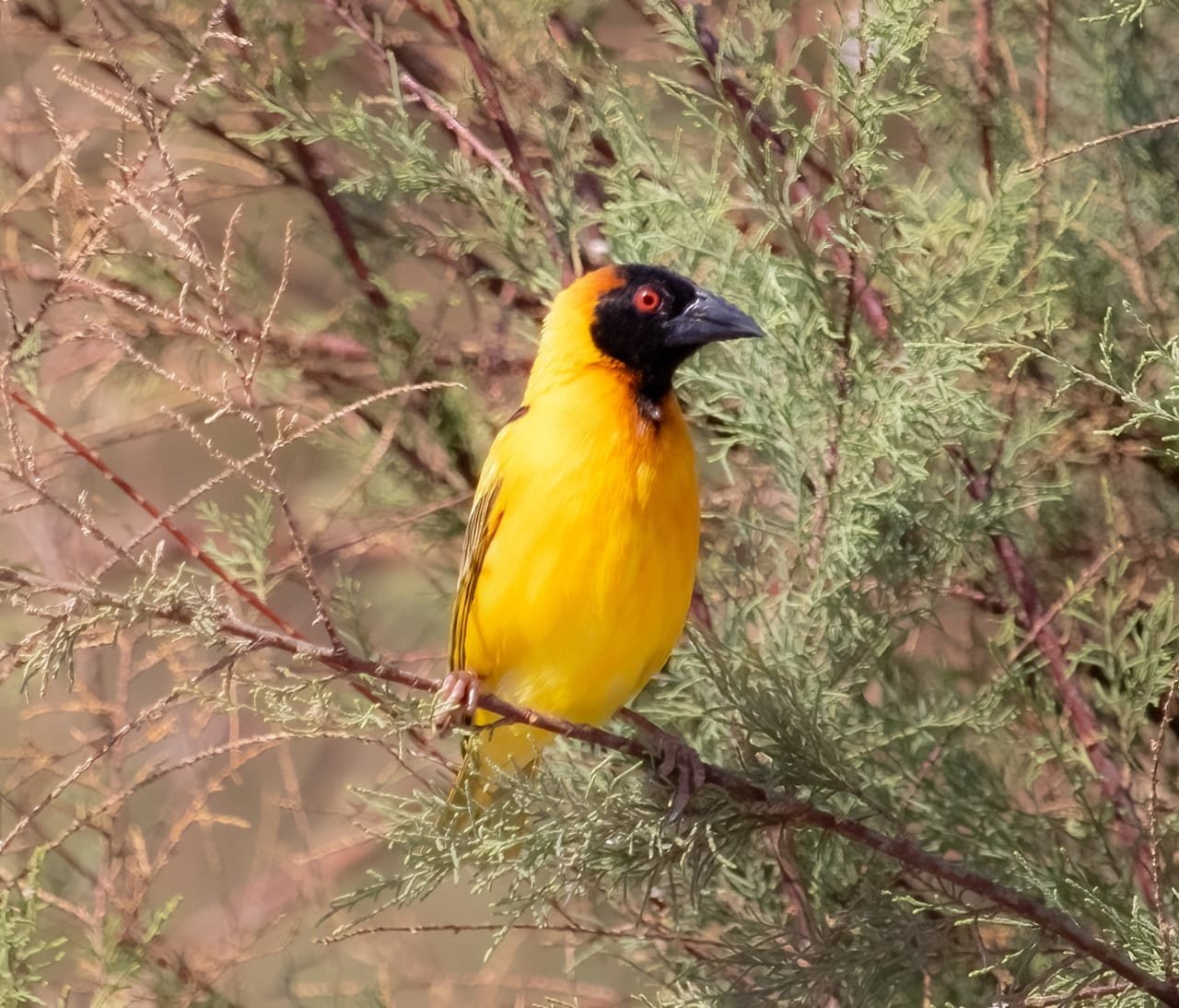
On the morning of 24 May, I was waiting at the harbor as my guests arrived. The day’s plan was a boat trip on Lake Nasser with a very specific target: Village Weaver (Ploceus cucullatus).
This is a species that tends to surprise people when they hear it occurs in Egypt. It does — and Abu Simbel is currently one of the most reliable sites for it in the entire country. As we passed the famous temple facades in the early morning light, two African Pied Wagtails dropped down onto the boat and gave us prolonged, wonderfully close views. This always makes me happy — the African Pied Wagtail is a bird that belongs to the tropical heart of Africa, and to watch it perched on your boat just metres from the monuments of Ramses II is one of those moments that reminds you how extraordinary a birding destination Aswan truly is.
For the Village Weaver, we found what I had hoped for: several abandoned colonies and three sites with fresh active nests, including four males and two females going about their business in the lakeshore vegetation In the distance, a Barbary Falcon — the desert subspecies of Peregrine, elegant and fast — passed briefly over the lake before disappearing south.
That afternoon, after the obligatory midday rest, we headed to a reedbed on the lakeshore behind the Abu Simbel airport. The reward here was exceptional: within a flock of Indian Silverbills, two Crimson-rumped Waxbills (Estrilda rhodopyga) — a species first documented in Egypt only in 2023 and still very rare here. The group had only learned of this possibility through advance research and local contacts, and finding them so quickly was a genuine bonus. Several Brown-throated Martins were feeding low over the reeds alongside them, and a Little Bittern, a Striated Heron, and a Rufous-tailed Scrub Robin completed a very satisfying afternoon.
In the evening, we returned to the Kittlitz’s Plovers, the golden light of late afternoon falling perfectly on the lakeshore. A good day.
A Final Morning of Surprises
Sunday 25 May began with a tuk-tuk ride to an agricultural area near Abu Simbel — a habitat that looks unpromising at first glance but that can produce wonderful birds. We found a flock of at least 80 Indian Silverbills feeding in the fields, and overhead more than 50 Yellow-billed Kites (Milvus migrans aegyptius) were perched along pylons and wires — a characteristic and spectacular sight in this part of Egypt in late spring.
The afternoon and evening visit back to the lake produced two more significant finds. A pair of Greater Painted-snipe (Rostratula benghalensis) — a secretive and beautifully marked bird that always requires some luck to encounter well — showed themselves at the water’s edge. And as dusk settled over the desert, a Pharaoh Eagle-Owl (Bubo ascalaphus) began calling — the deep, resonant hoot rolling across the scrub in the darkness. You can not plan for moments like that. They simply find you.
What Late Spring Teaches You About Aswan
Before the group headed back north to Aswan on 26 May — and another boat trip on the Nile, where the familiar species: African Swamphen, Little Bittern, Striated Heron, Green Bee-eater, and Nile Valley Sunbird, felt like old friends by now — I found myself reflecting on what these three days had shown us.
Late May in Aswan is demanding. The heat is real, and you plan your days around it — early morning, late afternoon, everything possible in the field before noon and after four. But the rewards for those willing to work within those constraints are considerable. The Afrotropical species that make this region unique are all present and active. The lake is quiet and productive. And the Nile, which never disappoints at any time of year, was at its generous best.
The final species tally for our days together around Aswan and Lake Nasser included some of the most sought-after birds in Egypt: Yellow-billed Stork, Reed Cormorant, Village Weaver, Kittlitz’s Plover, Crimson-rumped Waxbill, African Pied Wagtail, Greater Painted-snipe, Pharaoh Eagle-Owl, and Nile Valley Sunbird — alongside a supporting cast of waterbirds, raptors, and waders that any serious birder would be proud to record in a single visit.
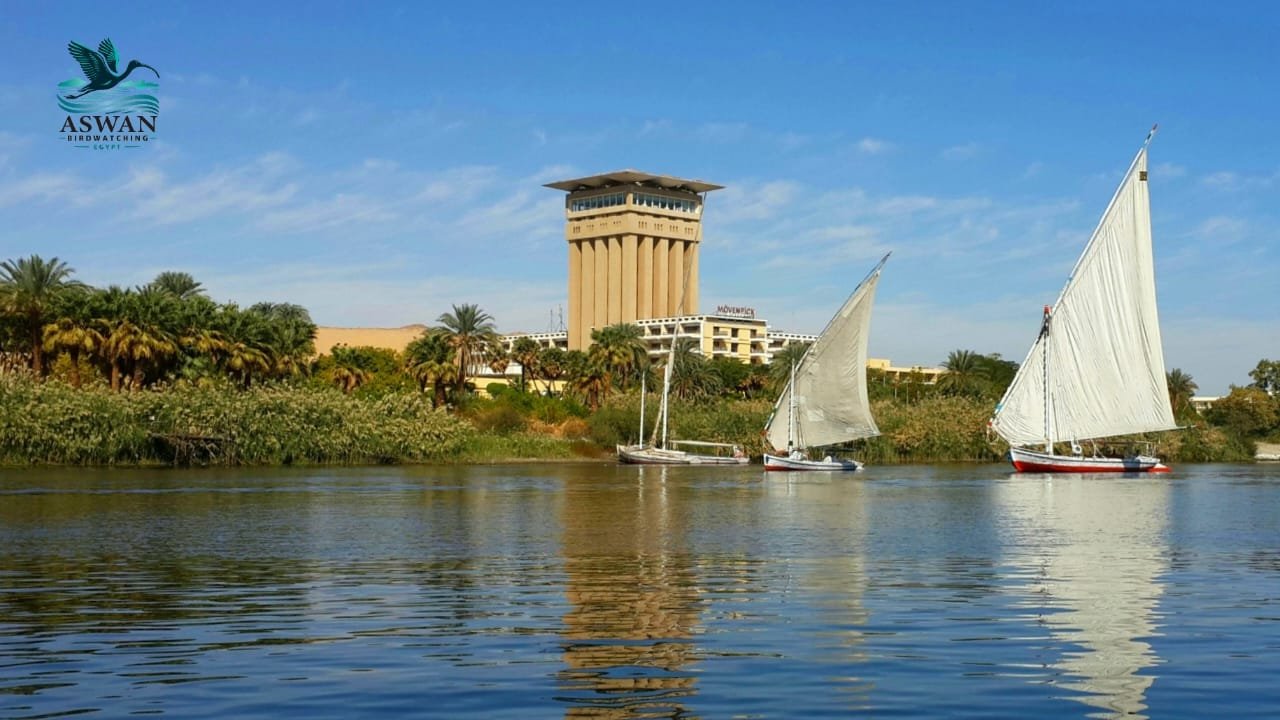
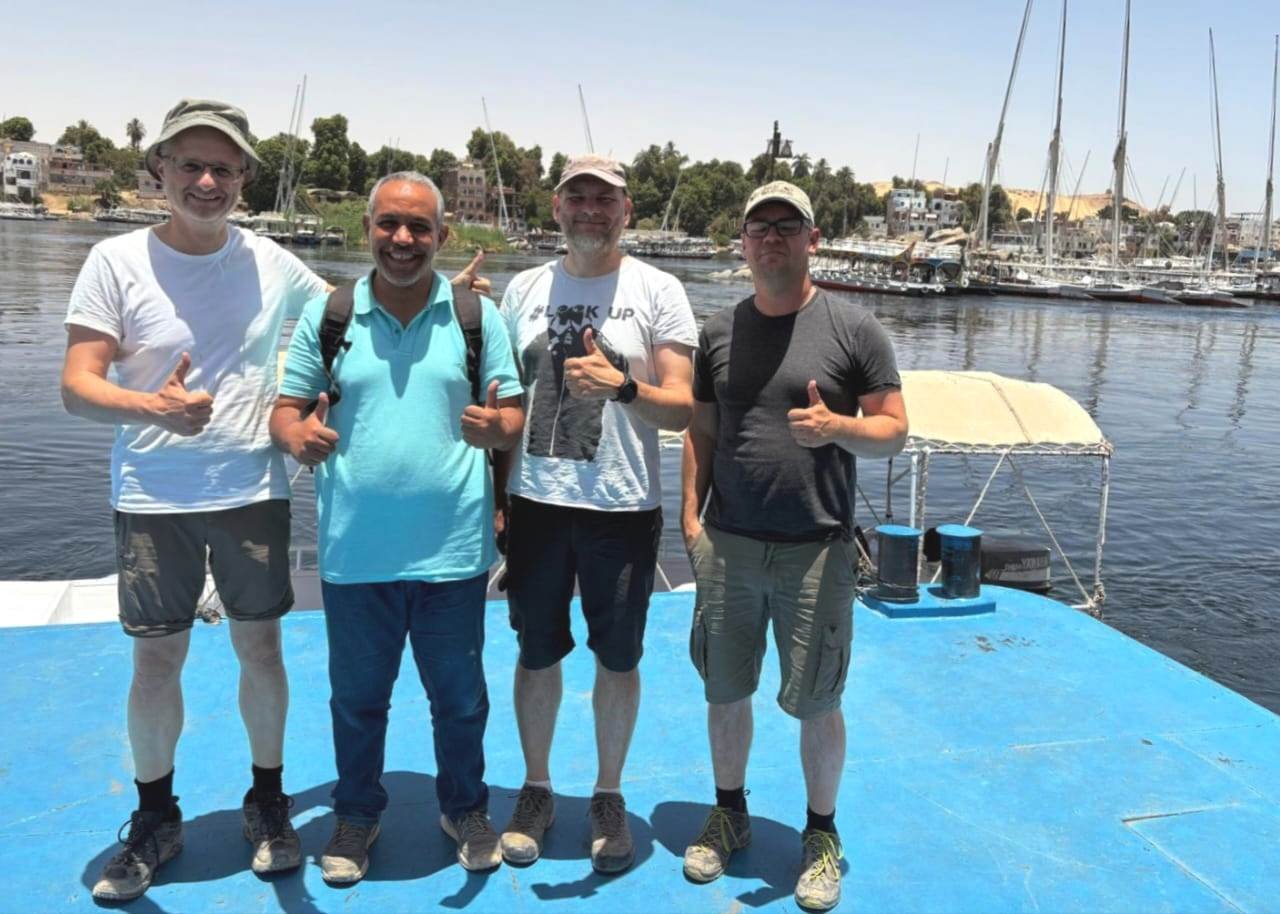
Lukas summed it up well in the final photo we took together on the boat on the Nile: four people with binoculars and big smiles, the green water behind us, the Aswan corniche in the distance, and a very long species list between us.
This is why I do this work. Every season, the same river, the same lake, the same desert cliffs. And every season, something new.