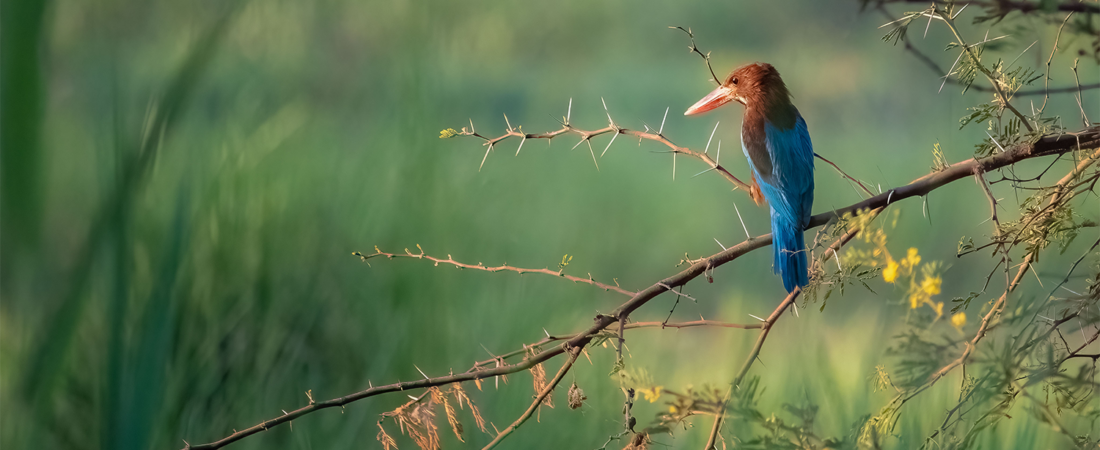
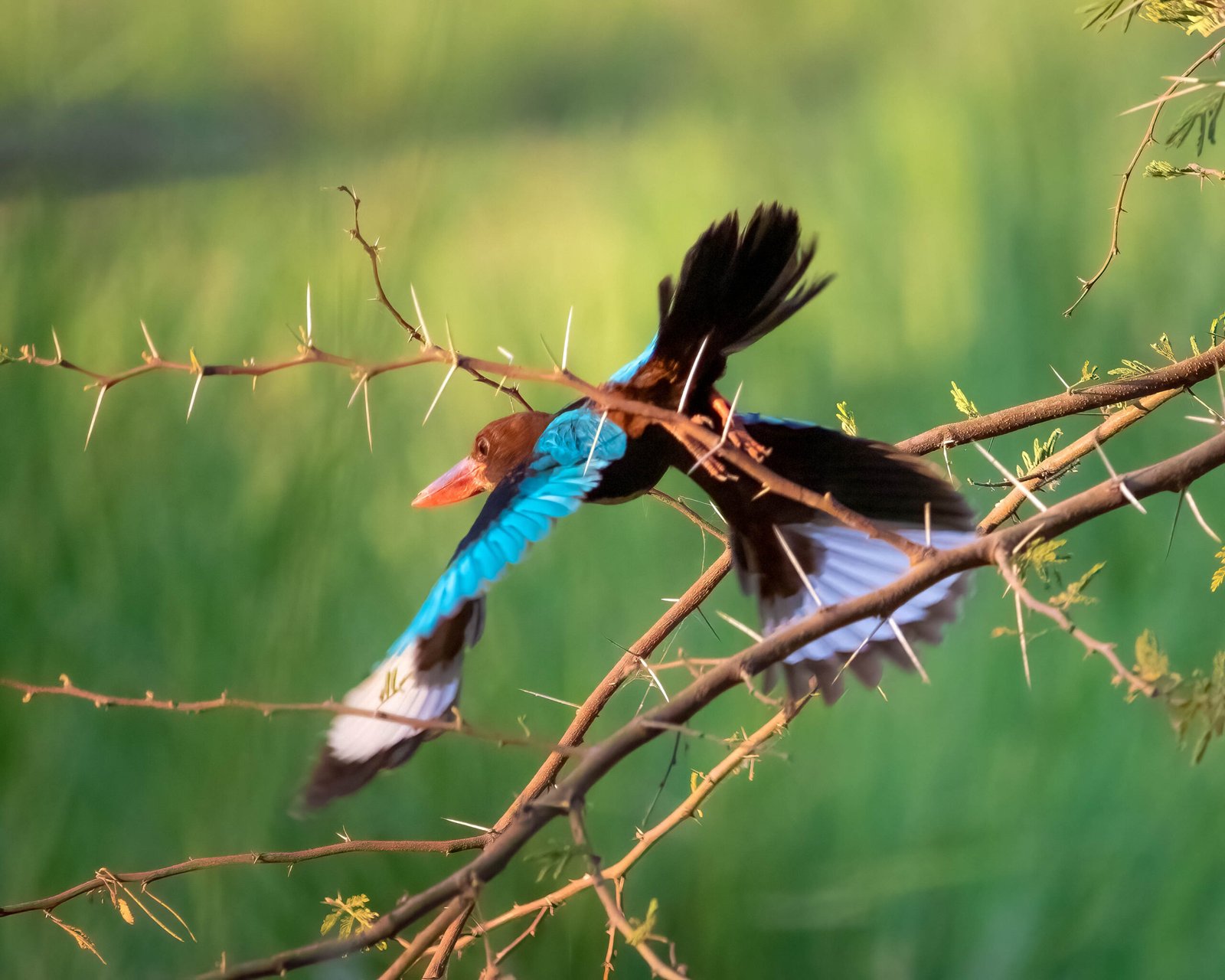
If there is one bird that can suddenly make a quiet moment of birdwatching along the Nile much more exciting, it is the White-throated Kingfisher (Halcyon smyrnensis).
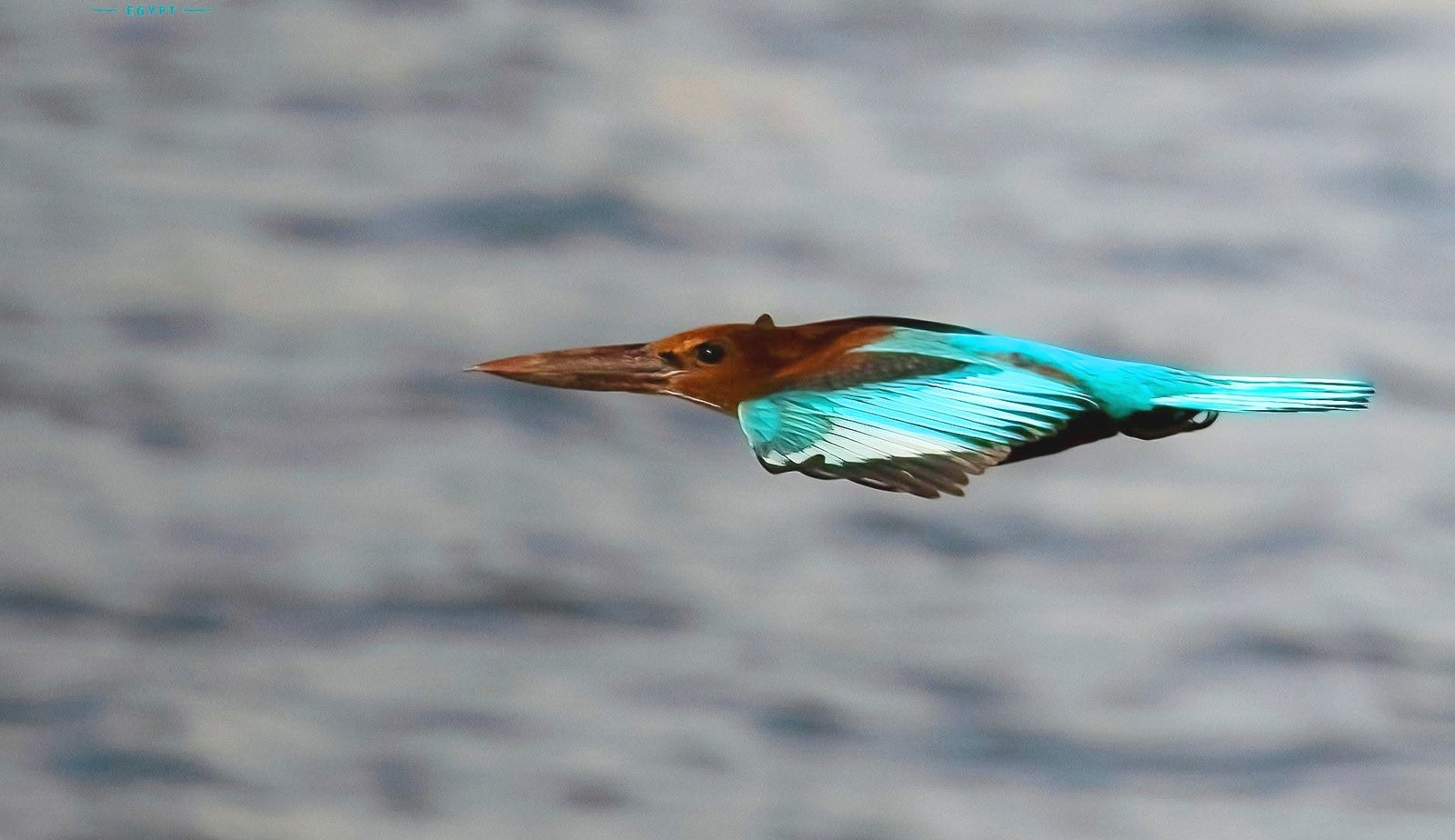
With its brilliant blue wings and back, rich brown head and body, bright white throat and breast, and large red bill, this is one of the most striking birds you can encounter around Aswan. It is also a bird that often catches the eye before you even realize what you are looking at.
A Kingfisher That Doesn’t Need Water
Despite its name, the White-throated Kingfisher is not restricted to the water.
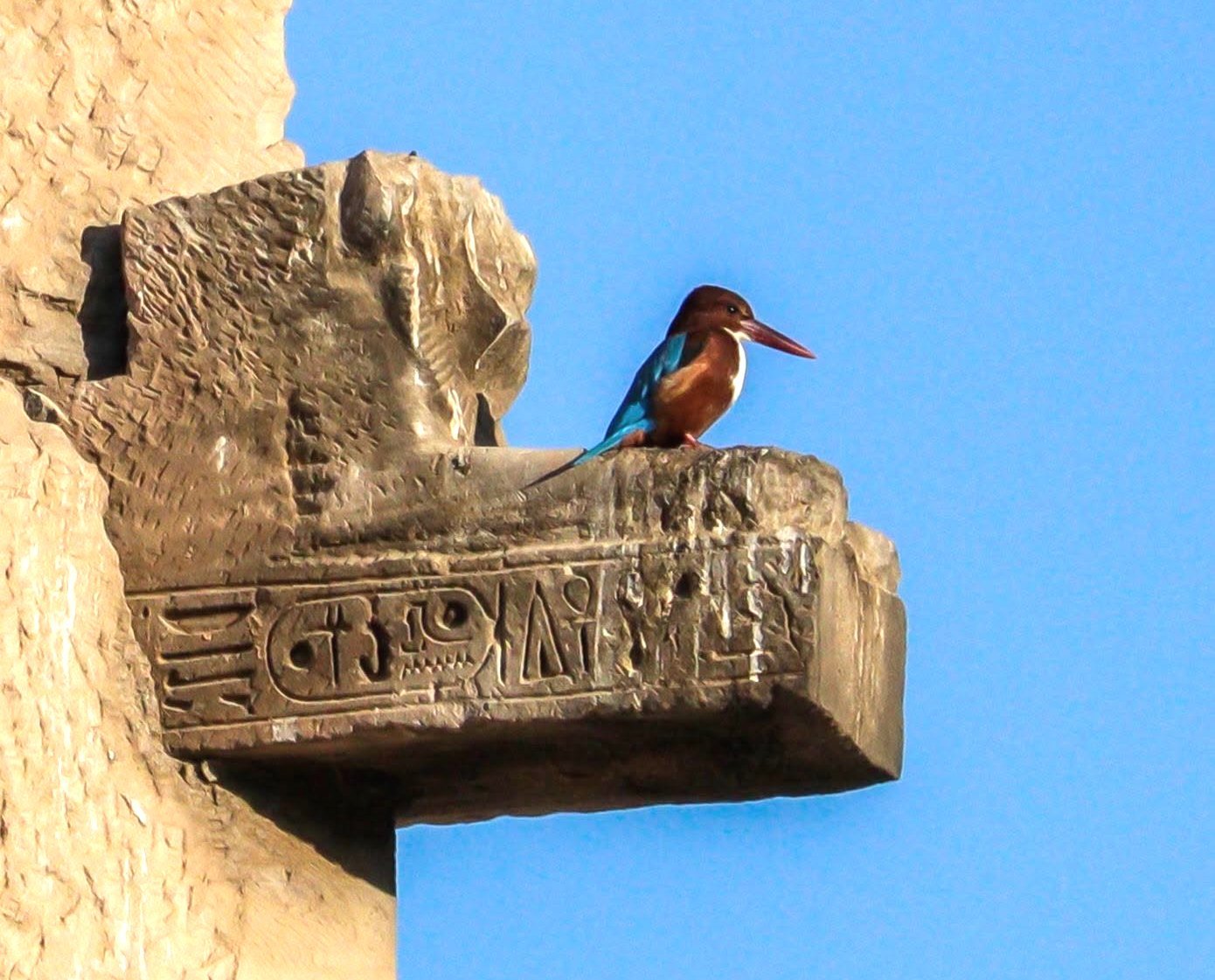
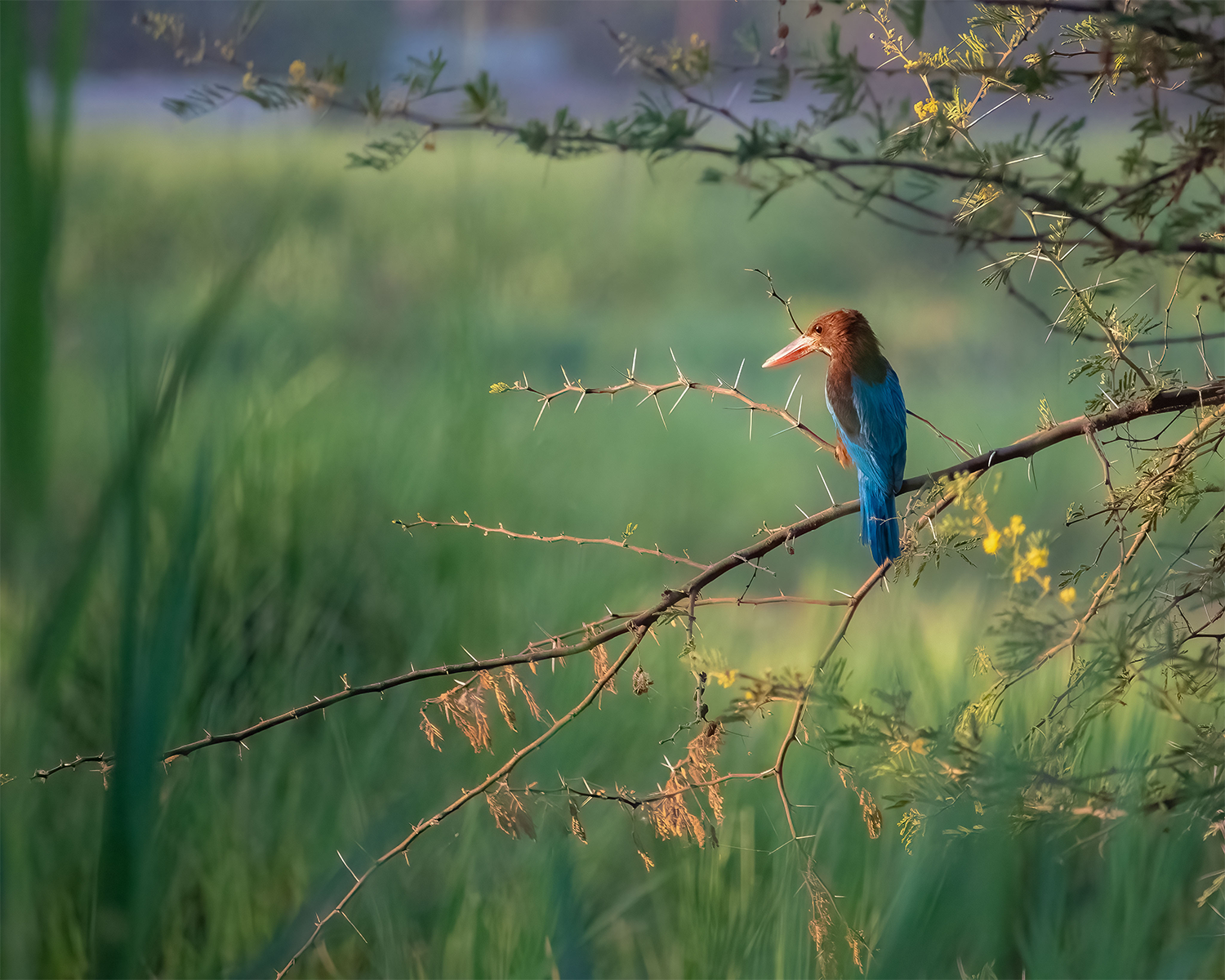
Unlike the Common Kingfisher, which is strongly associated with rivers and lakes, the White-throated Kingfisher is equally at home in open countryside, gardens, agricultural areas and semi-open habitats. It often sits on exposed branches, poles, wires or other convenient perches, scanning the ground below for prey.
This makes it particularly interesting to find around Aswan. While birding the Nile, you may see one perched quietly above the river, but you should also keep looking well beyond the water.
A Kingfisher With a Surprisingly Big Menu
Fish are certainly part of its diet, but the White-throated Kingfisher is far from being a specialist fish hunter.
It regularly hunts insects and other invertebrates and can also take frogs, lizards, crabs, small mammals and even small birds. It usually watches from a perch before making a rapid flight to grab its prey, often returning to the perch to deal with it before swallowing.
This explains why a White-throated Kingfisher can be sitting beside a dry field just as comfortably as beside the Nile.
A Bird You Won’t Forget
The White-throated Kingfisher is not only colorful; it can also be surprisingly vocal.
Its calls include harsh, descending trills and cackling notes that can sound almost raptor-like.
Once you become familiar with the call, it can become a useful clue that a White-throated Kingfisher is somewhere nearby, even when the bird itself is hidden.
Listen for It Before You See It
Aswan is one of Egypt’s premier birdwatching destinations, thanks to its location at the crossroads of Africa and the Western Palearctic.
Early morning is the perfect time to explore the Nile islands and riverbanks, when bird activity is at its peak.
A guided birdwatching excursion with the local birding expert Ismael Khalifa can reveal a remarkable variety of species, including Pied Kingfishers, Nile Valley Sunbirds, African Green Bee-eaters, Purple Herons, Senegal Thick-knees, African Swamphens, Egyptian Geese and many migratory birds.
Whether you’re an experienced birder or simply enjoy nature, a morning birding trip offers a unique way to experience Aswan’s natural beauty.
Where to Look for White-throated Kingfishers in Aswan
The Nile and its surrounding habitats provide several opportunities to encounter this species.
Along the river, look for birds sitting on exposed branches, palms, fences and other elevated perches overlooking open ground or water. Riverside vegetation, agricultural areas and the edges of cultivated land are also worth checking.
The species has been recorded from several locations around Aswan, including the Nile riverbank and Philae Lake, so it is very much a bird that belongs on the local birding checklist.
One of the best moments is spotting one from a boat: a flash of blue and chestnut against the green vegetation, followed by the unmistakable silhouette of its large red bill.
A Must-See Bird for Visitors to Aswan
For visiting birders, the White-throated Kingfisher is one of those species that can make an Egyptian birding trip particularly memorable.
It is colorful, distinctive and behaviorally fascinating—and unlike many kingfishers, you don’t have to stay beside the water to find it.
So while exploring the Nile in Aswan, don’t only scan the water for Pied Kingfishers and Common Kingfishers. Look up at the trees, palms, wires and exposed perches along the river.
You might suddenly see a flash of brilliant blue.
That’s your White-throated Kingfisher.
And once you’ve seen one perched in the warm Aswan sunlight, it is a bird you are unlikely to forget.